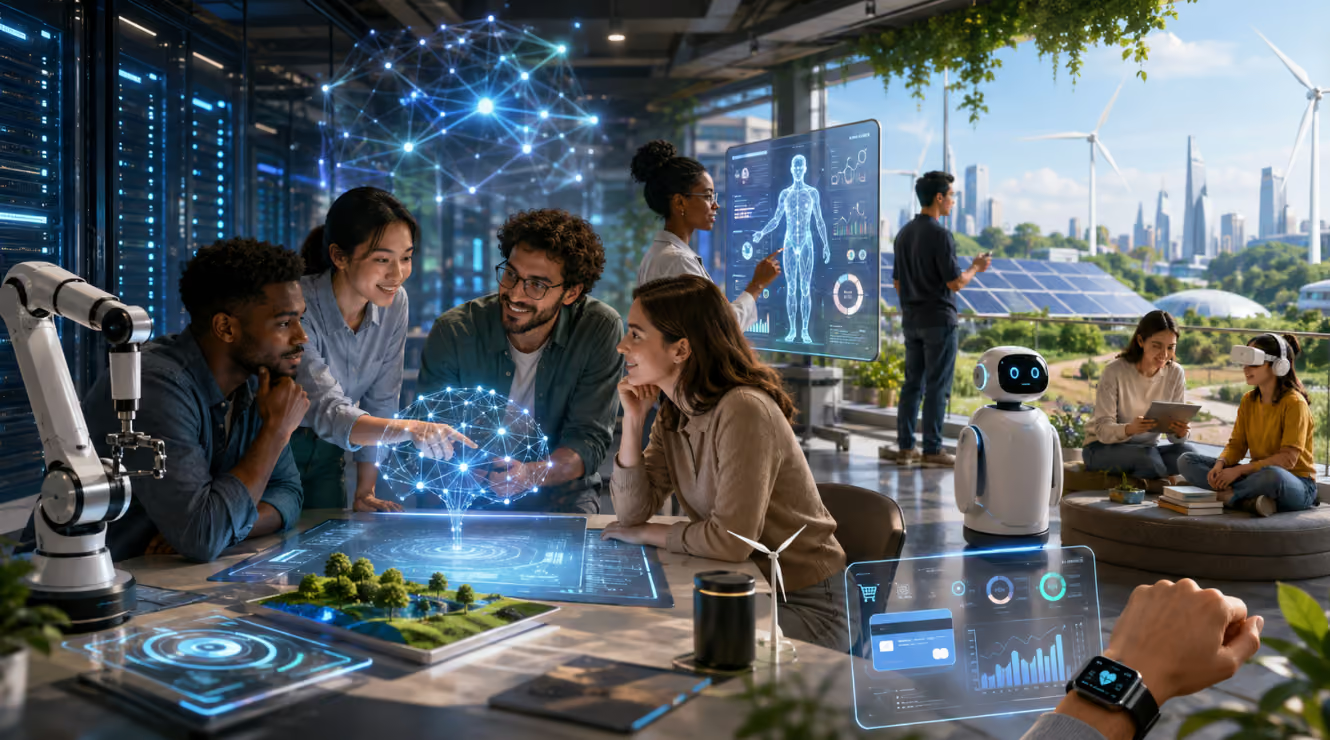
AI is reshaping education through AI tutors, virtual teachers and personalised learning systems that adapt lessons to individual student needs. From K–12 classrooms and homework support to university learning and test preparation, AI is making education more flexible and accessible. At the same time, it is raising important questions about academic integrity, privacy and the role of teachers, highlighting a future where human educators remain essential while AI strengthens personalised learning and support.
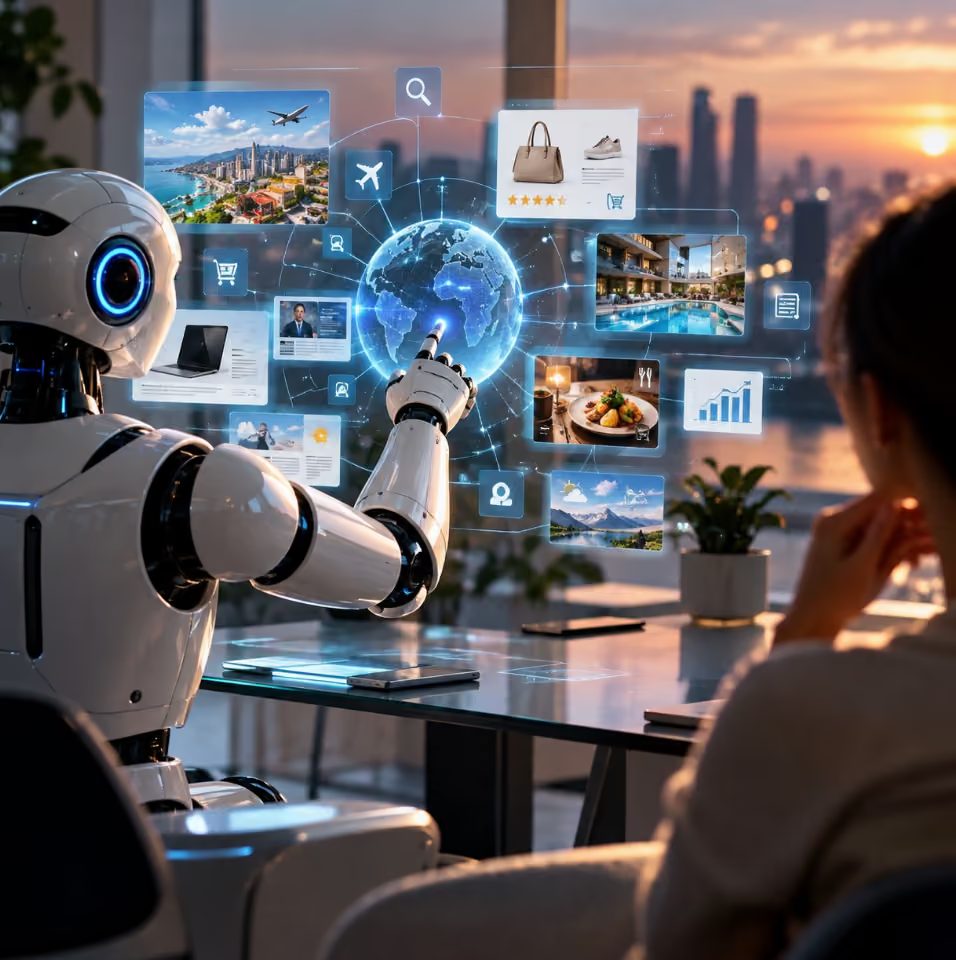
Digital marketing in 2026 is being shaped by AI, short-form video, personalization, social commerce, and increasingly conversational customer expectations. The strongest strategies do not simply add more technology or more channels; they connect useful data with relevant content and authentic human communication. Brands that use AI responsibly, create educational video, strengthen email relationships, simplify social purchasing, and continuously measure performance can improve engagement while building customer relationships that are more personal, responsive, and commercially effective.
Gaming and interactive media have evolved into a dominant force in global entertainment, driven by live-service models, cross-platform ecosystems, and cloud gaming innovations. The industry is expanding access, enhancing player engagement, and creating persistent digital experiences. Meanwhile, esports is gaining mainstream recognition, attracting large audiences and major investments. Together, these trends are transforming gaming into a connected, scalable, and culturally influential ecosystem that continues to redefine how people play, compete, and interact worldwide.
It highlights the key shifts reshaping the industry, from the rise of private content sharing and AI-driven personalization to the growing influence of emerging platforms and first-party data. The summary explores how search behavior is evolving, why content quality now outweighs volume, and how ROI transparency is becoming essential. Together, these trends point to a move toward more data-led, accountable, and trust-driven digital marketing strategies in 2026.
Top Banks in the Dominican Republic highlights the country’s leading financial institutions that play a vital role in driving economic growth, stability, and innovation. The article explores how major banks support businesses, empower consumers, expand financial inclusion, and adopt digital transformation. It also showcases their contributions to national development, international connectivity, and sustainable finance, positioning the Dominican banking sector as a key pillar of the nation’s evolving economy.
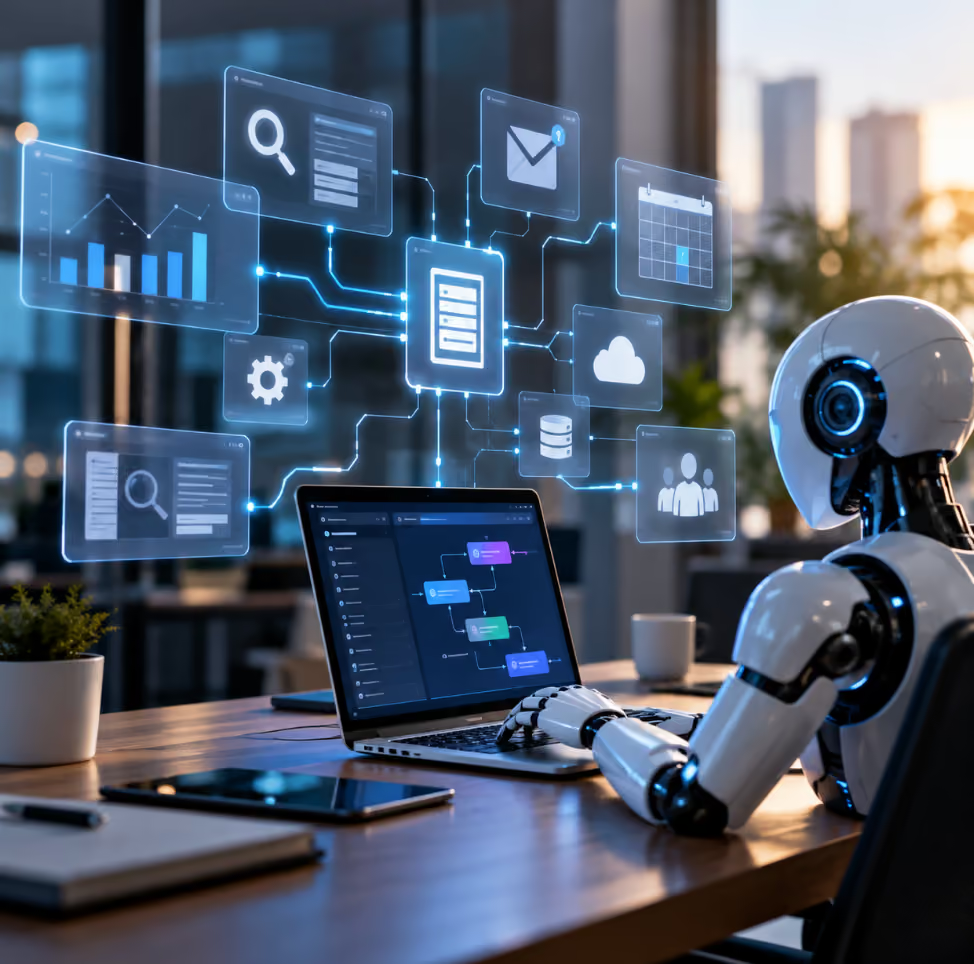
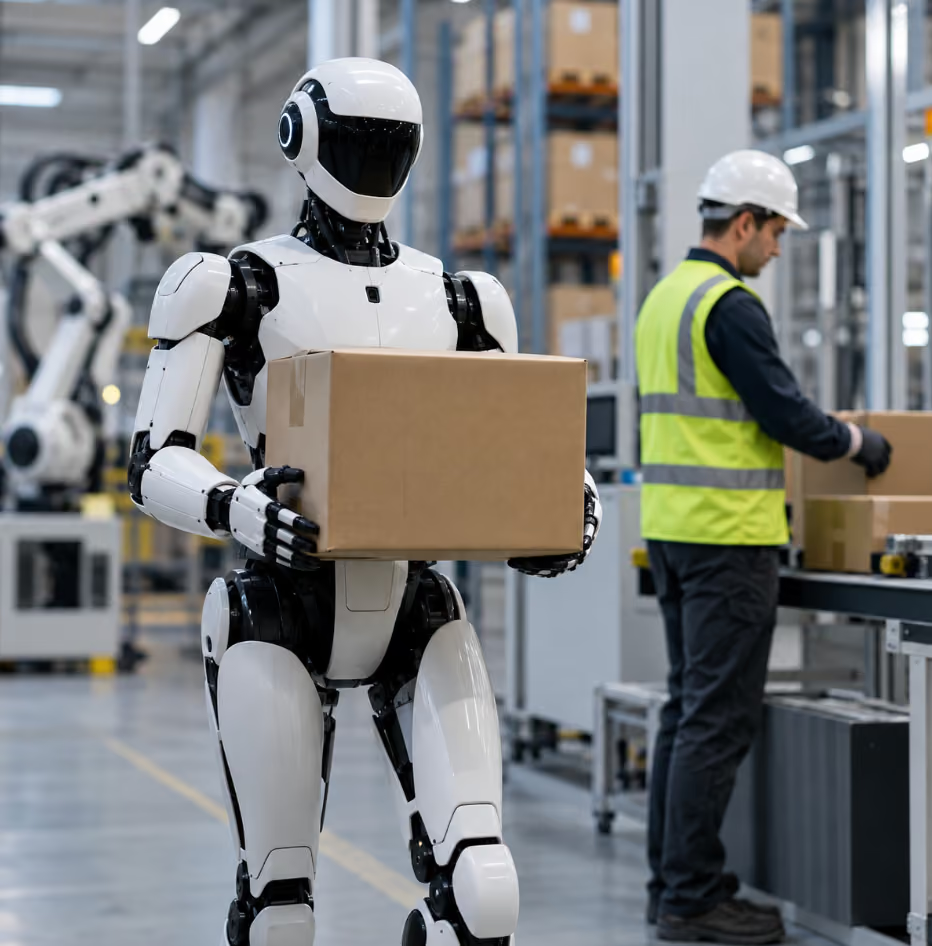
AI and robotics are rapidly moving beyond experimentation into practical business applications, creating a new Machine Economy. Intelligent robots, humanoids and automated systems are transforming manufacturing, healthcare, logistics, retail and restaurants by improving efficiency, precision and productivity. Advances in artificial intelligence, computer vision and autonomous decision-making are enabling machines to perform increasingly complex tasks, while countries and companies worldwide compete to lead the next generation of robotics, automation and human-machine collaboration across the global economy.
AI-native startups are reshaping the future of business in 2026 by building artificial intelligence into the core of their operations, products, and growth strategies. Unlike traditional startups that add AI later, these companies use automation, AI agents, data intelligence, and real-time decision-making from day one. With rising investor interest and rapid enterprise adoption, AI-native startups are creating leaner, faster, and more scalable business models across industries.
Customer experience is no longer a support function; it is a competitive strategy spanning every interaction a customer has with a brand. From website navigation and sales conversations to delivery, billing, service, and follow-up, each touchpoint influences loyalty. Personalization, customer feedback, and engaged employees help organizations reduce friction and respond to changing expectations. Businesses that systematically listen, improve, and empower employees can create experiences that strengthen satisfaction, retention, advocacy, customer value, and sustainable business growth.
LEGO’s transformation shows how a legacy brand can rediscover growth by returning to what customers value most. Facing challenges in the early 2000s, the company sharpened its focus on core play, creativity, storytelling, and community while expanding innovation through partnerships and fan participation. LEGO Ideas demonstrates this customer-led approach by allowing fan concepts to earn community support and enter review. The lesson is clear: research, focus, participation, and disciplined innovation can renew even iconic brands.
Our daily updates deliver a curated selection of top stories.