Stay informed with our newsletter.
.webp)


EN





The United States Department of State has decided to permanently close its consulate in Peshawar, Pakistan, marking a major change in the U.S. diplomatic presence in the region. The move reflects evolving security, operational, and strategic considerations. Services previously handled by the Peshawar consulate may be redirected to other U.S. diplomatic missions in Pakistan, including the embassy in Islamabad, while the U.S. reassesses its engagement and consular operations in the country.
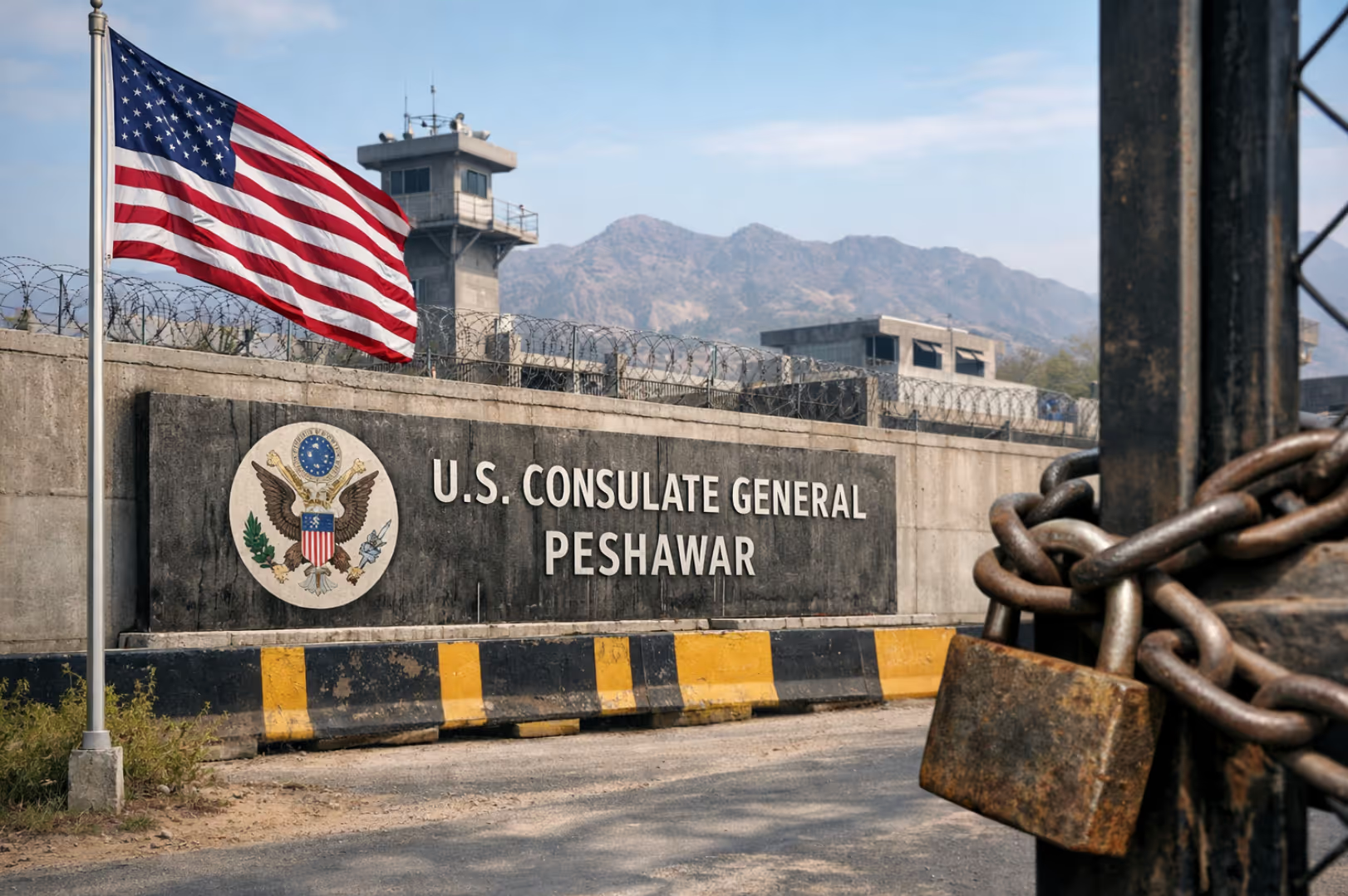
The United States Department of State has decided to permanently shut down its diplomatic mission in Peshawar, a city in northwestern Pakistan that sits close to the border with Afghanistan. For years, this consulate served as the nearest American diplomatic outpost to the Afghan frontier, making it strategically important for Washington’s regional engagement. Its location allowed the United States to maintain close oversight of developments in the border region, which has long been a focal point of geopolitical activity.
The mission played a particularly crucial role in the period surrounding the U.S.-led military intervention in Afghanistan that began after the September 11 attacks in 2001. During that time, the Peshawar facility became a key hub for coordination, planning, and logistical support. American officials and personnel used the site as a staging ground for diplomatic outreach, intelligence cooperation, and humanitarian initiatives tied to the broader regional mission.
In the years that followed, the consulate continued to serve as an operational base for a wide range of U.S. activities in the region. Its staff engaged with local authorities, monitored security developments, and supported projects related to economic development and public diplomacy. Because of its proximity to the Afghan border, the facility maintained an important role even after major military operations in Afghanistan began to wind down.
Despite its historical significance, Washington has now concluded that maintaining a permanent presence in Peshawar is no longer necessary. According to officials, the closure reflects a shift in diplomatic priorities and operational strategies rather than a sudden or reactive decision. By consolidating resources elsewhere, the State Department believes it can continue its work in Pakistan more efficiently.
The department informed the United States Congress earlier this week about its plan to shut down the mission permanently. In its communication to lawmakers, the agency explained that the move is expected to generate annual savings of around USD 7.5 million. Officials argued that the financial benefits would come without weakening Washington’s ability to pursue its policy objectives in Pakistan.
Diplomatic leaders also emphasized that American engagement with Pakistan will continue through other channels. The United States maintains its main diplomatic mission in Islamabad, where the Embassy of the United States, Islamabad coordinates bilateral relations and handles most diplomatic and consular activities. Additionally, the U.S. operates consulates in major cities such as Karachi and Lahore, ensuring continued presence across the country.
Officials say the decision to close the Peshawar post has been in discussion for quite some time. Internal reviews examining the costs, security conditions, and operational needs of overseas missions have been underway for more than a year. These evaluations were part of a broader effort to reassess the footprint of American diplomatic facilities around the world.
The review process gained momentum after the administration of Donald Trump began implementing measures aimed at reducing the size and expenses of the federal government. Various departments and agencies were encouraged to streamline their operations and eliminate facilities or programs that were no longer considered essential. The State Department’s global network of embassies and consulates naturally became part of that examination.
Within this context, the Peshawar consulate emerged as a candidate for closure. Analysts concluded that many of its functions could be absorbed by other diplomatic posts in Pakistan without causing significant disruption. Advances in communication technology and changes in regional priorities also made it easier to manage diplomatic activities from centralized locations.
Officials stressed that the decision is unrelated to the recent tensions in the Middle East involving Iran. Although the conflict has triggered demonstrations in several Pakistani cities, including Karachi and Peshawar, the closure of the consulate had already been under consideration long before these events unfolded.
In recent weeks, protests connected to the regional crisis have taken place in multiple urban centers across Pakistan. Demonstrators have expressed concern over the wider geopolitical situation and its implications for the region. As a precautionary measure, U.S. diplomatic missions temporarily limited or suspended some operations during periods of heightened unrest.
For instance, the American consulates in Karachi and Peshawar briefly halted routine services to ensure the safety of staff and visitors. Such temporary suspensions are not uncommon during times of political tension or public demonstrations, particularly when diplomatic facilities could become focal points for protests.
However, the permanent closure of the Peshawar consulate is a separate matter entirely. State Department officials have made it clear that the shutdown is part of an organizational restructuring effort rather than a response to current protests or security incidents.
Once the closure process is completed, the Peshawar facility will become the first U.S. diplomatic mission abroad to be fully shut down as a result of the department’s ongoing reorganization. While other embassies and consulates around the world have undergone staffing reductions or operational adjustments, very few have been eliminated altogether.
The decision highlights the evolving nature of diplomatic engagement in the modern era. Governments increasingly rely on flexible arrangements, regional hubs, and digital communication to maintain international relationships while controlling costs. In this environment, some traditional diplomatic outposts may gradually lose their strategic necessity.
Even so, the legacy of the Peshawar consulate remains significant. For decades, it served as a bridge between the United States and communities in Pakistan’s northwest, a region that has often been at the center of global security discussions. Diplomats stationed there worked closely with local leaders, civil society groups, and development organizations.
As the United States reshapes its diplomatic network, officials insist that cooperation with Pakistan will remain a priority. The relationship between the two countries spans security cooperation, trade, education, and cultural exchange. American representatives say these partnerships will continue through existing diplomatic missions and new forms of engagement.
While the closing of the Peshawar consulate marks the end of an important chapter in U.S. diplomacy in Pakistan, it also signals a broader transition in how Washington manages its global presence. The focus now is on efficiency, adaptability, and the ability to respond quickly to changing international dynamics.
For questions or comments write to contactus@bostonbrandmedia.com
Source: newsonair



-v3.jpg)


-v3-02.jpg)