Stay informed with our newsletter.
.webp)


EN





A multi-million dollar flood warning system near Mount Everest, once designed to protect thousands from glacial lake outburst floods, has fallen into disrepair after years of neglect. Key equipment has rusted or stopped functioning, leaving nearby communities vulnerable to sudden, potentially devastating floods. Experts warn that without urgent maintenance or replacement, the system’s failure could result in significant loss of life and property. The situation highlights broader concerns about sustainability, oversight, and long-term investment in critical climate adaptation infrastructure.
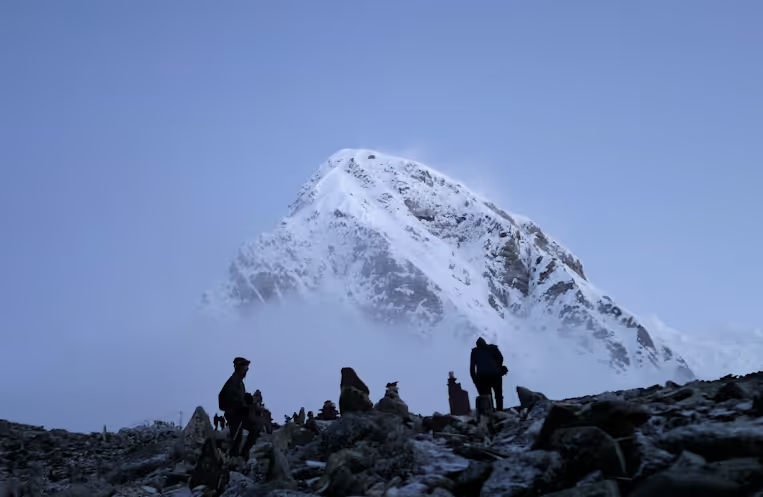
An early warning system built to protect communities in Nepal’s Everest region from catastrophic flooding is no longer reliable, officials say, raising concerns for thousands living downstream of a volatile glacial lake.
Nepalese authorities acknowledged that the multi-million dollar system originally supported by the United Nations has deteriorated after years without maintenance. The admission follows reports from Sherpa villagers who say inspections have not been conducted since 2016, when Imja Glacial Lake was partially drained to reduce flood risk.
Residents describe rusting siren towers, some leaning and close to collapse, and missing batteries believed to have been stolen. The system’s satellite link, which is meant to monitor lake levels and trigger mobile alerts, has also been inconsistent, according to Nepal’s Department of Hydrology and Meteorology (DHM).
Located more than 16,000 feet above sea level, Imja Lake was once considered one of the most dangerous glacial lakes in the Himalayas. A $3.5 million project a decade ago lowered its water level and installed the warning system meant to safeguard nearby communities.
But scientists warn the threat is growing again. Climate change is accelerating glacier melt across the Himalayas, causing lakes like Imja to expand and increasing the risk of sudden, destructive floods. A recent regional study found ice loss rates in the Hindu Kush Himalaya have doubled since 2000.
In the Everest region alone, at least five glacial lake outburst floods have occurred in the past 50 years. Communities in the potential path of a future flood say they no longer trust the system designed to protect them.
“We don’t expect to get any warning if the lake bursts,” said a local community leader, pointing to visible damage to siren towers in his village.
Another resident from Chhukung, the first settlement that would be hit by flooding, said locals have repeatedly asked officials to repair the system, with little response.
The risk extends beyond residents. The Everest region attracts more than 60,000 visitors annually, including trekkers and climbers, many of whom could be caught off guard in the event of a flood.
Government officials acknowledge the system’s shortcomings but cite a lack of funding as a key obstacle. Meteorologists say no budget has been allocated for maintenance, and proposals to involve hydropower companies downstream have yet to materialize.
Authorities also report technical issues with the monitoring station responsible for transmitting real-time data, further limiting their ability to send timely alerts.
Officials say efforts are underway to address the problems, including regulatory changes and renewed focus on Imja Lake after resources were diverted to other projects. Meanwhile, the United Nations Development Programme has secured $36 million for similar flood prevention initiatives elsewhere in Nepal, with an emphasis on long-term sustainability.
For many in the Everest region, those promises offer little reassurance.
Residents say they continue to live under the constant threat of disaster, questioning how a costly system meant to protect them has been allowed to fail.
For questions or comments write to contactus@bostonbrandmedia.com
Source: BBC



-v3.jpg)


-v3-02.jpg)