Stay informed with our newsletter.
.webp)


EN





AI-powered search and conversational interfaces are reducing website clicks by delivering answers directly within platforms. This shift challenges traditional SEO models focused on rankings and traffic. Brands must now optimize for authority, structured credibility, and referenceability within AI ecosystems. Visibility depends less on keyword dominance and more on becoming a trusted source in knowledge networks shaping digital discovery.
For more than twenty years, digital visibility was governed by a simple principle:
Rank high.
Get the click.
Convert the visitor.
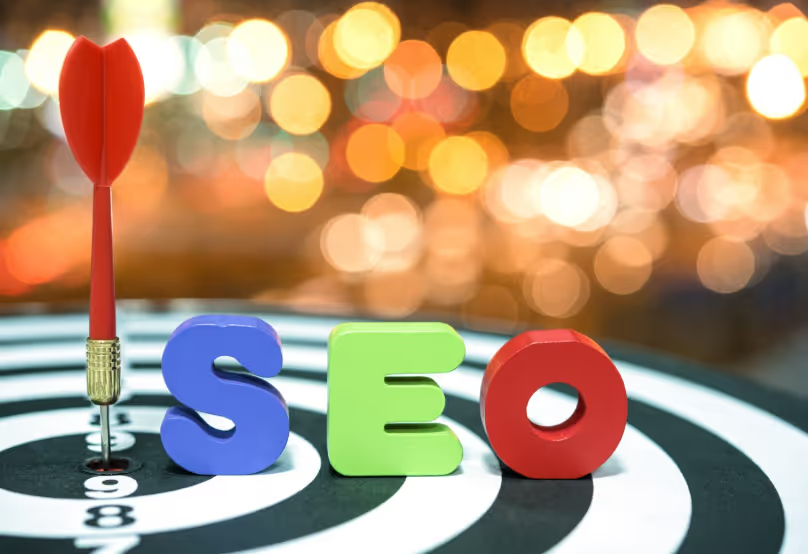
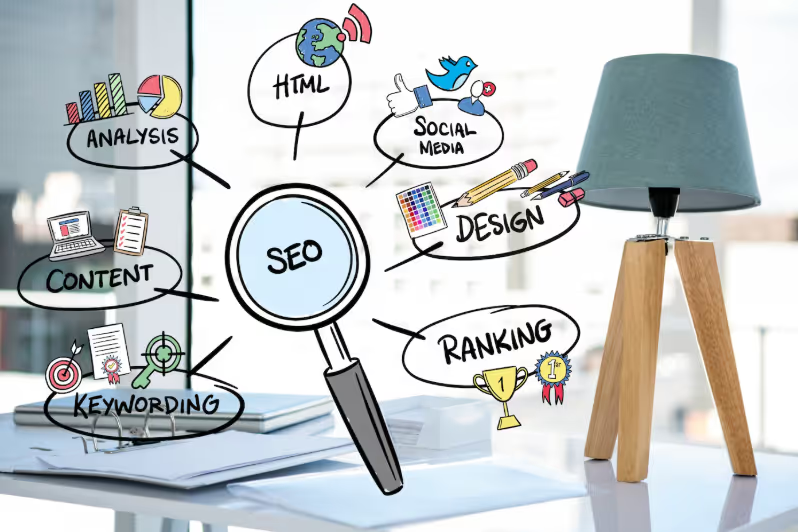
Search engine optimization became a technical discipline focused on keywords, backlinks, metadata, and domain authority. Traffic was the objective. Visibility was measured by position.
In 2026, that model is weakening.
Customers are no longer just searching. They are asking AI systems for answers.
And increasingly, they receive those answers without ever visiting a website.
Welcome to the era of zero-click marketing.
AI-powered search experiences now summarize information directly within results pages. Conversational interfaces generate synthesized answers pulled from multiple sources. Product comparisons are delivered instantly. Research reports are condensed into structured insights.
The user’s journey is shorter.
But the brand’s challenge is greater.
If customers receive answers without clicking through, traffic declines, even when your content informs the response.
This represents a structural shift in how authority is established.
Visibility is no longer about ranking first.
It is about being referenced.
AI systems function as gatekeepers - interpreting, summarizing, and presenting information on behalf of users.
Brands must adapt accordingly.
Traditional SEO optimized for discoverability through keyword alignment.
Zero-click environments prioritize authority and credibility.
AI models are trained to surface information that appears:
Well-structured
Consistently cited
Factually supported
Contextually reliable
This shifts the strategic focus from tactical optimization to intellectual positioning.
Brands that invest in research-backed thought leadership, structured data architecture, and credible external validation are more likely to be surfaced by AI systems.
Those relying on superficial keyword tactics may experience diminishing returns.
Recent ecosystem developments reinforce the magnitude of this transformation:
• Advanced reasoning models are now capable of synthesizing long-form content into conversational summaries, reducing reliance on direct site visits.
• Enterprise AI systems increasingly integrate structured knowledge graphs, prioritizing verified data sources over loosely formatted content.
• Voice AI platforms with near-instant latency are accelerating conversational search adoption, further compressing the traditional click funnel.
The implication is clear: AI systems are becoming the first interpreter of brand information.
Control over the customer journey is shifting upstream.
For years, traffic volume served as a proxy for marketing success.
In zero-click environments, traffic alone is an incomplete indicator.
Brands may influence purchasing decisions without receiving direct visits. AI systems may cite data from research reports without generating measurable clicks.
This creates a new performance challenge:
How do you measure influence when the interaction is mediated?
The answer lies in reframing visibility from exposure to referenceability.
Are AI platforms pulling from your data?
Are your insights cited in generated responses?
Is your brand positioned as a reliable source within structured knowledge systems?
These metrics may not resemble traditional dashboards, but they increasingly determine discoverability.
To compete in zero-click ecosystems, brands must rethink content architecture.
Unstructured blog posts are insufficient.
AI systems prioritize content that is:
Clearly formatted
Data-supported
Logically structured
Consistently updated
This demands tighter collaboration between marketing, data teams, and subject-matter experts.
Thought leadership must be built on defensible research. Claims must be traceable. Statistics must be verifiable.
Authority is no longer aesthetic.
It is structural.
Organizations that assume traditional SEO strategies will continue delivering consistent returns may face gradual erosion.

As AI systems absorb more informational queries directly into results interfaces, informational traffic declines first.
Transactional and branded searches remain resilient, but even these are increasingly mediated through recommendation systems and conversational interfaces.
Brands that fail to establish authority within AI ecosystems risk invisibility, not because they lack quality, but because they lack structural integration.
To remain competitive, leaders must shift from optimization thinking to ecosystem thinking.
Key priorities include:
Building proprietary research assets
Developing citation-worthy insights
Structuring content for machine readability
Investing in authoritative partnerships
Ensuring data transparency and traceability
The objective is not simply to rank.
It is to become a trusted node within the AI knowledge network.
When AI systems answer questions about your industry, your brand should be part of the underlying fabric.
In a world where generative AI can replicate tone and style instantly, intellectual authority becomes harder to copy.
Original research.
Verified data.
Longitudinal analysis.
Credible institutional voice.
These assets create defensible differentiation.
While AI can summarize publicly available content, it cannot easily replicate proprietary insight.
This is where brand equity intersects with knowledge equity.
Organizations that invest in structured authority today build long-term discoverability resilience.
Executives must recognize that zero-click dynamics are not a temporary anomaly. They are a structural evolution.
Questions leaders should consider:
Is our content designed for AI interpretation?
Are we cited externally by credible institutions?
Do we own proprietary data that strengthens our authority?
How do we measure influence beyond traffic?
These considerations extend beyond marketing.
They intersect with research investment, brand strategy, and governance.
The death of traditional SEO is not the death of visibility.
It is the redefinition of it.
In 2026, the brands that win are not those that dominate keyword rankings.
They are those that dominate context.
When AI systems summarize your industry, your perspective should inform the synthesis.
When customers ask questions, your brand should underpin the answer — even if the click never comes.
Because in zero-click ecosystems, influence precedes traffic.
And authority precedes influence.
Visibility is no longer about being seen first.
It is about being trusted enough to be referenced.
For questions or comments write to contactus@bostonbrandmedia.com



-v3.jpg)


-v3-02.jpg)