Stay informed with our newsletter.
.webp)


EN





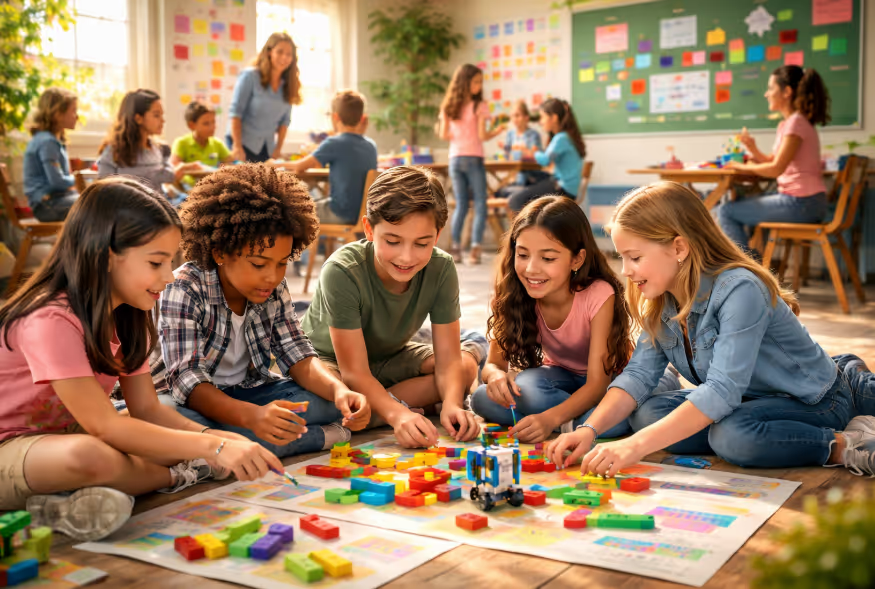
A growing number of home-schooled children are now attending social learning sessions, highlighting parents’ efforts to balance personalized education with structured peer interaction. These sessions provide opportunities for collaboration, group activities, and skill development beyond academics. The trend reflects rising awareness of the importance of social exposure, communication skills, and community engagement alongside home-based learning, as families seek a more holistic approach to their children’s overall development.
“The world can feel overwhelming,” she says, “and if children aren’t equipped to face it, that uncertainty can quickly turn into anxiety and fear.”
In Nottinghamshire, former primary assistant headteacher Deb Hadden now dedicates her time to supporting children who are educated at home. During her years in mainstream schools, she observed that many pupils struggled emotionally and socially in ways traditional classrooms were not resourced to address.
She believes the ripple effects of the Covid-19 pandemic are still being felt, more time online, fewer in-person connections, and limited opportunities to build meaningful relationships face to face. In January 2021, Deb launched the Ethereal Learning Foundation in Nottingham, initially delivering mental health workshops within schools. By April 2024, she had opened her own learning centre in Mapperley, later relocating to St Mary’s Church Family Centre in Arnold to continue expanding her sessions.
Twice a week, she hosts drop-off gatherings where home-educated children come together to play, collaborate and explore. What began with just three attendees has grown to 55, mirroring a wider rise in home education across Nottinghamshire. By law, parents must ensure their child receives a full-time education from age five. However, families who choose home education are not required to follow the national curriculum, deliver formal lessons or conduct structured assessments. Government guidance simply states that education must suit the child’s age and ability, allowing them to make appropriate progress.
Ethereal’s sessions welcome children aged four to 12. Because each child attends fewer than 15 hours per week, the provision is not classified as a school and does not fall under Ofsted inspection. Deb describes her approach as rooted in play, projects and curiosity. She introduces themes, but the direction of learning is largely shaped by the children themselves. While elements of maths and writing are woven in, academic instruction remains the responsibility of parents. Her focus, she explains, is nurturing social confidence and emotional resilience.
Sara, who home-educates her eight-year-old daughter Ellie, says leaving school was a carefully considered decision. After just a few months, it became clear that the traditional environment did not suit her daughter. Following extensive research and many late-night conversations, the family chose to educate Ellie at home. Their days include reading, writing and structured study, balanced with visits to National Trust sites, gymnastics classes and swimming. Although not a qualified teacher, Sara has long worked with children and immersed herself in understanding different learning approaches.
Ellie is one of 2,178 children currently home-educated in Nottinghamshire, up from 1,839 the previous academic year, an increase of just over 18%.
Councillor Hana John, the county council’s cabinet member for education and SEND, emphasizes that families are legally entitled to choose how their children are educated, provided it meets statutory requirements. She notes that anxiety, mental health challenges, and philosophical beliefs are among the reasons some parents opt for home schooling.
A former teacher, she maintains that mainstream schools remain the best fit for most children, though she acknowledges that outcomes depend heavily on a family’s capacity and support network. She has seen parents become overwhelmed by the organisational demands of home education. In her view, the most successful arrangements are those where children are surrounded by strong community networks, ensuring they do not miss out on peer interaction and enrichment experiences.
Nationally, government data published on 15 January shows the number of home-educated children rose from 111,700 in autumn 2024 to 126,000 in autumn 2025.
Pepe Di’lasio, general secretary of the Association of School and College Leaders, has voiced concern about the upward trend. He points out that schools offer far more than academic instruction — they provide structure, early identification of mental health concerns, and access to specialist support. While he recognises that some families deliver high-quality home education, he believes traditional schooling remains the most suitable setting for the majority.
Ofsted has echoed similar sentiments. While acknowledging that many parents provide excellent education at home, the inspectorate is concerned that some families feel compelled into the decision because they believe no local school can meet their child’s needs. Its renewed inspection framework places stronger emphasis on inclusion and ensuring schools serve all pupils effectively.
Proposals within the Children’s Wellbeing and Schools Bill would require local authorities to assess a child’s home learning environment within 15 days of them being added to a “children not in school” register. The Department for Education states that although most children thrive best in school, it recognises home education can be appropriate in certain circumstances. Upcoming reforms, including measures outlined in the Schools White Paper, aim to ensure every child, regardless of setting, has the opportunity to achieve and flourish.
For questions or comments write to contactus@bostonbrandmedia.com
Source: BBC



-v3.jpg)


-v3-02.jpg)