Stay informed with our newsletter.
.webp)


EN





A recent report claims that dire wolves, once considered extinct for thousands of years, may have been brought back through advanced scientific techniques. According to the findings, these revived animals are reportedly exhibiting natural behaviors, including hunting in coordinated packs similar to their ancient ancestors. While the development has sparked excitement and debate, experts urge caution, emphasizing the need for verification and ethical consideration surrounding de-extinction efforts and wildlife reintegration.
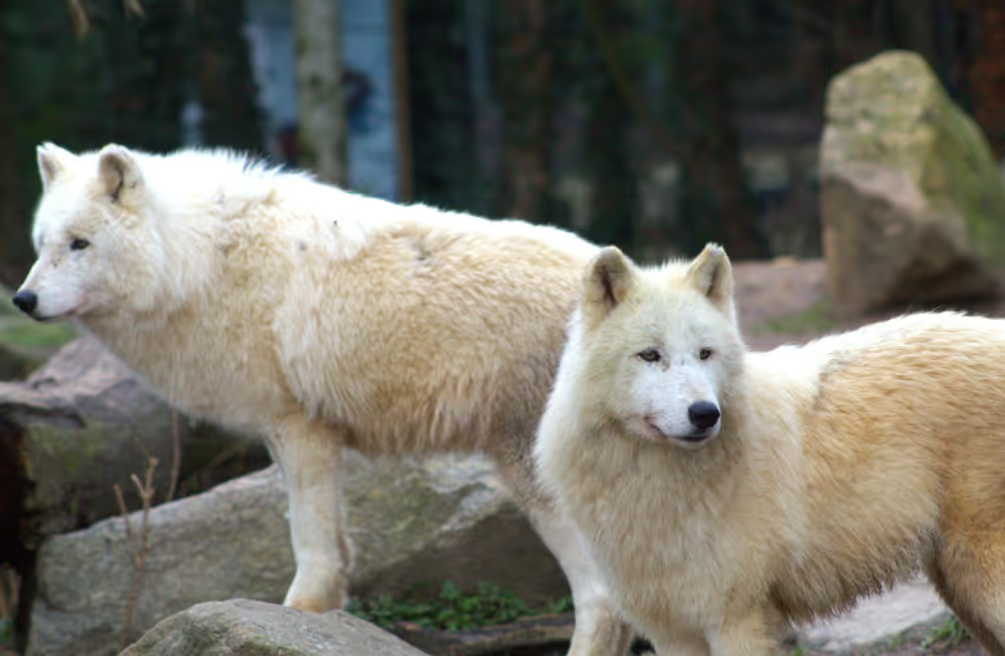
Colossal Biosciences has announced that the dire wolves it unveiled in 2025 are now actively hunting together as a coordinated trio.
The Texas-based biotech startup, which captured global attention with its ambitious de-extinction initiative last year, revealed that three of its recreated wolves have begun functioning as a structured hunting unit. During the inauguration of its new Dallas headquarters, the company screened footage showing the fully grown animals trekking across snow-covered landscapes and feeding side by side, as reported by ScreenRant.
The company described this development as a major breakthrough in its mission to revive the extinct species, noting that cooperative hunting reflects both biological development and emerging social bonds.
“They’ve clearly figured out how to track prey,” said Matt James, Colossal’s chief animal officer. “But when it comes to finishing the job, they’re still learning, one rabbit came back very much alive.”
According to James, the trio, Romulus, Remus, and Khaleesi, have become adept at chasing rabbits and are now gradually attempting to target larger animals.
He shared his excitement about observing what he called the first truly mature dire wolves of the modern era. The animals recently underwent comprehensive medical evaluations, including CT scans and MRI tests, all of which confirmed they are thriving.
Health reports have given the team confidence to continue expanding the group cautiously. However, James emphasized that growth must be carefully controlled before introducing additional wolves into the pack.
He described himself as the voice of restraint amid enthusiastic scientists eager to accelerate breeding efforts. Practical considerations such as space, staffing, and facility capacity ultimately determine how quickly the population can grow.
The project first drew attention in April last year when the company released footage of wolf pups it identified as dire wolves, a species believed to have disappeared more than 12,000 years ago. These animals were created using a combination of grey wolf DNA and reconstructed dire wolf genetic material.
Scientists carried out 20 genetic modifications across 14 genes to replicate the extinct predator’s physical characteristics. The resulting wolves are nearly 20 percent heavier than typical grey wolves and display hallmark traits such as thick white coats, broader skulls, and a more robust frame.
Colossal Biosciences says its broader goal is to apply advanced genetic engineering to conservation challenges, including protecting critically endangered species like the red wolf and the northern white rhino. Still, the initiative continues to fuel debate, with critics questioning whether such efforts truly qualify as “de-extinction” and raising ethical concerns about genetic intervention.
For questions or comments write to contactus@bostonbrandmedia.com
Source: NDTV



-v3.jpg)


-v3-02.jpg)