Stay informed with our newsletter.
.webp)


EN





Donald Trump has announced plans for a new oil refinery in the United States with investment support from Reliance Industries. The project is expected to strengthen domestic energy production, expand refining capacity, and create new jobs. The partnership highlights growing cooperation between the U.S. energy sector and global investors while aiming to improve fuel supply stability and support economic growth through large-scale infrastructure development.
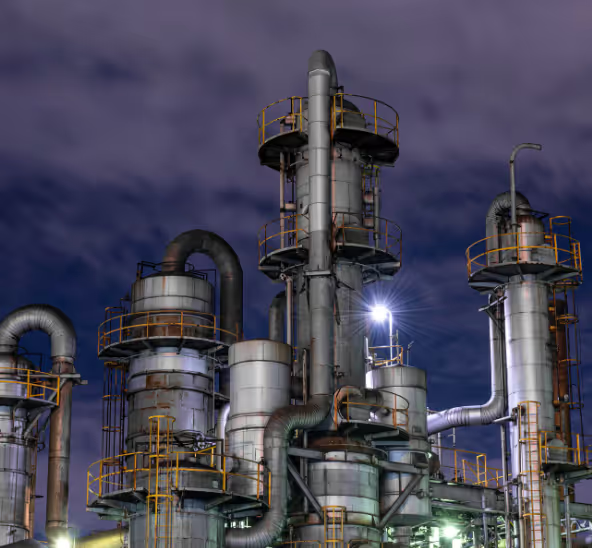
The administration of Donald Trump has been strongly promoting a strategy focused on achieving American energy dominance. This approach encourages the expansion of domestic production across key energy resources such as oil, natural gas, and coal in an effort to strengthen the country’s energy independence and global influence.
In line with that vision, Trump recently revealed that the United States could see its first newly built oil refinery in five decades. The ambitious project is expected to move forward with financial backing from Reliance Industries, one of India’s largest energy and petrochemical companies.
Sharing the news on the social media platform Truth Social, Trump announced that a company called America First Refining plans to establish the nation’s first new refinery in 50 years. According to his post, the facility will be located in Brownsville and is being positioned as a landmark project aimed at revitalizing America’s refining capacity.
The announcement comes at a time when the White House is attempting to calm concerns over rising fuel prices linked to escalating tensions surrounding the Strait of Hormuz and the ongoing conflict involving Iran. The administration is currently reviewing multiple strategies to ease pressure on energy markets, including releasing oil from the nation’s strategic emergency reserves and potentially deploying military escorts to safeguard tankers traveling through the vital shipping corridor.
Interestingly, the refinery project is not entirely new. It traces its roots to earlier development work undertaken by Element Fuels. Back in June 2024, the company reported that it had finished preparing the construction site and secured all necessary permits required to build a facility capable of refining approximately 160,000 barrels of crude oil per day.
Since then, developments appear to have shifted. The website previously associated with Element Fuels now redirects to the online platform of America First Refining, the company Trump highlighted in his announcement as the new entity responsible for delivering the refinery project.
According to a statement released Tuesday by America First Refining, construction preparations are progressing quickly. The company expects to begin groundbreaking activities during the second quarter of this year. In addition, it has already secured a long-term buyer for the fuels the facility will produce.
The agreement, which spans two decades, has reportedly been signed with Reliance Industries, ensuring a stable market for the refinery’s output once operations begin. This partnership highlights growing cross-border collaboration within the global energy sector.
Representatives from Reliance Industries were not immediately available to comment on the arrangement. Meanwhile, officials from the U.S. Department of Energy directed inquiries to the White House, which has yet to provide further clarification about the project or its broader policy implications.
Trump’s push for expanded energy infrastructure is part of a broader effort to strengthen the country’s position as a global energy powerhouse. Over the past fifteen years, the United States has dramatically increased its crude oil production, largely driven by the rise of shale drilling technologies that unlocked vast reserves across the country.
Despite this production boom, America’s refining network tells a different story. Much of the country’s refinery infrastructure is decades old, and several facilities have permanently shut down in recent years. This has created challenges in processing capacity, even as crude output continues to climb.
The proposed Brownsville facility aims to address part of that gap. America First Refining stated that the plant will be designed specifically to process crude derived entirely from U.S. shale oil sources, reinforcing the administration’s focus on utilizing domestic energy resources.
Building a brand-new refinery in the United States, however, has historically proven to be extremely difficult. Projects of this scale face enormous financial requirements, lengthy regulatory approval processes, and frequent opposition from environmental groups.
Past attempts highlight these challenges. In the mid-2000s, for example, a proposed $2.5 billion refinery project led by Arizona Clean Fuels Yuma aimed to construct a facility south of Phoenix. The plant was intended to process crude imported from either Mexico or Canada.
Despite initial enthusiasm, the plan ultimately stalled after developers struggled to secure sufficient funding to move the project forward.
The Brownsville initiative now stands as one of the most significant attempts in decades to build a new refinery from the ground up in the United States. If completed as planned, it could mark a turning point for the country’s aging refining infrastructure while strengthening ties between American energy development and international investment partners.
For questions or comments write to contactus@bostonbrandmedia.com



-v3.jpg)


-v3-02.jpg)