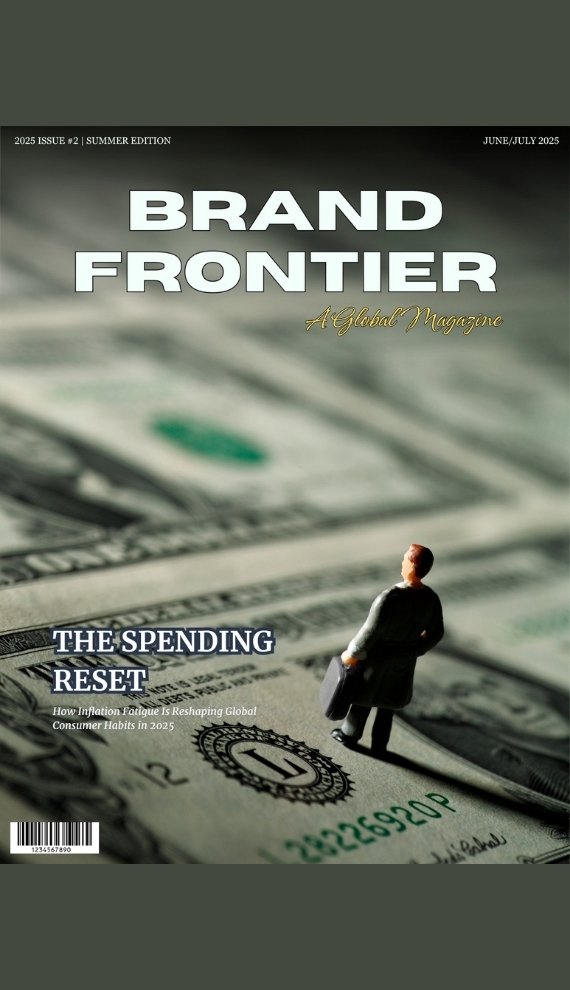
Stay informed with our newsletter.
.webp)


EN





The global economic outlook reflects a period of stable but restrained growth, shaped by persistent structural pressures. While inflation has moderated and GDP growth remains steady across major economies, challenges such as wage costs, high debt levels, geopolitical trade tensions, and regionalized supply chains continue to influence markets. Businesses are operating in an environment that rewards resilience, strategic clarity, and strong brand positioning over aggressive expansion.

As we move deeper into 2026, the global economy finds itself in an unusual but increasingly familiar position: neither booming nor collapsing. Instead, it is operating in a state of managed stability, shaped by structural shifts that are redefining how growth is created, sustained, and valued.
Unlike previous cycles marked by sharp expansions or sudden contractions, the current environment is characterized by moderation, caution, and recalibration. Businesses, investors, and policymakers are navigating a world where uncertainty is persistent, but no longer paralyzing.
From a macroeconomic standpoint, 2026 reflects steady, if unspectacular, momentum.
Global GDP growth is projected to hover around 3.2 - 3.4%, providing enough expansion to support consumption and investment without triggering overheating. The United States continues to grow at a resilient 2.3 - 2.5%, supported by consumer spending, productivity gains, and sustained investment in technology and infrastructure.
Emerging markets, meanwhile, are once again outperforming developed economies. Countries across Asia, parts of Latin America, and select regions in Africa are benefiting from demographic advantages, rising domestic consumption, and growing participation in global value chains. This divergence reinforces a long-term shift in economic gravity away from traditional Western centers toward faster-growing emerging economies.
Inflation, which dominated economic narratives in the early 2020s, has largely moderated across major markets. However, this does not mean price pressures have disappeared. Wage growth, energy costs, and debt servicing expenses remain elevated, placing constraints on both corporate margins and government budgets. The result is a fragile equilibrium: inflation is contained, but vulnerability persists.
While headline indicators suggest stability, deeper structural forces are reshaping the economic landscape. These tensions are not cyclical, they are transformational.
Supply chains are regionalizing.
The era of hyper-globalized, cost-optimized supply networks is giving way to systems designed for resilience. Companies are diversifying suppliers, nearshoring production, and building redundancy into logistics networks. This shift improves reliability but often increases costs, reinforcing the need for operational efficiency and pricing discipline.
Trade is increasingly shaped by geopolitics.
Trade flows are no longer governed solely by comparative advantage. Strategic considerations, national security, energy independence, technological sovereignty, now play a central role. Tariffs, export controls, and regulatory alignment are reshaping cross-border commerce, forcing businesses to adapt to a more fragmented global market.
Capital investment is shifting priorities.
Instead of capacity expansion alone, capital is flowing into automation, artificial intelligence, digital infrastructure, and operational resilience. These investments are designed to protect margins, manage labor constraints, and future-proof operations rather than chase rapid top-line growth.
Together, these dynamics create an environment of structural tension: growth continues, but the rules governing growth have fundamentally changed.
In a moderate-growth economy, strategic discipline matters more than scale. Markets in 2026 are not rewarding aggressive expansion or speculative bets; they are rewarding clarity, consistency, and credibility.
Businesses that demonstrate operational stability, prudent capital allocation, and clear strategic direction are outperforming those that pursue growth at any cost. In this environment, execution matters more than ambition, and resilience matters more than speed.
Cost pressures, particularly from wages, financing, and compliance, are forcing companies to prioritize productivity and efficiency. At the same time, customers are increasingly value-conscious, selective, and informed. This combination raises the stakes for differentiation and trust.
One of the most underappreciated consequences of economic moderation is the growing importance of intangible assets, especially brand equity.
Historically, companies with strong brands outperform the broader market by 20 - 30% during periods of economic uncertainty. This trend is becoming even more pronounced in 2026.
Strong brands act as a buffer against volatility in several ways:
In a world where growth is incremental rather than explosive, brand strength becomes a competitive multiplier. It allows companies to defend market share, protect margins, and maintain relevance without relying solely on aggressive expansion.
From a branding lens, 2026 is less about visibility and more about meaning. Consumers and stakeholders are increasingly skeptical of hype, discount-driven tactics, and short-term positioning. What resonates instead is clarity of purpose, consistency of message, and credibility of action.
Brands that communicate stability, transparency, and long-term commitment are better positioned to thrive. This does not mean avoiding innovation; it means aligning innovation with trust. In a structurally tense economy, coherence matters more than novelty.
For B2B organizations in particular, brand reputation is closely tied to reliability, governance, and long-term partnership value. Decision-makers are prioritizing vendors and partners who demonstrate resilience and strategic foresight, not just cost advantages.
The economic outlook for 2026 is best described as stable but structurally constrained. Growth is present, inflation is manageable, and financial systems are functioning, but the underlying rules of global commerce are evolving.
This is not an environment that rewards complacency. Nor is it one that favors reckless expansion. Instead, it favors organizations that understand the new balance between efficiency and resilience, growth and stability, scale and trust.
For leaders, the challenge is clear: adapt to structural change without sacrificing long-term vision. For brands, the opportunity is equally clear: in a world of persistent uncertainty, trust is the ultimate currency.
In 2026, stability is not the absence of tension, it is the ability to perform despite it. And for businesses that invest in strong brands, disciplined strategy, and resilient operations, this period of moderated growth may prove to be a powerful foundation for long-term advantage.
For questions or comments write to contactus@bostonbrandmedia.com



-v3.jpg)


-v3-02.jpg)