Stay informed with our newsletter.
.webp)


EN





Airlines around the world are cancelling and rerouting flights across the Gulf region as the ongoing war raises safety concerns in regional airspace. Flights to and from countries such as the United Arab Emirates and Bahrain have been disrupted as carriers avoid flying through conflict zones. Several routes are being diverted to safer corridors, resulting in longer travel times, delays, and cancellations, leaving many passengers stranded and causing major disruption to global air travel.
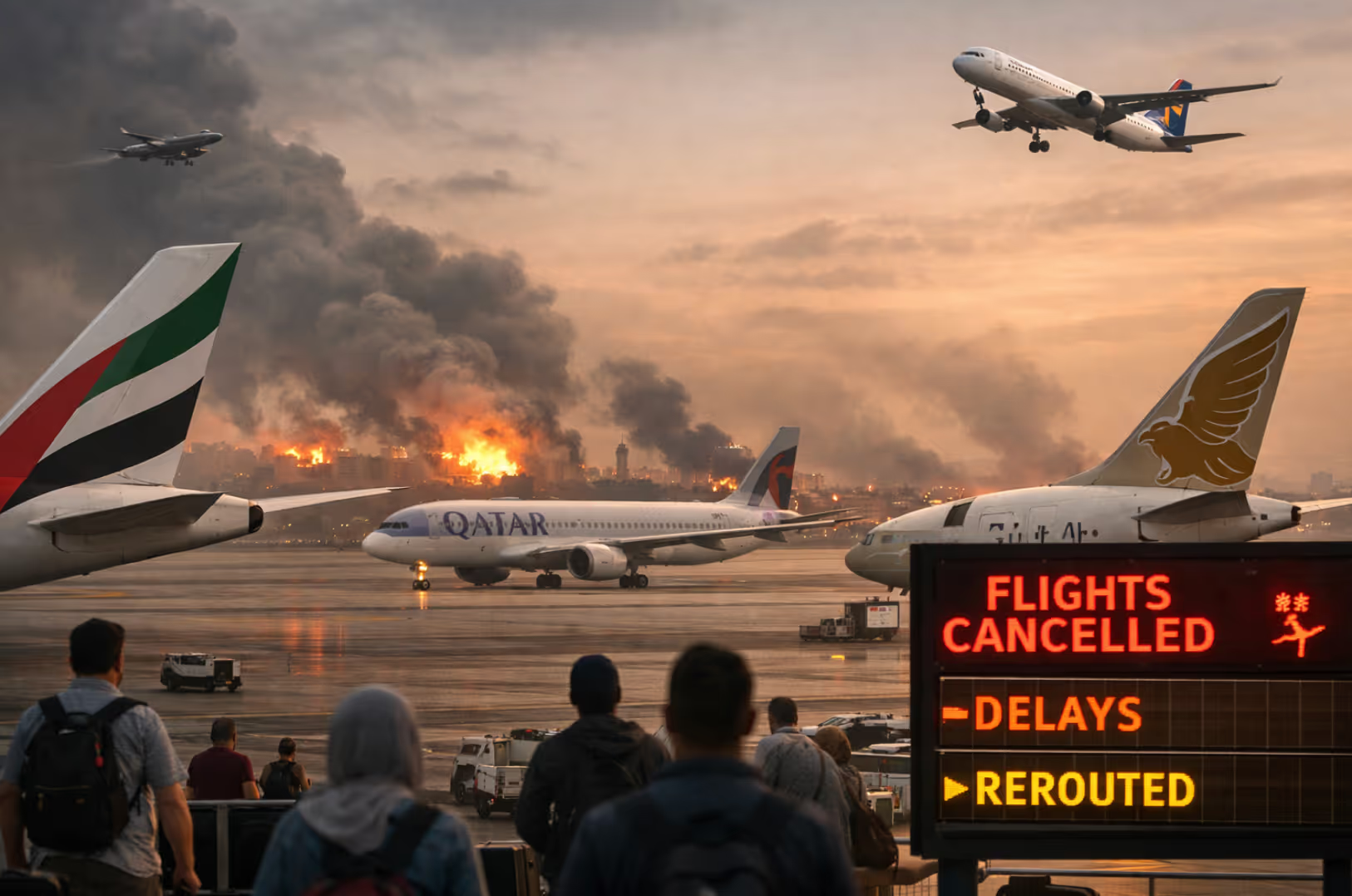
The escalating war in the Middle East has triggered massive disruption in global aviation, forcing airlines to cancel or reroute flights across the Gulf region. As tensions intensified and several countries closed their airspace, airlines suspended operations to major destinations including cities in the United Arab Emirates, Bahrain, Qatar, and Saudi Arabia. The ongoing conflict has created one of the most significant aviation disruptions in recent years, leaving thousands of passengers stranded and forcing airlines to make rapid adjustments to ensure safety.
The aviation chaos began after military strikes and retaliatory attacks escalated tensions in the region, prompting governments to close portions of their airspace for security reasons. Several countries across the Middle East, including the United Arab Emirates, Qatar, Bahrain, Kuwait, and Israel, temporarily restricted or closed their airspace to commercial aircraft as the situation deteriorated.
With missiles, drones, and military aircraft active in the region, civil aviation authorities determined that normal commercial flight operations posed unacceptable risks. As a result, airlines were forced to suspend flights or divert them away from potentially dangerous zones.
These sudden closures disrupted thousands of scheduled flights within hours. Aviation data indicates that more than 40,000 flights were cancelled across the Middle East within days of the conflict escalating, creating severe travel chaos across global air routes.
Airlines based in the Gulf, many of which operate some of the world’s busiest international hubs, were among the most affected. Major carriers such as Emirates, Etihad Airways, and Qatar Airways suspended numerous flights as airspace restrictions spread across the region.
Dubai, Abu Dhabi, and Doha normally serve as key transit hubs connecting Europe, Asia, Africa, and Australia. However, the war forced airlines to pause large portions of their schedules while authorities assessed safety conditions. Emirates temporarily halted most scheduled flights from Dubai while prioritizing limited repatriation services for stranded passengers. Meanwhile, Etihad Airways resumed only a restricted number of flights to selected destinations once some airspace corridors reopened.
Qatar Airways also reduced its operations drastically, operating only limited services under strict approval from aviation authorities as Qatar gradually reopened parts of its airspace for emergency flights.
The disruption has not been limited to regional carriers. International airlines from Europe, Asia, and North America have also cancelled or rerouted flights to avoid the conflict zone. Several major airlines, including British Airways, Lufthansa, Air France, KLM, and Cathay Pacific, have either suspended flights to Gulf cities or altered routes to bypass the region entirely.
British Airways, for example, suspended services to several Middle Eastern cities including Dubai, Abu Dhabi, Bahrain, and Doha, citing security concerns and ongoing regional instability. Similarly, Cathay Pacific cancelled some routes and warned that the disruption could significantly affect long-haul travel between Europe and Asia, where Gulf airports typically serve as key transit points. These cancellations have created ripple effects across global aviation networks, affecting routes far beyond the Middle East.
For flights that have continued operating, airlines have been forced to reroute aircraft around the conflict area. Instead of flying directly across Middle Eastern airspace, many flights are now taking longer paths through Central Asia, the Mediterranean, or southern routes over the Arabian Sea.
While these detours allow airlines to continue operating safely, they also significantly increase flight times and fuel costs. Some long-haul routes between Europe and Asia now take several hours longer than usual. The rerouting has also intensified congestion in alternative air corridors, putting additional pressure on airports and air traffic control systems in surrounding regions.
Several airports across the Gulf have experienced major operational disruptions due to the conflict. Airports in Dubai, Abu Dhabi, Doha, and Bahrain temporarily reduced or halted operations as authorities monitored the security situation. In some cases, flights heading to these airports were diverted to other destinations, leaving passengers stranded far from their original arrival points.
In Bahrain, national carrier Gulf Air suspended flights after the country temporarily closed its airspace, grounding aircraft until authorities determined that it was safe to resume operations. Even airports outside the Gulf have felt the impact. In India, for example, multiple flights to Gulf destinations were cancelled due to the ongoing disruptions and airspace limitations.
The large-scale cancellations have left thousands of passengers stranded in airports across the Middle East and beyond. Many travelers have faced delays lasting several days while airlines attempt to reorganize schedules and provide alternative routes. Airlines have begun operating special repatriation flights to help stranded passengers return home. However, limited airspace access and operational restrictions mean that these flights are operating at reduced capacity.
Travelers have also reported difficulty finding alternative routes due to surging demand and reduced flight availability.
The disruption has also caused a dramatic increase in airfares on certain international routes. With key Gulf transit hubs partially shut down and flights rerouted, available seats have become scarce. Some long-haul routes connecting Europe and Australia have seen ticket prices soar dramatically, as airlines scramble to accommodate travelers on alternative routes. The spike in prices reflects both the increased demand and the logistical challenges airlines face while operating around restricted airspace.
The conflict has dealt a heavy blow to the aviation industry, which relies heavily on stable airspace corridors and efficient transit hubs. Gulf airports such as Dubai International Airport and Hamad International Airport typically handle millions of passengers each month and serve as central connectors for global travel.
The suspension of flights and closure of airspace has disrupted airline schedules worldwide, forcing carriers to absorb additional operational costs and lost revenue. Aviation analysts warn that if the conflict continues, the economic impact on airlines, tourism, and global trade could grow significantly. The Gulf region plays a vital role in international travel, and prolonged instability could reshape airline route networks for months or even years.
Despite the widespread disruptions, some airlines have started gradually restoring limited operations as authorities reopen parts of regional airspace. However, flight schedules remain unpredictable, and many carriers are operating reduced services until security conditions stabilize.
Airlines continue to monitor the situation closely and coordinate with aviation authorities to ensure passenger safety. For now, travelers are being advised to check flight updates regularly and prepare for possible delays or cancellations.
The ongoing war has highlighted the vulnerability of global aviation to geopolitical tensions. With the Gulf region acting as one of the world’s most important aviation crossroads, any disruption there quickly affects air travel worldwide.
Until the conflict subsides and airspace restrictions are lifted, airlines are expected to continue cancelling, rerouting, or limiting flights across the region. For passengers and airlines alike, the situation remains uncertain, with safety concerns continuing to shape the future of air travel in the Middle East.
For questions or comments write to contactus@bostonbrandmedia.com



-v3.jpg)


-v3-02.jpg)