Stay informed with our newsletter.


EN





The global food and beverage industry is entering a new era shaped by rising costs, cautious consumers and rapidly changing preferences. As companies confront higher commodity, energy and transportation expenses, affordability is becoming increasingly important. Meanwhile, demand is shifting toward healthier, zero-sugar, protein-rich, functional and convenient products. Major brands are adapting through innovation, localized offerings and new pricing strategies. Heading into 2027, success will increasingly depend on balancing price, health, convenience and consumer value.
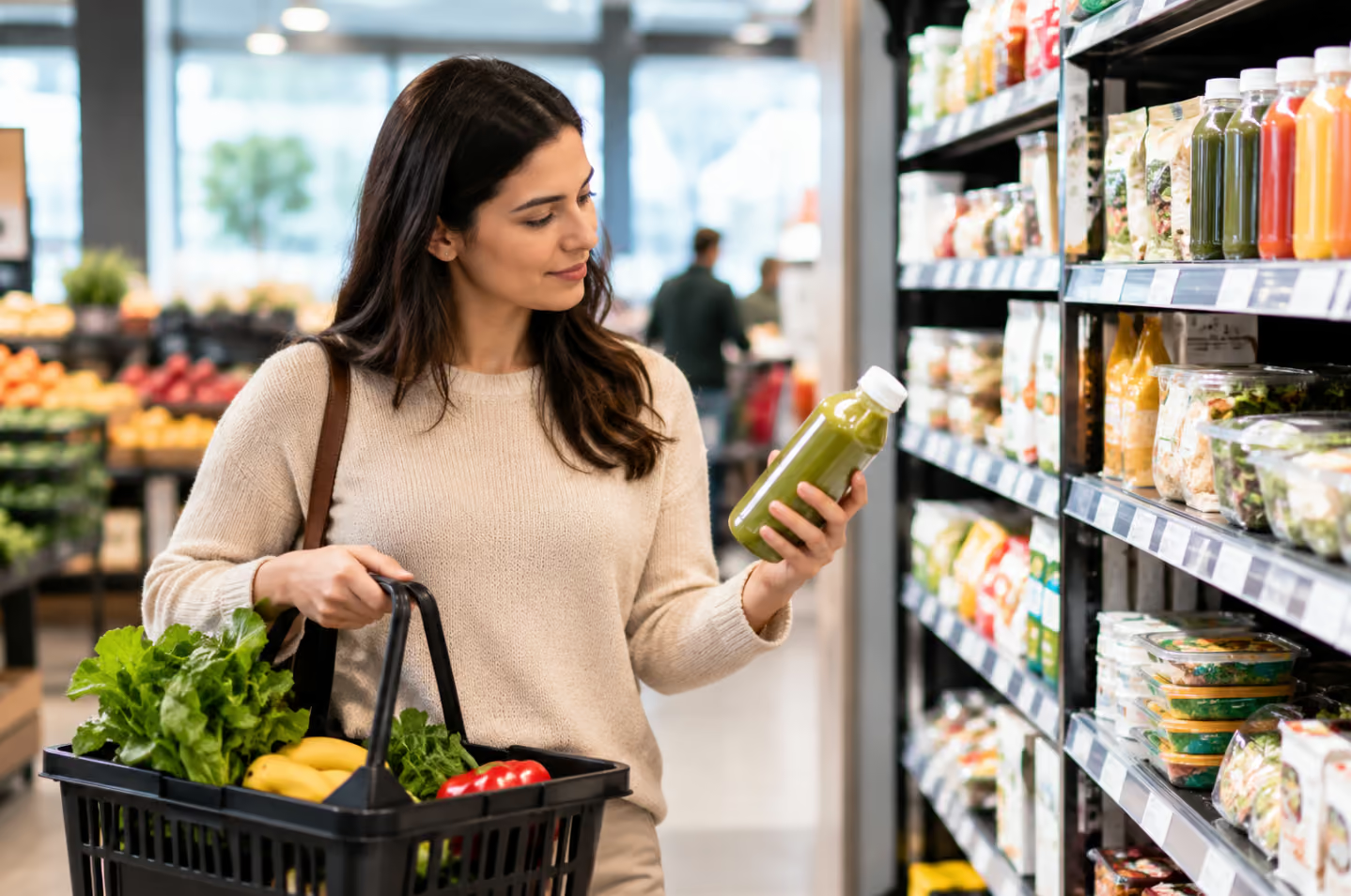
The global food and beverage industry is heading into 2027 facing a difficult contradiction. Consumers increasingly want affordable products, yet the companies producing their groceries, snacks and drinks are confronting higher costs. At the same time, shoppers are becoming more selective about what they consume, pushing brands toward healthier, lower-sugar and more functional products.
Two developments illustrate this transformation particularly clearly: warnings of another wave of food and beverage price increases in 2027, and the widening performance gap between companies that successfully respond to changing consumer preferences and those struggling to keep pace.
Together, they reveal an industry being reshaped by inflation, affordability, health consciousness and changing definitions of value.
The first warning comes from the world's commodity markets.
The UN Food and Agriculture Organization's Food Price Index reached 136.0 points in September 2026, rising 1.5% from August and 5.8% compared with a year earlier. The index measures international prices across major globally traded food commodities.
The increase was not concentrated in a single category.
FAO reported that its Cereal Price Index jumped 5.1% in one month and stood 17.2% above September 2025 levels. Global wheat prices climbed 6.3%, while maize prices increased 5.6% from August. Vegetable oil prices also moved higher.
Weather problems, transportation disruption and constraints affecting international trade have contributed to the pressure.
For consumers, however, commodity markets are only the beginning.
Higher agricultural prices eventually move through supply chains into manufacturing, packaging, transportation, supermarkets and restaurants. Add higher energy and freight costs, and the price of an everyday product can face pressure at almost every stage before reaching the shopper.
Some of the world's largest consumer companies are consequently warning that additional price increases could arrive in 2027.
Reuters reported on October 27 that major companies including Coca-Cola, Nestlé, PepsiCo, Reckitt and Procter & Gamble are confronting higher energy, raw-material and transportation costs. The challenge is particularly difficult because consumers are already showing resistance to expensive branded products.
That leaves companies with an uncomfortable decision.
Absorb higher costs and sacrifice profitability or pass them to consumers and risk losing sales.
Nestlé CFO Anna Manz acknowledged that volumes can decline temporarily when prices increase and said the company would pursue pricing only to the extent that it does not damage medium-term consumer penetration.
This could become one of the defining battles of the food industry in 2027: how much more will consumers actually pay?
Evidence suggests companies cannot assume shoppers will simply accept another round of increases.
Earlier in 2026, PepsiCo announced price reductions of up to 15% on major U.S. snack brands including Lay's and Doritos after consumers pushed back against previous increases. The company identified affordability as a major barrier to greater spending among lower- and middle-income consumers.
By October, however, PepsiCo was again confronting higher input costs and margin pressure. Its North American beverage volumes declined 2% year over year during the third quarter, even as its international operations performed more strongly.
The situation demonstrates how complicated the pricing equation has become.
Consumers want lower prices.
Companies need higher margins.
Input costs remain elevated.
And competitors are fighting for increasingly cautious shoppers.
The result could be a greater emphasis on smaller packages, promotions, value ranges and carefully targeted price increases rather than sweeping increases across entire portfolios.
Yet consumers have not stopped spending entirely.
Coca-Cola's latest results demonstrate that people may still pay when products deliver the combination of brand strength, affordability, novelty or perceived value they want.
The company reported third-quarter 2026 revenue of $13.38 billion, up 7.4%, beating analysts' expectations of approximately $12.92 billion. Global unit case volumes increased around 5%, while pricing rose approximately 1%.
Growth in India, China, Mexico and Brazil helped drive global volumes, while the company continued balancing affordable package options with premium products.
Coca-Cola consequently increased its 2026 comparable currency-neutral earnings-per-share growth forecast to at least 9%, up from its previous expectation of 7% to 8%.
Its performance offers an important lesson.
Consumers are not simply looking for the cheapest product. They are looking for value.
And the definition of value is changing.
Another force is becoming increasingly difficult for major food companies to ignore: health-conscious consumption.
The rise of GLP-1 weight-loss medications has intensified scrutiny of portions, calories, sugar and highly processed foods. Food manufacturers are responding with products emphasizing protein, fiber and other health-related attributes.
PepsiCo, for example, has introduced products including Doritos Protein, SunChips Fiber and Good Warrior beef sticks as it adapts its portfolio to changing eating habits.
It has also emphasized portion control and products with reduced sugar or fewer artificial ingredients. More than 70% of PepsiCo's U.S. food portfolio was already available in single-serve formats earlier in 2026.
This is part of a much larger transformation.
The traditional food industry's formula was often simple: maximize taste, convenience and brand recognition.
Tomorrow's winning formula could increasingly require companies to balance taste + health + convenience + affordability.
That is far more complicated.
The beverage industry provides an especially visible example.
Consumers can now choose among traditional carbonated drinks, zero-sugar alternatives, energy drinks, sports hydration, protein beverages, enhanced waters, premium sparkling drinks and other products positioned around wellness or functionality.
Coca-Cola's North American results demonstrate this fragmentation. Although overall North American volumes were flat in its latest quarter, growth from trademark Coca-Cola beverages and fairlife helped offset weakness elsewhere.
The beverage refrigerator is therefore becoming less about one product category competing against another and more about brands competing for different consumption occasions.
A consumer might drink coffee in the morning, a hydration beverage after exercise, a zero-sugar soda with lunch and a protein drink later in the day.
For beverage companies, capturing those occasions could matter as much as dominating one traditional category.
The industry's geographical center of gravity is also shifting.
Coca-Cola's latest volume growth across markets including India, China, Mexico and Brazil demonstrates why global brands increasingly view emerging and developing economies as crucial sources of future expansion.
Growing populations, urbanization, expanding retail networks and rising disposable incomes can create enormous long-term opportunities.
But affordability remains essential.
The products that succeed in wealthy markets cannot simply be replicated everywhere at identical prices and package sizes. Companies increasingly need localized flavors, smaller packs and pricing strategies designed around local purchasing power.
Global scale remains valuable, but local adaptation is becoming equally important.
The next stage of the food and beverage industry's transformation will probably not be defined by one spectacular new product.
Instead, it could revolve around a deceptively simple question:
What is a product genuinely worth to the consumer?
Food manufacturers may face higher agricultural, energy, packaging and transportation costs. At the same time, consumers who have endured years of inflation have become more willing to switch brands, wait for promotions or choose cheaper alternatives.
This puts enormous pressure on companies to justify every premium.
Brand reputation alone may no longer be sufficient.
Products increasingly need to offer some combination of better nutrition, convenience, distinctive taste, functionality, affordability or emotional brand appeal.
The food and beverage industry is entering a period where two seemingly contradictory trends will exist simultaneously.
Food could become more expensive while consumers become less willing to overpay.
That contradiction will reward companies capable of innovation without losing sight of affordability.
Some brands will respond by shrinking packages. Others will introduce premium products for consumers willing to spend more. Many will accelerate development of healthier products, protein-rich foods, lower-sugar drinks and convenient portion-controlled formats.
Meanwhile, global companies will increasingly look toward faster-growing international markets for volume.
The winners will probably not be those that simply raise prices fastest or launch the largest number of products.
They will be the businesses that understand the changing consumer.
As the world moves toward 2027, price, health, convenience and value are converging into a single competitive battle. The companies that can offer consumers something healthier or more desirable without making it feel unaffordable could define the next era of global food and beverage growth.
For questions or comments write to contactus@bostonbrandmedia.com