Stay informed with our newsletter.


EN





The global economy is growing, but increasingly at different speeds. India is emerging as a major growth engine, while the United States remains resilient and China continues expanding despite structural challenges. Southeast Asian economies are benefiting from shifting supply chains, while Europe faces weaker growth, aging populations and productivity pressures. As technology, investment, demographics and infrastructure reshape competitiveness, a widening global growth divide is determining which economies pull ahead and which risk being left behind.
The world economy is still growing, but increasingly, it is not growing together.
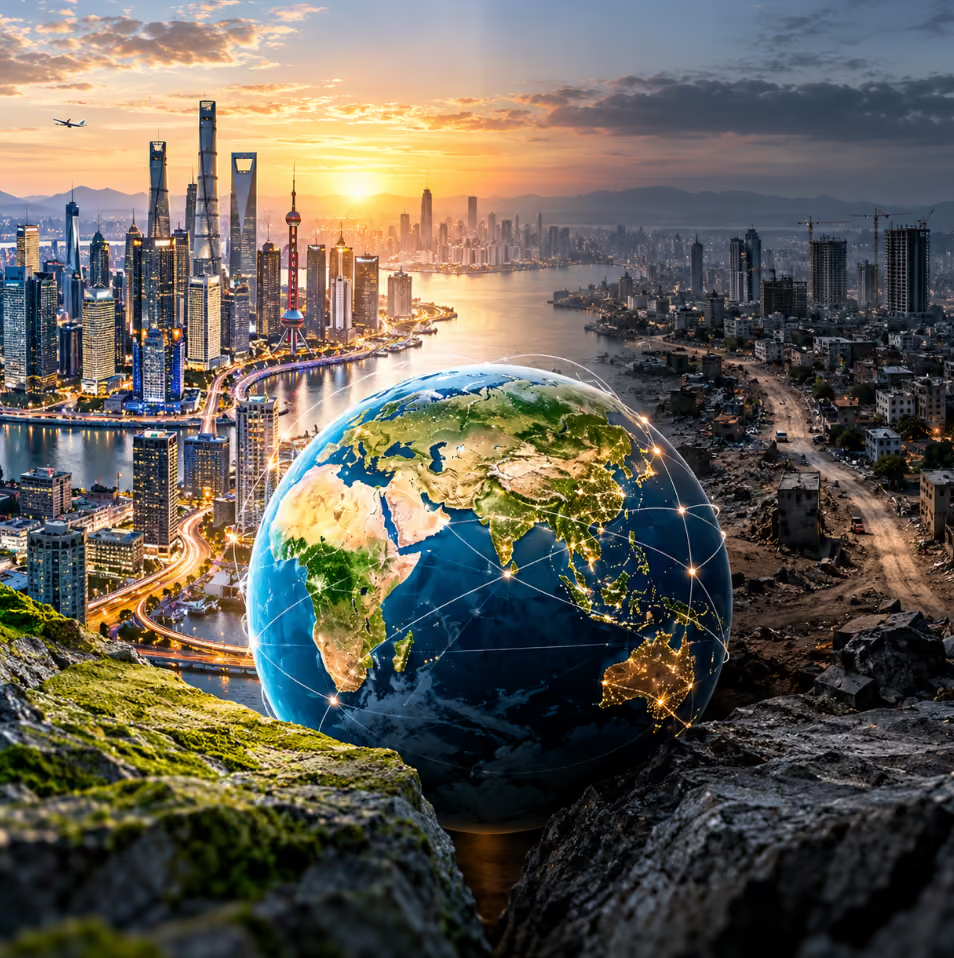
Across the global economic map, a widening divide is emerging between countries benefiting from technology investment, strong domestic consumption, expanding services, resilient exports and favorable demographics, and those constrained by high debt, weak productivity, expensive energy, aging populations and limited investment.
The International Monetary Fund’s October 2026 World Economic Outlook projects the global economy to expand by approximately 3.1% in 2026, before strengthening to 3.4% in 2027. Yet the global headline conceals enormous differences between countries.
Some emerging economies are expanding at more than twice the global rate. Others, including several of the world's wealthiest economies, are struggling to generate growth above 1%.
The result is a new global growth divide that could reshape where businesses invest, where jobs are created and where the next generation of global economic power is concentrated.
Among the world's major economies, India stands out.
The World Bank's October 2026 India Development Update projects the economy to expand by 7.1% in FY27, supported by strong domestic demand and exports. That places India among the fastest-growing major economies in the world.
India's advantage is structural as much as cyclical. A population exceeding 1.4 billion people, a growing consumer market, rapid infrastructure development, expanding manufacturing ambitions and a globally competitive services sector are creating multiple engines of growth.
Technology is becoming another.
According to the World Bank, private artificial-intelligence investment in India increased more than threefold, from $1.2 billion in 2024 to $4.1 billion in 2025. Employment at Global Capability Centers also increased from 1.9 million people in 2024 to 2.36 million in 2025.
India therefore represents something increasingly valuable in a fragmented global economy: scale combined with growth.
China presents a more complicated picture.
The era of routine 8%, 9% or 10% annual Chinese growth has ended. The OECD expects China's economy to expand approximately 4.5% in 2026, slowing further thereafter.
The country's prolonged property adjustment, weaker consumer confidence and demographic pressures are restraining expansion. Real-estate investment remains a particular weakness.
But describing China simply as a declining growth story misses something important.
A 4.5% expansion in the world's second-largest economy still generates an enormous amount of additional economic activity. China also remains extraordinarily competitive across manufacturing industries ranging from electric vehicles and batteries to renewable-energy equipment, electronics and advanced industrial technologies.
Its economic model is changing rather than disappearing.
China's challenge is increasingly whether technological upgrading, advanced manufacturing and exports can compensate for weaker property investment, aging demographics and cautious household spending.
Among advanced economies, the United States remains one of the stronger performers.
The OECD expects U.S. GDP to grow around 2.2% in 2026, while the IMF's mid-year projection was approximately 2.3%.
Those figures may look modest beside India or Vietnam, but for a mature economy of America's size, the difference matters enormously.
One major advantage is investment.
Technology-related business spending continues to support economic activity, particularly around artificial intelligence, semiconductors, cloud infrastructure and data centers. The United States also benefits from deep capital markets, world-leading research universities, major technology companies and a relatively flexible labor market.
It additionally occupies an unusual position among advanced economies as a major energy producer, providing some protection against international energy shocks.
This combination helps explain why the United States continues to outperform many other wealthy economies.
Cross the Atlantic and the picture changes dramatically.
The OECD expects the euro area to grow only around 1% in 2026, while the IMF's July assessment put growth at roughly 0.9%.
Europe's problem is not simply one bad economic year. It is increasingly about potential growth.
Aging populations, weak productivity improvements, high energy costs, regulatory complexity and comparatively fragmented capital markets are creating long-term challenges. Manufacturing-heavy economies also face intensifying competition from China and other Asian industrial centers.
Germany illustrates the problem particularly clearly. The IMF's July forecast placed German growth at only 0.7% for 2026. France was projected at 0.6% and Italy at 0.5%. Spain remained a notable relative outperformer at 2.1%.
Europe remains extraordinarily wealthy. But wealth and growth are different things.
The critical question is whether Europe can transform its enormous base of capital, engineering expertise, scientific research and industrial knowledge into faster productivity growth.
Some of the most interesting economic momentum is occurring elsewhere in Asia.
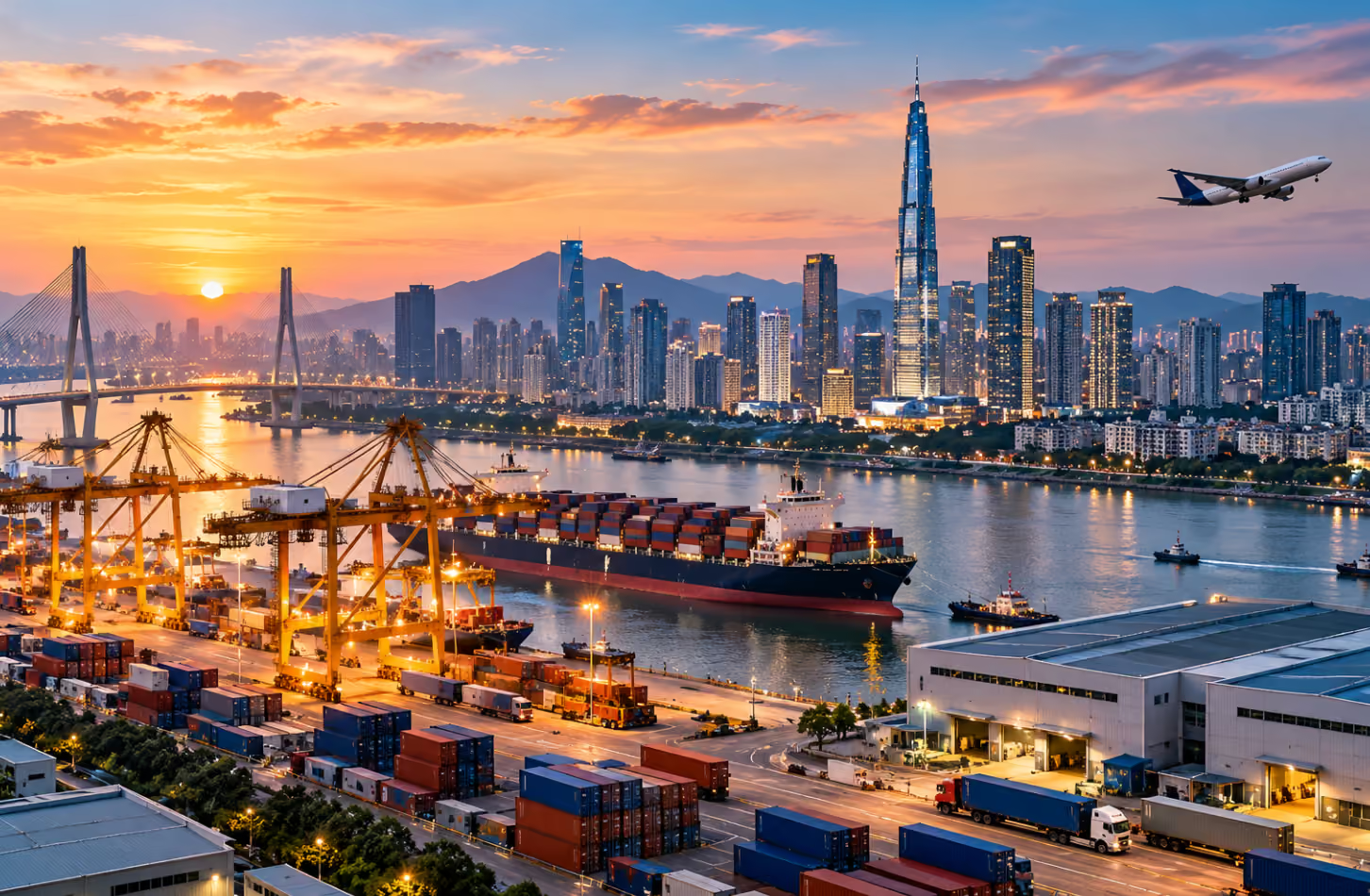
The IMF's July outlook projected Vietnam to grow by 7.5% in 2026, helped by technology exports and strong domestic demand. Malaysia was projected to expand by 4.7%, benefiting partly from data-center investment and the global technology cycle.
These economies are benefiting from the restructuring of global supply chains.
Multinational companies increasingly want manufacturing networks that are diversified rather than concentrated in a single country. That is creating opportunities across Southeast Asia for electronics manufacturing, semiconductor supply chains, logistics, data infrastructure and export-oriented industry.
The World Bank nevertheless expects overall East Asia and Pacific growth of about 4.2% in 2026, demonstrating that even within fast-growing Asia, performance varies considerably.
Sub-Saharan Africa offers another important lesson: headline GDP growth does not necessarily equal rapidly rising prosperity.
The World Bank expects regional growth of approximately 4.0% in 2026, strengthening to 4.4% in 2027.
Those numbers appear impressive compared with Europe.
But many African economies also have rapidly growing populations. When population growth is subtracted from GDP growth, improvements in income per person can be much smaller.
That distinction is critical.
An economy growing 4% while its population increases close to 3% annually is experiencing a fundamentally different transformation from an economy growing 6% with population growth near 1%.
For emerging economies, therefore, the real race is not simply GDP expansion. It is productivity and per-capita income growth.
Perhaps the most concerning aspect of today's global economy is the divergence occurring within the developing world itself.
The World Bank warns that by 2028, developing economies excluding China and India could collectively have experienced nearly a decade without meaningful progress in narrowing their per-capita income gap with advanced economies.
High government debt is part of the problem. Countries already carrying large debt burdens often face higher borrowing costs, leaving governments with less money for infrastructure, education, healthcare and economic development.
That can create a damaging cycle: weak investment reduces productivity, weak productivity limits growth, and weak growth makes debt more difficult to manage.
One of the defining differences between countries pulling ahead and those falling behind is increasingly their position within the global technology ecosystem.
The IMF says countries integrated into the technology-driven investment cycle are receiving a meaningful economic boost, while energy-importing economies with limited participation in technology value chains face a considerably more difficult environment.
This means the growth divide of the 2030s may not simply be rich versus poor or East versus West.
It could increasingly become a divide between economies capable of deploying capital, energy, digital infrastructure, advanced manufacturing and skilled workers at scale — and those that cannot.
The global economy is not moving toward a single winner.
Instead, several distinct growth centers are emerging.
India combines demographics, domestic demand and digital development. China retains extraordinary industrial scale despite slower expansion. The United States continues to capitalize on technology, capital markets and investment. Vietnam and parts of Southeast Asia are gaining from shifting supply chains. Meanwhile, parts of Europe and highly indebted developing economies face a much more difficult growth equation.
Even the institutions measuring the world economy disagree about the precise speed of expansion. The IMF currently projects 3.1% global growth for 2026, the OECD estimates 2.9%, while the World Bank's June forecast was a more cautious 2.5%.
But behind those different forecasts is a remarkably consistent message.
The defining economic story is no longer simply whether the world is growing.
It is where that growth is happening, what is driving it, and whether countries can convert it into higher productivity and living standards.
The next decade could therefore redraw the global economic hierarchy. Countries able to combine technology, investment, infrastructure, human capital, energy security and demographic strength may pull progressively ahead.
For everyone else, the danger is not necessarily recession.
It is something potentially more consequential: being left behind while the rest of the global economy moves forward.
For questions or comments write to contactus@bostonbrandmedia.com