Stay informed with our newsletter.
.webp)


EN





The global Food & Beverage industry is undergoing major transformation in 2026, driven by cybersecurity threats, sustainable packaging and stricter food-safety regulations. From the ransomware attack disrupting Coca-Cola’s Fairlife production to the rapid adoption of recyclable packaging, companies are adapting to new operational challenges. Meanwhile, intensified regulatory inspections are placing greater emphasis on hygiene, compliance and consumer protection. Together, these trends are redefining how F&B businesses manage risk, sustainability and consumer trust worldwide.
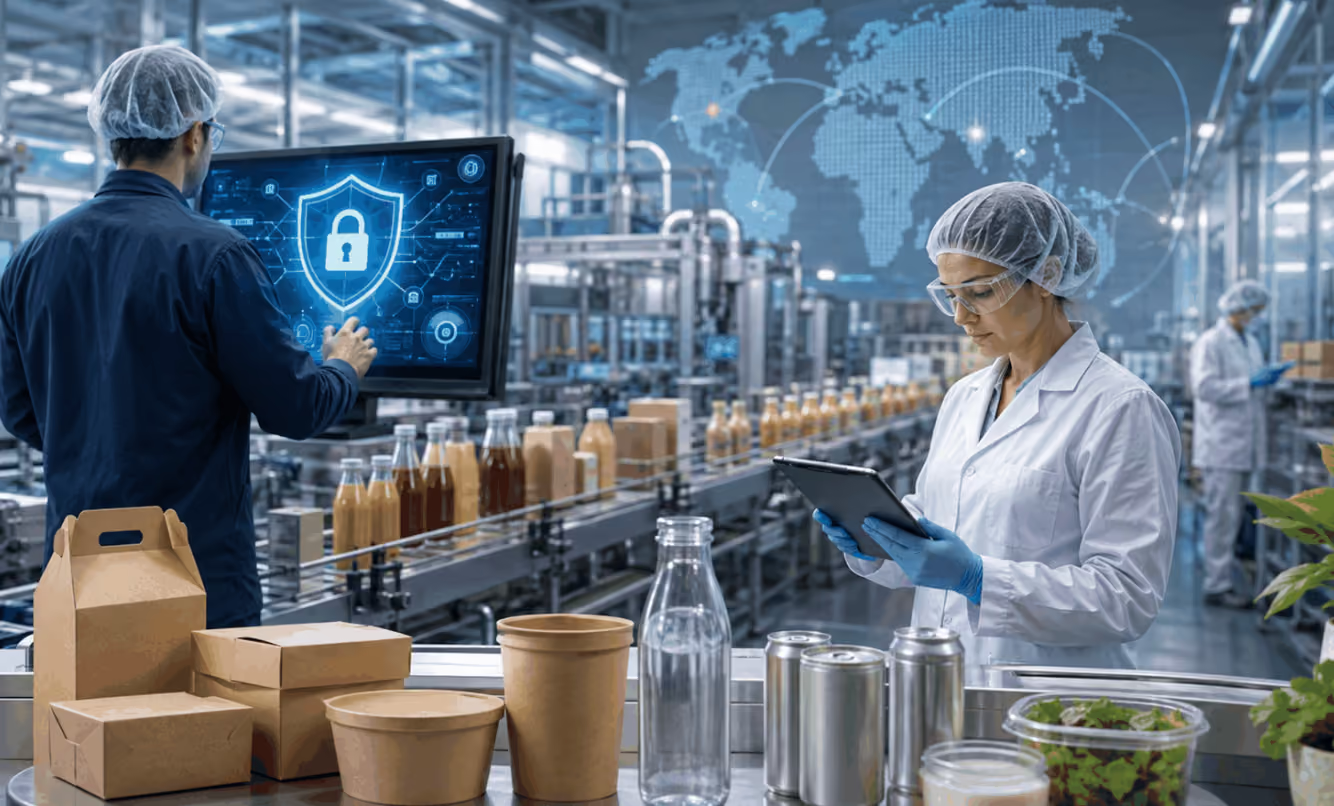
The global Food & Beverage (F&B) industry is entering a period of significant transformation. Food manufacturers, beverage companies, restaurants and retailers are facing a combination of cybersecurity threats, sustainability pressures and tighter food-safety regulations. These forces are changing not only how products are manufactured and packaged, but also how companies manage risk, compliance and consumer trust.
Three developments currently stand out: the ransomware attack on Coca-Cola’s Fairlife dairy business, the accelerating shift toward recyclable packaging, and an intensifying food-safety and regulatory crackdown, particularly visible across India. Together, these developments demonstrate that operational resilience, sustainability and compliance are becoming central to competitiveness in the F&B sector.
In July 2026, Coca-Cola’s Fairlife dairy business became the latest high-profile example of how cybersecurity threats can disrupt food manufacturing. A ransomware attack affected Fairlife’s production-related systems in the United States, forcing the company to temporarily suspend production while it investigated the incident.
The incident was particularly significant because it demonstrated that a cyberattack on a food company can go far beyond stolen information. When manufacturing systems are affected, companies can face production stoppages, supply shortages, distribution disruptions and financial losses.
Fairlife subsequently resumed the majority of production at its four U.S. manufacturing facilities. Reports indicated that the disruption lasted roughly 11 days. Canadian production was not affected, illustrating how geographic diversification can provide an element of operational resilience.
Coca-Cola said the incident involved unauthorized access to parts of Fairlife’s systems. Importantly, the company indicated that the attack did not compromise product quality or safety.
The Fairlife incident is a warning for the wider F&B sector. Modern food factories increasingly depend on connected production equipment, enterprise software, supply-chain platforms, automated controls and digital monitoring systems. While these technologies improve efficiency, they can also create additional points of vulnerability.
For food manufacturers, cybersecurity can therefore no longer be treated simply as an IT responsibility. Business continuity planning, network security, employee awareness, backup systems and incident-response procedures are becoming essential elements of food-industry risk management.
The larger lesson is clear: in a highly connected food supply chain, digital resilience is becoming as important as physical supply-chain resilience.
The second major development is the accelerating move toward recyclable mono-material and paper-based packaging.
A new industry study published on August 18, 2026, highlights how packaging mandates are driving changes across food and beverage production lines. The transition is affecting equipment categories including form-fill-seal systems, filling and bottling lines and cartoning machinery.
Traditionally, many food packages have relied on multi-layer materials because they provide excellent barriers against oxygen, moisture, light and contamination. However, combinations of different materials can make recycling more difficult.
The industry is therefore increasingly exploring mono-material packaging, in which the package is primarily made from a single material family. This can simplify recycling while maintaining the performance required to protect food products.
Market research also indicates strong growth expectations for the mono-material packaging sector. One 2026 market assessment projects the global mono-material packaging market to expand from approximately $5.84 billion in 2026 to $9.77 billion by 2034.
For F&B companies, however, switching packaging is not simply a matter of replacing one material with another. Packaging must continue to meet requirements related to food safety, shelf life, product protection, transportation and consumer convenience.
Manufacturers may also need to modify or replace equipment designed for conventional packaging formats. This creates additional capital expenditure but also opportunities for packaging innovation and automation.
Regulation is another major driver. In India, for example, the Food Safety and Standards Authority of India has introduced amendments to food labelling and display requirements, including changes affecting non-retail food containers. Some of these provisions are scheduled to take effect from July 1, 2027, giving businesses time to prepare.
The direction of travel is unmistakable: sustainability is moving from a marketing initiative to an operational requirement. Companies that redesign packaging early could be better positioned to meet future regulations, reduce environmental impact and respond to increasingly sustainability-conscious consumers.
The third major trend is the growing emphasis on food safety, hygiene, labelling and regulatory compliance.
India provides a particularly visible example. In August 2026, Maharashtra authorities took action against several major restaurant outlets following inspections that identified serious hygiene problems. Four Domino’s outlets and one Pizza Hut outlet were shut down after authorities reported issues including grease residue, insect infestations and missing expiry information. The inspections formed part of a broader campaign covering more than 100 outlets in a single day, with numerous improvement notices issued.
The regulatory focus extends beyond restaurants. Karnataka authorities have launched an extensive food-safety drive, with 1,849 food establishments inspected and more than 2,400 food samples collected for laboratory testing, according to reports published on August 18.
Karnataka has also announced measures requiring restaurants and eateries to display QR codes that allow consumers to submit food-safety complaints directly to authorities.
Meanwhile, Indian regulators are also increasing scrutiny of product labelling and claims. In July, India ordered manufacturers of certain high-caffeine beverages marketed as “energy drinks” to stop using that description, despite objections from major beverage companies.
These developments demonstrate that regulatory compliance is becoming a brand reputation issue, not merely a legal requirement. A hygiene violation at one outlet can quickly become a national story, particularly when social media amplifies images or videos from inspections.
Shopping malls are responding as well. Reports indicate that major Indian malls are increasing oversight of restaurants and cafés operating on their premises because food-safety violations can damage the reputation of the entire property.
For F&B businesses, this means investment in employee training, hygiene systems, traceability, documentation, supplier controls and regular internal audits is increasingly essential.
The latest developments show that the Food & Beverage industry is being reshaped by three powerful forces: cybersecurity, sustainability and regulatory enforcement.
The Fairlife ransomware incident demonstrates the importance of digital resilience. The rapid development of recyclable packaging highlights the industry's movement toward circular and sustainable production. Meanwhile, intensified food-safety inspections show that compliance and consumer protection are becoming increasingly important to business success.
For F&B leaders, the message is straightforward: the companies best positioned for the future will not focus only on taste, price and convenience. They will also build secure operations, sustainable packaging and rigorous compliance systems.
In 2026 and beyond, trust, resilience and responsibility are becoming just as important as the products on the shelf.
For questions or comments write to contactus@bostonbrandmedia.com



-v3.jpg)


-v3-02.jpg)