Stay informed with our newsletter.
.webp)


EN





A father and son have made aviation history by breaking the global drone speed record, reaching an incredible 656.6 kmph. Their achievement highlights cutting-edge engineering, precision design, and a shared passion for innovation, showcasing how collaboration and technical expertise can push the limits of drone technology and redefine what is possible in high-speed unmanned flight.
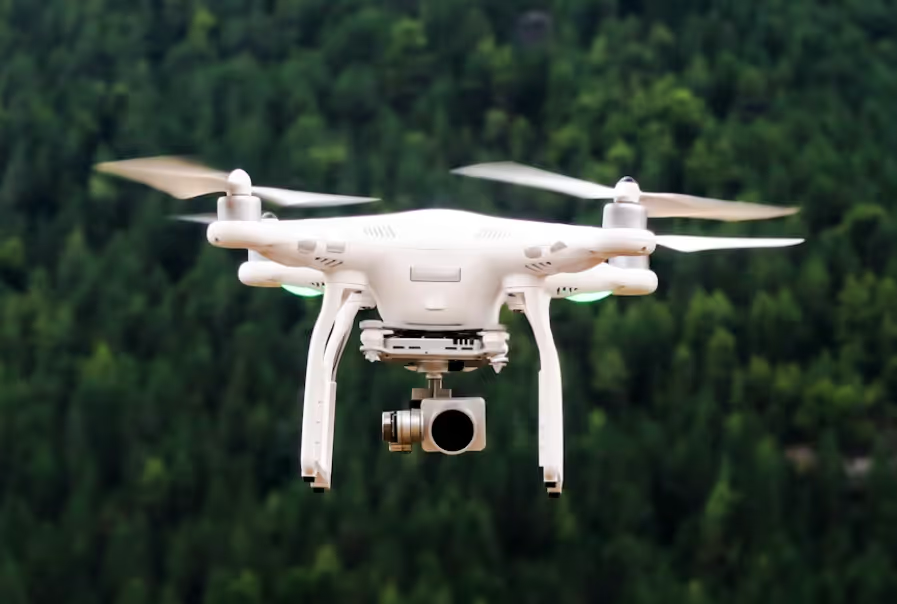
A quiet stretch of sky over Cape Town turned into the stage for a record-breaking moment in drone history when popular YouTuber Luke Bell and his father, Mike Bell, pushed the limits of unmanned flight. On December 11, 2025, the South African duo achieved what many engineers only dream of, rewriting the global speed benchmark for quadcopter drones.
Their achievement unfolded during a carefully planned test flight of their latest machine, the Peregreen V4. Sleek, lightweight, and entirely produced using advanced 3D-printing techniques, the quadcopter was designed with one clear goal in mind: raw speed. As the drone sliced through the air, its performance exceeded expectations, eventually registering an astonishing average velocity of 656.6 kilometres per hour.
With that figure, the Bells reclaimed the Guinness World Record for the fastest quadcopter drone, returning the title to South Africa and cementing their reputation as pioneers in high-speed drone engineering. The record was not just a number on paper but the result of years of experimentation, countless design tweaks, and an unrelenting passion for innovation shared between a father and his son.
Luke Bell, known online for documenting ambitious engineering projects, has long turned complex technical challenges into compelling digital content. His father, Mike, brings decades of hands-on experience and problem-solving expertise to the table. Together, they form a rare partnership that blends creativity, precision engineering, and real-world testing. The Peregreen V4 stands as a physical expression of that collaboration.
What makes the achievement even more remarkable is the context in which it occurred. Only a month earlier, the global drone community had been buzzing after Australian aerospace engineer Benjamin Biggs briefly claimed the speed crown. His home-built Blackbird drone reached a top speed of 626.42 kilometres per hour, setting a new bar and sparking intense discussion among hobbyists and professionals alike.
The Bells were already part of that conversation. In fact, weeks before Biggs’ announcement, they had demonstrated their own growing momentum. A report published on November 22, 2025, highlighted how the South African duo had clocked an impressive 580 kilometres per hour, signalling that something even bigger was on the horizon. At the time, it was seen as a major leap forward. In hindsight, it was only a stepping stone.
Rather than resting on that success, Luke and Mike returned to their workshop, refining aerodynamics, improving structural efficiency, and optimising power delivery. The result was the Peregreen V4, a drone that combined extreme speed with surprising stability, even under immense aerodynamic stress. Every component was scrutinised, redesigned, and tested repeatedly before the record attempt.
The December test flight was not a flashy public spectacle but a calculated engineering exercise. Sensors tracked speed with precision, while safety protocols ensured the attempt remained controlled. When the final figures were confirmed, the numbers spoke for themselves. The previous records had been surpassed by a significant margin, leaving little doubt about the validity of the achievement.
Beyond the headline-grabbing speed, the story resonates because of its human element. This was not a large aerospace corporation with vast resources, but a father and son driven by curiosity and determination. Their success underscores how innovation today is increasingly powered by small, focused teams willing to challenge conventions and embrace new technologies like 3D printing.
The record has also reignited interest in the future of drone design. High-speed quadcopters were once thought to have clear limits due to drag, heat, and structural constraints. The Peregreen V4 challenges those assumptions, hinting that the ceiling may be far higher than previously believed. Engineers and enthusiasts around the world are already dissecting the Bells’ approach, eager to learn from their methods.
For Luke Bell, the moment represents more than just a Guinness title. It is a testament to years spent experimenting, failing, learning, and trying again, all while sharing the journey with a global online audience. For Mike Bell, it is proof that experience, patience, and collaboration still play a vital role in cutting-edge innovation.
As drone technology continues to evolve, records like this are unlikely to stand forever. Yet the significance of the Bells’ achievement lies in how decisively they pushed the boundary at this moment in time. By reclaiming the fastest quadcopter title at 656.6 kilometres per hour, the South African duo has not only made history but also inspired a new wave of engineers to imagine what might come next.
For questions or comments write to contactus@bostonbrandmedia.com
Source: mid-day



-v3.jpg)


-v3-02.jpg)