Stay informed with our newsletter.
.webp)


EN





A powerful winter storm swept across the East Coast of the United States, dumping more than a foot of snow in several regions and triggering widespread disruption. Over 5,000 flights were cancelled as airports struggled to maintain operations amid heavy snowfall and icy conditions. The storm also caused power outages, hazardous road conditions, and closures of schools and offices. Emergency crews and local authorities are working to restore services as communities begin clearing snow and recovering from the severe weather impact.
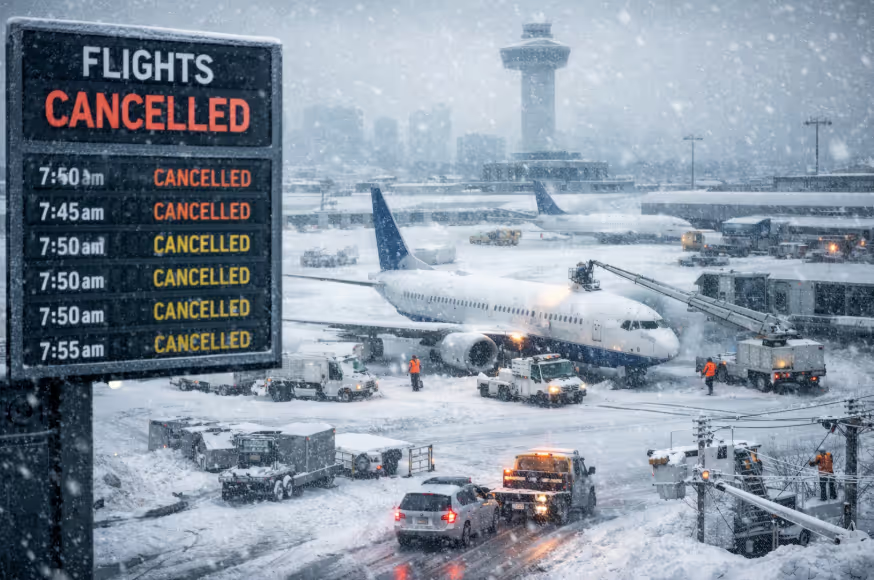
A powerful winter storm swept across the eastern United States, bringing widespread disruption, heavy snowfall, and significant travel chaos. More than 5,000 flights were cancelled as major cities struggled to cope with record levels of snow accumulation. The storm blanketed large parts of the East Coast with more than a foot of snow, forcing airports, roads, and public transportation systems to shut down while millions of residents dealt with power outages and dangerous weather conditions.
Meteorologists described the storm as one of the most significant winter events of the season. From the Mid-Atlantic region to parts of New England, snowfall totals surged beyond expectations, with several communities reporting more than 12 inches of snow in a short period. The storm intensified overnight, creating blizzard-like conditions in many areas and reducing visibility to near zero. Local governments issued emergency advisories urging residents to remain indoors and avoid nonessential travel.
Air travel faced the most immediate and visible disruption. Major airports along the East Coast were forced to suspend operations as runways became covered in snow and ice. Airlines cancelled thousands of flights, leaving travelers stranded and forcing carriers to reschedule or reroute services. Some airports temporarily halted departures to allow crews to clear snow from runways and taxiways, while others struggled to maintain operations amid freezing temperatures and strong winds.
Airlines worked around the clock to manage the backlog of passengers and disrupted schedules. Many carriers issued travel waivers, allowing passengers to change their flight dates without penalties. However, the scale of the cancellations created a ripple effect across the national aviation network, affecting flights far beyond the storm’s immediate path.
Road travel was also severely impacted. Snow-covered highways and icy conditions led to hundreds of accidents across multiple states. Transportation departments deployed snowplows and salt trucks in large numbers, but the intensity of the snowfall made it difficult to keep roads clear. Some major highways were temporarily closed due to hazardous driving conditions, while local streets in residential neighborhoods became nearly impassable.
Public transportation systems in several cities were forced to reduce or suspend services. Bus routes were delayed or cancelled, and commuter rail services experienced significant disruptions as tracks became covered in snow. Municipal authorities urged commuters to work from home where possible and to postpone unnecessary travel until conditions improved.
The storm also triggered widespread power outages across several states. Heavy snow combined with strong winds caused trees and power lines to collapse, cutting electricity to tens of thousands of homes and businesses. Utility companies mobilized repair crews, but restoration efforts were slowed by dangerous weather conditions and blocked roads.
Residents faced freezing temperatures without electricity, prompting local authorities to open emergency warming centers. Community organizations and emergency responders worked to assist vulnerable populations, including elderly residents and those with medical needs. Authorities emphasized the importance of checking on neighbors and ensuring that those without power had access to safe shelter.
Schools and offices across affected regions were closed, adding to the widespread disruption. Many educational institutions switched to remote learning where possible, while businesses encouraged employees to work from home. Government offices in several states also announced temporary closures as officials focused on managing the storm’s impact and coordinating emergency responses.
Meteorologists had warned of the storm days in advance, giving local authorities time to prepare. Snowplow fleets were placed on standby, emergency supplies were stocked, and public advisories were issued ahead of the storm’s arrival. Despite these preparations, the sheer intensity of the snowfall overwhelmed some systems, demonstrating the challenges of managing extreme weather events.
Experts noted that winter storms of this magnitude can have cascading effects on infrastructure and daily life. Airports require extensive de-icing operations, roads must be continuously cleared, and emergency services often experience increased demand due to accidents and medical emergencies. Even after snowfall stops, recovery efforts can take days as communities work to restore normal operations.
For travelers, the storm served as a reminder of the vulnerability of transportation networks to severe weather. Airlines and airports have invested heavily in weather forecasting systems and contingency planning, but large storms can still force widespread cancellations. Passengers are often advised to monitor flight updates closely and allow extra time for travel during winter months.
Local economies also feel the effects of major winter storms. Retail businesses, restaurants, and service providers often experience temporary closures, leading to lost revenue. At the same time, sectors such as snow removal, hardware stores, and emergency services may see increased demand during severe weather events.
Climate researchers point out that while snowstorms are a natural part of winter in many parts of the United States, changing climate patterns may be influencing the intensity and variability of such events. Warmer atmospheric conditions can sometimes lead to heavier precipitation, which may fall as snow when temperatures are low enough. As a result, some storms are capable of producing unusually high snowfall totals in a short time.
In the days following the storm, communities began the long process of cleanup and recovery. Snowplows continued clearing streets, residents shoveled sidewalks and driveways, and airports gradually resumed operations. Airlines began restoring normal schedules, although some delays persisted as crews repositioned aircraft and staff.
Authorities warned that even after the snowfall ended, risks remained. Melting snow followed by freezing overnight temperatures could create icy conditions on roads and sidewalks. Residents were urged to exercise caution when traveling and to allow additional time for commutes.
Despite the challenges, many communities demonstrated resilience during the storm. Neighbors helped each other shovel driveways, volunteers assisted those without power, and emergency responders worked tirelessly to maintain public safety. Social media was filled with images of snow-covered streets, children building snowmen, and residents documenting the historic snowfall.
Severe winter storms often leave lasting impressions on the communities they affect. For many residents along the East Coast, this storm will be remembered not only for its heavy snowfall but also for the widespread disruption it caused across transportation systems and daily life.
As weather conditions improve and recovery efforts continue, authorities are focusing on restoring services and ensuring that infrastructure remains resilient against future storms. For now, residents across the region are slowly returning to normal routines while reflecting on one of the season’s most powerful winter events.
For questions or comments write to contactus@bostonbrandmedia.com



-v3.jpg)


-v3-02.jpg)