Stay informed with our newsletter.
.webp)


EN




In today's trust recession, brand success is no longer determined by visibility alone. Consumers increasingly trust reviews, influencers, and peers more than traditional advertising and corporate messaging. While many companies focus on building awareness, the brands gaining a competitive advantage are investing in trust and distinctiveness. As information becomes abundant and skepticism grows, credibility is emerging as the key factor influencing buying decisions, customer loyalty, and long-term growth. The future belongs to brands that are believed, not just known.
People trust influencers more than institutions.
Employees trust peers more than executives.
Consumers trust online reviews more than advertising.
At first glance, these trends seem unrelated. But together, they reveal one of the most significant shifts happening in business today:
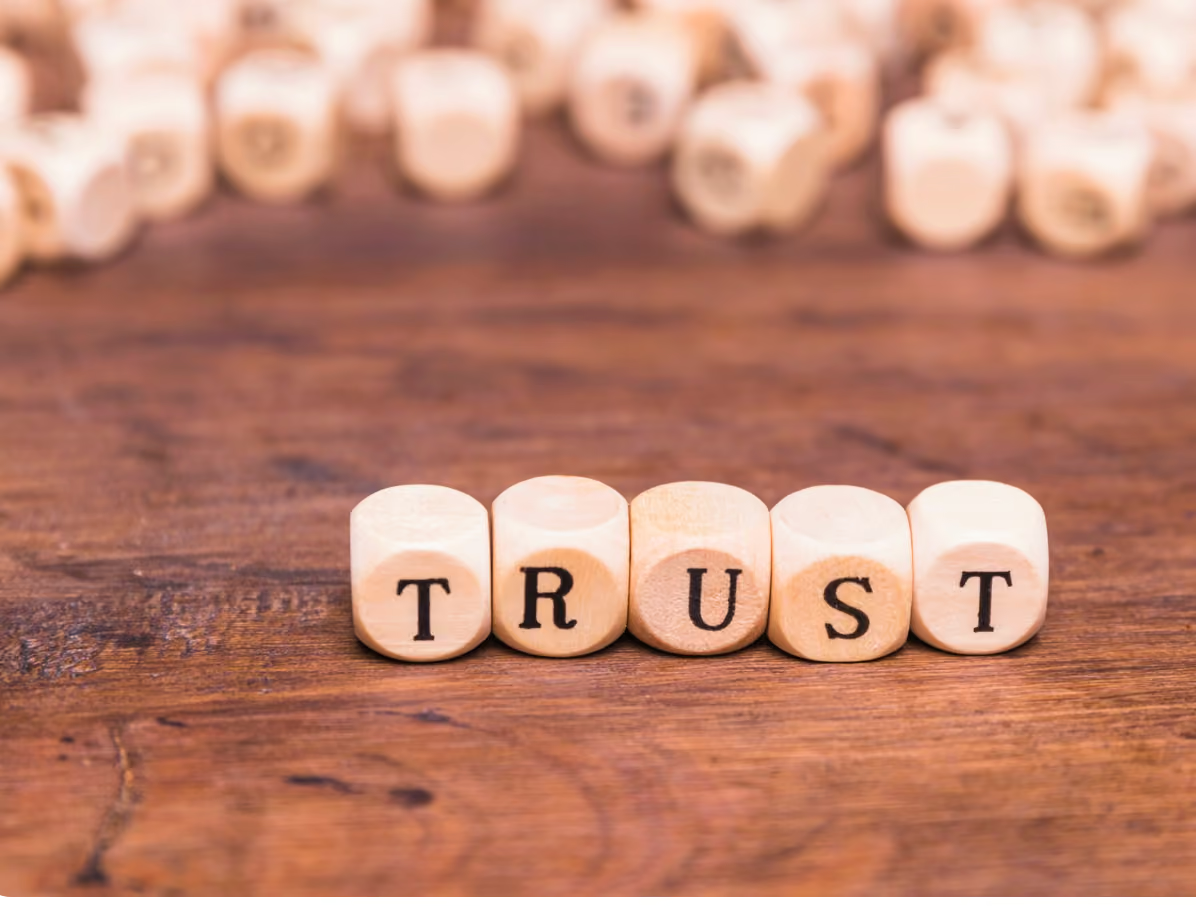
We are living through a trust recession.
Trust, once assumed, now has to be earned.
And as trust becomes harder to win, it becomes more valuable.
For decades, companies believed success was largely a function of visibility. The more people knew about your brand, the more likely they were to buy from you.
That equation is breaking down.
Today, consumers can discover thousands of alternatives with a few taps on a smartphone. Employees can verify leadership claims through internal networks. Buyers can compare products, services, and experiences instantly.
Information has become transparent.
Trust has become scarce.
And scarcity creates value.
The biggest brand battle of the next decade will not be awareness.
It will be credibility.
We Have a Trust Problem
Historically, institutions controlled information.
Governments controlled narratives.
Corporations controlled messaging.
Media organizations controlled distribution.
Consumers had limited ability to challenge what they were told.
The internet changed that.
Social media accelerated it.
AI is amplifying it.
Today, people can access more information than at any point in human history.
Ironically, that abundance has not increased trust.
It has decreased it.
Why?
Because information overload makes it harder to determine what is true.
Every claim has a counterclaim.
Every statistic has a competing statistic.
Every expert faces competing experts.
As a result, people increasingly rely on sources they perceive as authentic and relatable.
That explains why a product review from a stranger often carries more weight than a million-dollar advertising campaign.
It explains why employees listen more closely to colleagues than executive speeches.
And it explains why niche creators can outperform global brands when it comes to influence.
The issue isn't visibility.
The issue is believability.
One of the most important business trends today is the shift from institutional trust to personal trust.
People are becoming less likely to trust logos.
They are becoming more likely to trust people.
This is why founders are becoming brand assets.
Why employee-generated content often outperforms corporate content.
Why customer testimonials outperform marketing slogans.
Why creator partnerships generate engagement that traditional advertising struggles to achieve.
Humans trust humans.
Not because humans are always right.
But because humans feel real.
Corporate messaging often sounds polished, scripted, and optimized.
People are increasingly drawn to voices that feel authentic, transparent, and imperfect.
In an environment where everyone can publish, credibility becomes the differentiator.
And credibility is built through consistency, honesty, and proof—not promotion.
Many companies continue to invest heavily in awareness campaigns.
More impressions.
More reach.
More followers.
More clicks.
Visibility matters.
But visibility without trust creates fragile brands.
Consider how quickly public perception can shift.
A company can spend years building recognition and lose credibility in days.
Consumers no longer evaluate brands solely on what brands say about themselves.
They evaluate what customers, employees, creators, and communities say about them.
The modern buyer conducts research before making decisions.
The modern employee researches employers before accepting offers.
The modern investor evaluates reputation alongside performance.
Visibility may attract attention.
Trust determines action.
Without trust, awareness becomes expensive noise.
Most businesses track visibility obsessively.
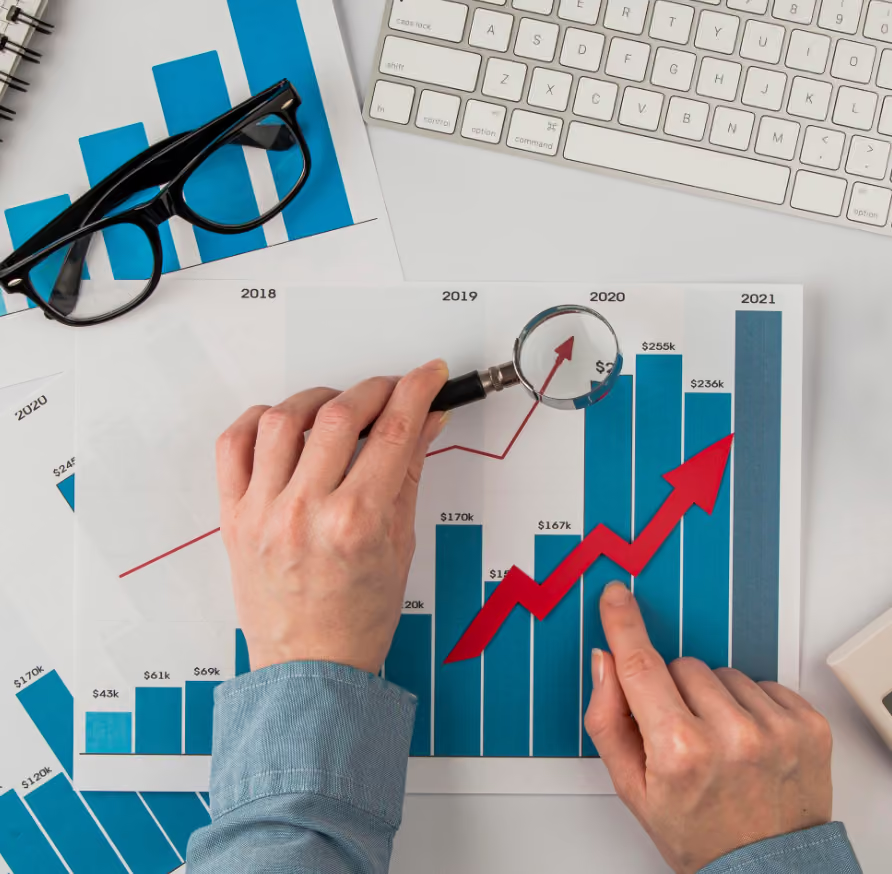
Very few measure trust and distinctiveness with equal rigor.
That needs to change.
A useful framework for evaluating brand strength is based on three dimensions:
Can people find you?
Do they know you exist?
Visibility remains important because buyers cannot choose brands they have never heard of.
This is where marketing traditionally focuses.
Advertising.
Social media.
SEO.
PR.
Events.
Visibility gets you into consideration.
But it does not guarantee preference.
Do people believe you?
Would they recommend you?
Would they buy from you again?
Trust is the bridge between awareness and action.
Without trust, visibility generates curiosity but not commitment.
Trust is built through:
Trust compounds over time.
Every positive interaction strengthens it.
Every broken promise weakens it.
The most resilient brands are often those with the highest trust reserves.
Do people remember you?
Can they describe what makes you different?
Many brands have visibility.
Some have trust.
Few have true distinctiveness.
Distinctiveness is what prevents a brand from becoming interchangeable.
It's your point of view.
Your personality.
Your unique promise.
Your recognizable voice.
Without distinctiveness, companies compete primarily on price.
And price is a dangerous place to compete.
The strongest brands occupy a unique space in people's minds.
They are remembered not because they are louder.
But because they are different.
The next decade will likely reward companies that focus less on broadcasting and more on relationship-building.
Consumers are becoming more skeptical.
Employees are becoming more informed.
Markets are becoming more transparent.
In this environment, trust becomes a competitive moat.
Trusted brands enjoy advantages that competitors struggle to replicate:
Trust reduces friction.
People buy faster from brands they trust.
They forgive mistakes more easily.
They advocate voluntarily.
In many cases, trust becomes a company's most valuable asset.
And unlike advertising budgets, it cannot be copied overnight.
For years, business leaders asked:
"How do we get more people to know us?"
The better question today is:
"How do we become more believable?"
Because awareness is no longer the ultimate goal.
Credibility is.
In a world overflowing with information, trust becomes a filter.
People don't buy from the loudest brands.
They buy from the brands they believe.
The companies that thrive in the years ahead will understand a simple truth:
Visibility gets attention.
Distinctiveness earns memory.
Trust earns business.
And while many organizations continue competing for awareness, the smartest brands are investing in something far more valuable.
Trust.
Because in the trust recession, credibility isn't just a brand advantage.
It's the foundation of sustainable growth.
For questions or comments write to contactus@bostonbrandmedia.com



-v3.jpg)


-v3-02.jpg)