Stay informed with our newsletter.
.webp)


EN





A tanker linked to Abu Dhabi National Oil Company was attacked in the Strait of Hormuz, prompting the United Arab Emirates to accuse Iran of responsibility. The incident has raised fresh concerns about maritime security in one of the world’s most important energy shipping routes. The attack comes amid heightened regional tensions and could further complicate efforts to maintain safe commercial traffic through the strategic waterway. Authorities are investigating the incident as governments closely monitor developments and potential repercussions for global energy markets.
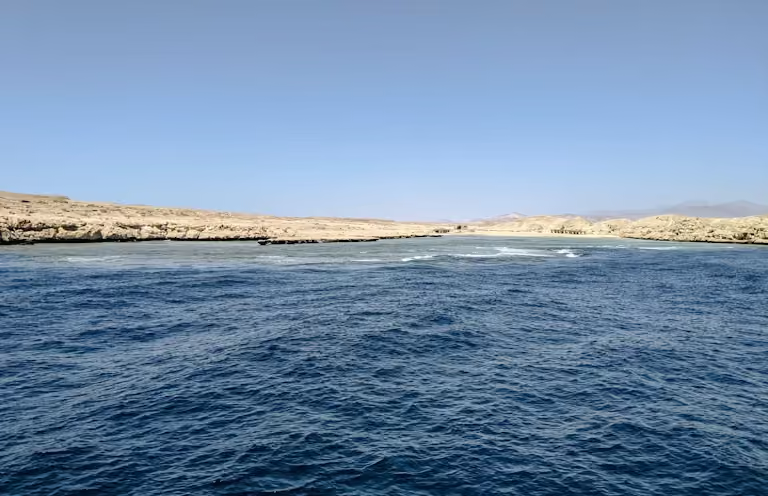
ABU DHABI — A tanker linked to Abu Dhabi National Oil Company was attacked in the Strait of Hormuz, prompting the United Arab Emirates to accuse Iran of responsibility and raising fresh concerns about the security of commercial shipping through one of the world's most strategically important waterways.
The incident comes at a particularly sensitive moment for the Gulf region, where tensions involving Iran and neighboring countries have heightened concerns over the safety of energy infrastructure and international shipping.
The United Arab Emirates has blamed Iran for the attack, putting Tehran at the center of a potentially significant new maritime security dispute.
Iran has not been independently established as responsible based solely on the UAE's accusation, and further investigation will be needed to determine exactly what happened, who carried out the attack and what prompted it.
The allegation nevertheless adds to growing concerns among Gulf states that commercial vessels could become targets as regional tensions continue to escalate.
The Strait of Hormuz is a narrow waterway connecting the Persian Gulf with the Gulf of Oman and the Arabian Sea. It is one of the world's most important energy corridors, carrying a substantial share of global oil and liquefied natural gas shipments.
Any disruption in the waterway can therefore have consequences far beyond the Middle East.
Oil traders closely watch developments around the strait because attacks, threats or restrictions on shipping can increase insurance costs, delay deliveries and push energy prices higher.
For the UAE and other Gulf producers, keeping the waterway open is critical to maintaining reliable access to international markets.
An attack involving an Abu Dhabi-linked tanker could become particularly sensitive because the UAE has traditionally sought to balance its economic interests with the broader security rivalry between Gulf Arab states and Iran.
The UAE has significant commercial and energy interests in the region, while Iran has repeatedly emphasized its strategic influence over the Strait of Hormuz.
The latest incident could therefore add another layer to an already complicated regional security environment.
The immediate impact on global oil prices will depend largely on whether the incident is viewed as an isolated attack or part of a broader campaign against shipping.
Markets typically react strongly when there is a perceived threat to the Strait of Hormuz because even the possibility of prolonged disruption can affect expectations for future energy supplies.
A sustained deterioration in maritime security could also lead shipping companies to reconsider routes, increase security measures or demand higher insurance premiums.
Those additional costs can eventually be reflected in the price of energy and other goods transported through the region.
Several important details surrounding the incident remain subject to investigation, including the precise circumstances of the attack, the extent of damage to the tanker and whether there were casualties.
Most importantly, the question of responsibility will likely remain central to the diplomatic response.
The UAE's accusation against Iran represents a serious escalation in rhetoric, but establishing responsibility for a maritime attack typically requires evidence from vessel tracking data, satellite imagery, damage assessments, crew testimony and other intelligence.
The incident is likely to draw increased attention from Gulf governments, international shipping companies and energy traders.
If additional attacks occur, governments could face pressure to increase naval patrols and provide greater protection for commercial vessels traveling through the waterway.
For the UAE, the priority will be protecting its energy exports and maintaining confidence in the security of its maritime trade.
For international markets, the bigger concern is whether the attack remains an isolated incident or becomes part of a wider pattern of attacks on commercial shipping.
For now, the Strait of Hormuz remains open, but the latest incident underscores how quickly security tensions in the Gulf can become a global economic concern.
Source: NDTV
For questions or comments write to contactus@bostonbrandmedia.com



-v3.jpg)


-v3-02.jpg)







.png)