Stay informed with our newsletter.


EN





China is accelerating its humanoid robotics push, moving beyond headline-grabbing demonstrations toward factory trials, logistics operations and commercial deployment. Government-backed training programs, a growing network of manufacturers and a deep industrial supply chain are helping the country scale production. Officials say output could exceed 100,000 units in 2026, but the number of models is not the same as genuine market demand. Reliability, dexterity, cost, safety and the ability to work independently remain major hurdles before humanoid robots become everyday workers.
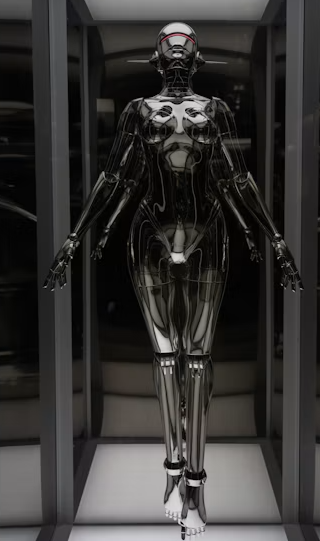
China is rapidly strengthening its position in the global humanoid robotics industry, as manufacturers, technology companies and government-backed research initiatives accelerate efforts to bring intelligent machines into the workplace. What was once largely associated with laboratory experiments, technology exhibitions and impressive robot demonstrations is increasingly becoming an industrial development priority.
From manufacturing facilities and warehouses to retail environments and healthcare applications, Chinese companies are exploring how humanoid robots can perform tasks traditionally carried out by human workers. The shift reflects a broader ambition: to combine artificial intelligence (AI), advanced engineering and industrial automation to create machines capable of understanding and interacting with the physical world.
The scale of China's ambitions is becoming increasingly clear. According to figures released by China's State Council Information Office in October 2026, the country had developed more than 400 humanoid robot models by the end of June, with production exceeding 40,000 units. Officials also expect annual production to surpass 100,000 units during 2026. These figures highlight the speed at which the industry is expanding and underline China's determination to establish itself as a leading force in the next generation of robotics.
A major factor behind the industry's expansion is the Chinese government's strategic commitment to artificial intelligence and advanced manufacturing. Beijing has identified embodied AI — a field that enables artificial intelligence systems to understand, interact with and perform tasks in the physical world — as an important area of technological development.
Unlike conventional AI applications that primarily process information, embodied AI connects digital intelligence with physical machines. Humanoid robots are among its most visible applications, combining cameras, sensors, processors, mechanical systems and AI models to navigate environments and perform physical activities.
In June 2026, China introduced a nationwide real-world training initiative designed to accelerate the commercial application of humanoid robots. The program aims to support the deployment of 10,000 humanoid robots across more than 100 high-value application scenarios by the end of the year. The initiative covers manufacturing, warehousing, logistics, retail, catering, healthcare, rehabilitation, inspection and emergency response.
The government is also encouraging companies and research institutions to establish training facilities where robots can learn through practical experience rather than relying exclusively on laboratory simulations. This approach is particularly important because a robot that performs successfully in a controlled demonstration may struggle when confronted with unpredictable conditions in an actual workplace.
China's robotics ecosystem includes a growing number of manufacturers competing to develop machines with improved mobility, intelligence, dexterity and commercial applications. Companies such as Unitree Robotics, AgiBot and UBTECH Robotics are among the prominent names attracting international attention.
Their development strategies reflect a wider transformation in the industry. Instead of concentrating exclusively on robots capable of walking, dancing or performing complicated movements, manufacturers are increasingly focused on machines that can complete repetitive tasks and operate in practical environments.
Unitree Robotics has attracted attention for its advanced humanoid platforms and demonstrations of high-performance movements. AgiBot has expanded its manufacturing ambitions and industrial applications, while UBTECH is pursuing commercial opportunities in manufacturing and logistics.
The competitive landscape is also attracting investment from China's broader technology and automotive industries. Electric vehicle manufacturers possess considerable experience in batteries, motors, sensors, precision engineering and automated production systems — capabilities that can be adapted to humanoid robotics. This industrial foundation gives Chinese companies an important advantage as they attempt to move from developing individual prototypes to producing robots at greater scale.
Manufacturing is emerging as one of the most promising markets for humanoid robots. Chinese factories are experimenting with machines that can move materials, load equipment, sort components, inspect products and assist with repetitive production activities.
One notable example comes from China's garment manufacturing sector, where robots developed by Aitu are being tested to handle pieces of fabric and position materials for sewing operations. According to a July 2026 report published by Xinhua, the company's robots achieved a reported 97% success rate in separating fabric pieces within a specific product category and fabric type. The company estimated that the machines could recover their investment in approximately 18 months under the conditions it assessed.
Other industrial applications include electronics assembly, component inspection and automotive production. These developments illustrate how humanoid robotics is moving towards measurable commercial objectives. Manufacturers are increasingly evaluating machines based on productivity, operating reliability, task completion rates and investment returns rather than their ability to attract attention at exhibitions.
However, the transition remains gradual. Most machines are currently assigned specific tasks rather than being trusted to independently manage entire production processes.
While improvements in mechanical engineering have helped robots walk, balance and manipulate objects, the next major challenge is developing the intelligence required to operate independently. A humanoid robot needs more than physical strength and movement capabilities. It must recognise objects, understand instructions, interpret its surroundings, make decisions and respond appropriately when unexpected situations arise.
This is where embodied AI becomes particularly important. According to a Reuters report published on November 1, 2026, Chinese robotics companies are increasingly shifting their attention from physical demonstrations towards developing AI systems that allow robots to understand their environments, learn new tasks and adapt to changing conditions.
The report highlighted growing investment in this field. China's embodied AI sector attracted approximately 93.5 billion yuan, or $13 billion, across 322 investment deals during the first half of 2026. Companies are exploring different approaches to robot training, including human demonstrations, wearable sensors and computer simulations.
The objective is to help machines acquire practical skills and transfer what they have learned into real-world situations. However, the ability to perform a task repeatedly under controlled conditions does not necessarily mean a robot can successfully complete the same task in an unfamiliar environment. Developing reliable decision-making capabilities remains one of the industry's most important technological challenges.
The expansion of humanoid robotics could have significant implications for the global labour market. Industries experiencing labour shortages, rising operational costs and increasing demand for productivity improvements may find automated machines attractive. Manufacturing, warehousing, logistics and certain service industries could be among the earliest beneficiaries.
For businesses, humanoid robots could eventually provide additional operational capacity, support repetitive activities and help reduce the physical demands placed on employees. However, their growing presence also raises questions about employment, workforce displacement, retraining and the future relationship between humans and machines.
Rather than immediately replacing entire occupations, humanoid robots are more likely to enter workplaces by performing selected tasks alongside human employees. Their broader impact will depend on how quickly they become affordable, dependable and capable of handling complex responsibilities. The development of new employment opportunities in robotics maintenance, programming, engineering, system integration and AI training could also become an important part of this transition.
Despite the industry's rapid expansion, several obstacles remain. Robots must operate consistently for extended periods without frequent failures or human intervention. Handling delicate materials, unfamiliar objects and complex equipment remains considerably more difficult than walking or performing simple movements.
Manufacturing costs, maintenance requirements and integration expenses must also decline before businesses can justify widespread adoption. Robots still struggle to generalise learned skills across unfamiliar environments and unpredictable situations. Machines operating alongside people additionally require dependable safety mechanisms, clear operating standards and effective cybersecurity protections.
There are also concerns about whether production capacity could expand faster than genuine customer demand. An increase in the number of manufacturers and robot models does not automatically translate into sustainable commercial sales. For the industry to achieve long-term success, companies must demonstrate that their machines can deliver measurable economic value.
China's rapid progress is increasing competitive pressure on robotics developers across the United States, Europe, Japan and South Korea. Each region brings different strengths to the industry, including AI research, advanced computing, industrial engineering, precision components and manufacturing expertise.
China's advantages include its extensive manufacturing ecosystem, established supply chains and strong domestic market. Its automotive and electronics industries also provide opportunities to test robotics technologies in operational environments. However, maintaining leadership will require more than producing large numbers of machines. Advances in AI models, computing hardware, software integration and real-world adaptability will be equally important.
The competition is therefore evolving beyond the development of sophisticated mechanical systems into a broader race to create intelligent machines capable of performing useful work independently.
China's humanoid robotics industry is entering a critical phase. The next few years will determine whether these machines can move beyond demonstrations and limited industrial trials to become commercially viable tools across multiple sectors. The country's production ambitions, investment momentum and government-backed initiatives suggest that it intends to remain at the forefront of this emerging technology.
Nevertheless, the industry's success will ultimately depend on practical performance rather than headline production figures. Robots must demonstrate that they can work safely, efficiently and consistently while delivering financial benefits to businesses.
If Chinese manufacturers can overcome these challenges, humanoid robots could become one of the most transformative technological developments of the coming decade reshaping manufacturing, logistics, healthcare and the global workforce. For now, China is positioning itself to lead that transformation, and the international technology industry is watching closely.
For questions or comments write to contactus@bostonbrandmedia.com