Stay informed with our newsletter.
.webp)


EN





South Africa is experiencing a significant shift in migration patterns, with more than 100,000 migrants reportedly leaving the country or being deported. The development reflects growing pressure on undocumented migrants, tighter immigration enforcement, and changing economic and social conditions. The large-scale departures could affect South Africa’s workforce, communities, and neighboring countries, while also intensifying debate over immigration policy, border management, employment opportunities, and the treatment of foreign nationals across the country.
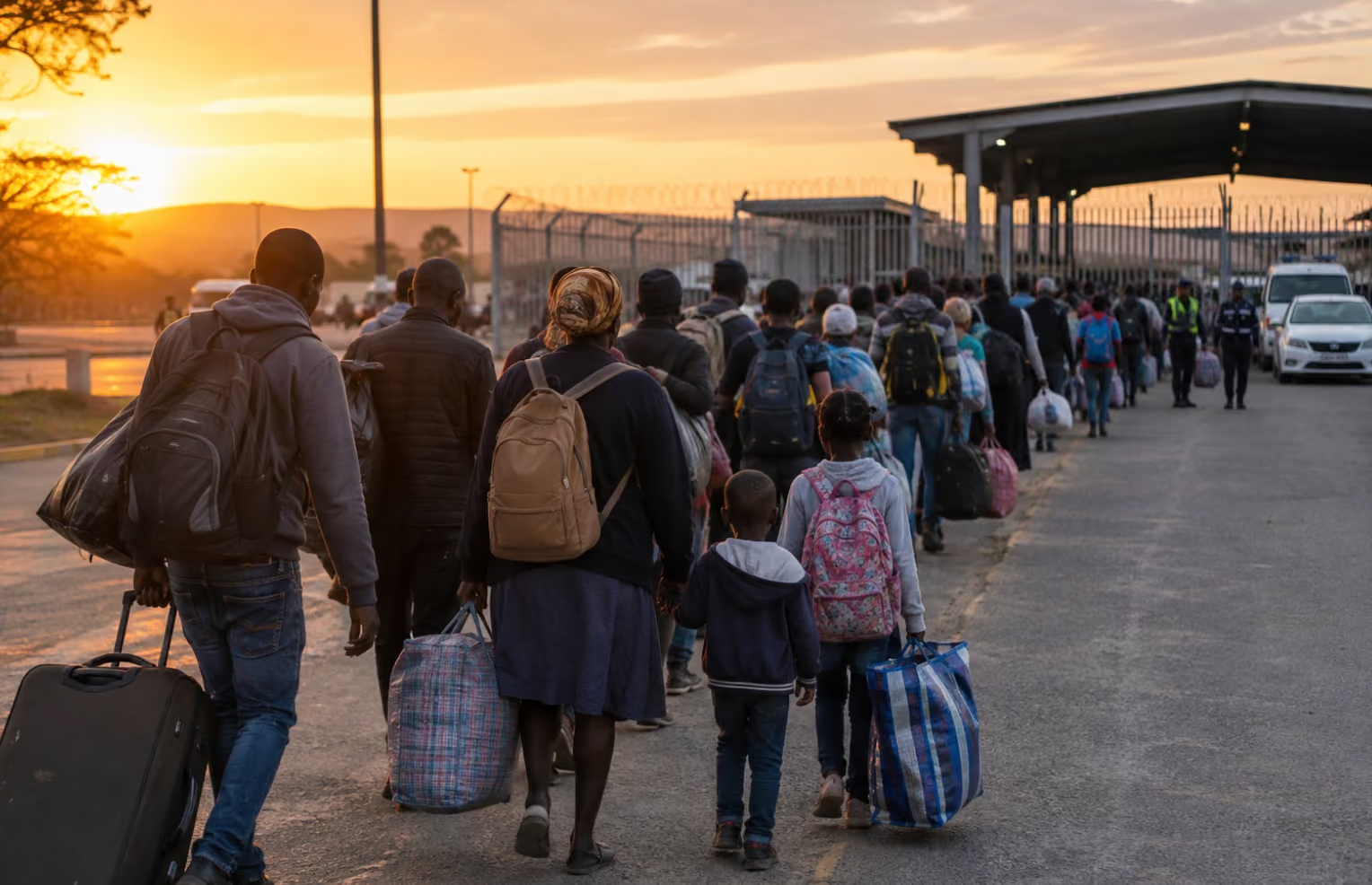
South African authorities revealed this week that around 19,000 individuals have been formally deported since April, reflecting a noticeable tightening of immigration enforcement across the country.
In recent months, more than 178,000 African migrants have departed South Africa, driven by intensified action against undocumented immigration as well as increasingly hostile anti-migrant demonstrations. Many of those leaving have reportedly cited concerns over personal safety and the possibility of violent attacks.
The scale of the movement represents one of the largest migrant departures from South Africa in recent years, marking a major demographic shift for the continent’s most industrialized economy.
Figures compiled by governments in migrants’ countries of origin show the extent of the movement. Since late May, more than 115,000 people have returned to neighboring Zimbabwe, while over 56,000 have gone back to Malawi. Authorities in Nigeria, Ghana, Mozambique and Lesotho have each reported the return of more than 1,000 citizens from South Africa.
The departures include people formally removed by South African authorities as well as migrants who voluntarily accepted repatriation assistance offered by South Africa or their home governments. Voluntary returns account for the majority of cases, while South Africa confirmed that approximately 19,000 deportations have taken place since April.
Human-rights organizations have voiced concern about the rapid displacement, particularly its effect on children, families and people living with serious health conditions. Thousands of children have reportedly been taken out of school, while some HIV patients have lost access to essential medication and treatment.
The situation also highlights the often-overlooked complexities of migration within Africa itself. Global attention frequently focuses on African migration toward Europe, including episodes such as the movement of tens of thousands of people from Morocco toward the Spanish territory of Ceuta, but migration pressures within the continent can be equally disruptive.
South Africa has witnessed repeated demonstrations targeting undocumented migration throughout the year. These campaigns intensified ahead of nationwide protests on June 30, which some organizers publicly described as a deadline for undocumented migrants to leave the country.
Anti-immigration groups argue that people living in the country without valid documentation are worsening South Africa’s already high unemployment rate, competing for jobs and increasing pressure on public infrastructure and services.
At the same time, South Africa has historically depended heavily on migrant labor. As one of the region’s strongest economies, it has attracted millions of workers from neighboring African countries, many employed in sectors such as agriculture, restaurants, construction and other relatively low-paid industries.
According to South Africa’s 2022 census, approximately 2.4 million foreign nationals were living among a population of roughly 62 million people. Campaigners opposed to undocumented migration maintain, however, that the true number of foreign-born residents may be considerably higher because many people are believed to be living in the country without official documentation.
Some anti-migrant campaigns have reportedly extended beyond peaceful demonstrations. Rights organizations say groups have conducted door-to-door searches, during which migrants have allegedly faced intimidation, physical violence and destruction of homes or businesses.
Reports indicate that even some migrants who were legally residing in South Africa have been caught up in the hostility.
Mozambique’s government has claimed that 11 of its citizens were killed in attacks in South Africa, while authorities in Nigeria and Ghana have also reported deaths involving their nationals.
South African officials have challenged some of those claims, arguing that certain deaths were linked to ordinary criminal incidents such as robberies rather than specifically to anti-migrant violence. Police investigations into a number of the cases remain ongoing.
The controversy has also created unusual diplomatic friction between South Africa and several African governments, with some accusing Pretoria of failing to adequately confront xenophobia.
Ghana sought to place concerns about alleged anti-migrant hostility and xenophobia in South Africa on the agenda of an African Union meeting scheduled for October.
South Africa opposed that specific proposal but called instead for a broader regional conversation about migration management across the African continent.
International organizations have also raised alarms about the welfare of children affected by the sudden departures. UNICEF and the United Nations Committee on the Rights of the Child warned that children caught up in poorly coordinated migration movements may face greater exposure to violence, exploitation, separation from family members and psychological trauma.
The agencies emphasized that these dangers become especially serious when population movements happen quickly, without proper documentation or without coordination between authorities.
Although several governments have not released complete demographic breakdowns, Malawi reported that nearly 4,000 children under five years old were among those returning from South Africa.
Meanwhile, the Zimbabwe Exemption Permit Coordinating Committee estimated that more than 11,000 children had returned to Zimbabwe by mid-July.
Zimbabwean authorities have consequently instructed schools to avoid discrimination against returning pupils and to make every reasonable effort to help reintegrate children into the education system.
Healthcare specialists and humanitarian organizations have raised another major concern: many migrants reportedly left South Africa without medication, prescriptions or medical records.
This has created fears that people undergoing treatment for HIV and other chronic illnesses could experience dangerous interruptions in care, particularly in a region already carrying some of the world’s highest HIV infection burdens.
Médecins Sans Frontières, also known as Doctors Without Borders or MSF, responded by setting up temporary clinic facilities at Zimbabwe’s Beitbridge border crossing.
Medical teams there have been assisting returning migrants experiencing trauma and helping patients who lost access to life-saving HIV medication and treatment for other chronic conditions during their journey.
South African authorities also reported that approximately 3,000 people remain at a migrant detention facility near Johannesburg awaiting deportation.
At the same time, around 6,300 immigration inspectors have been deployed across the country to investigate workplaces suspected of illegally employing migrants who do not possess the required documentation.
President Cyril Ramaphosa has publicly condemned violence and intimidation directed at migrants while acknowledging shortcomings in the government’s past enforcement of immigration rules.
His administration has pledged to strengthen border management through additional personnel and modern technology, while introducing dedicated immigration courts designed to process deportation cases more efficiently.
The government has also signaled plans for tougher penalties against employers who knowingly hire undocumented migrants, forming part of a wider effort to tighten South Africa’s immigration system while addressing growing public concern over illegal migration.
For questions or comments write to contactus@bostonbrandmedia.com
Source: NDTV



-v3.jpg)


-v3-02.jpg)