Stay informed with our newsletter.


EN





Global trade is entering a new era as geopolitics, tariffs, national security and supply-chain disruptions increasingly influence how goods move around the world. While global trade remains resilient, rising restrictions and uncertainty are pushing businesses to diversify suppliers and strengthen regional sourcing. For consumers, these changes can affect the prices of electronics, food, fashion, travel and online purchases. By 2027, supply-chain resilience could become a major competitive advantage for global brands.
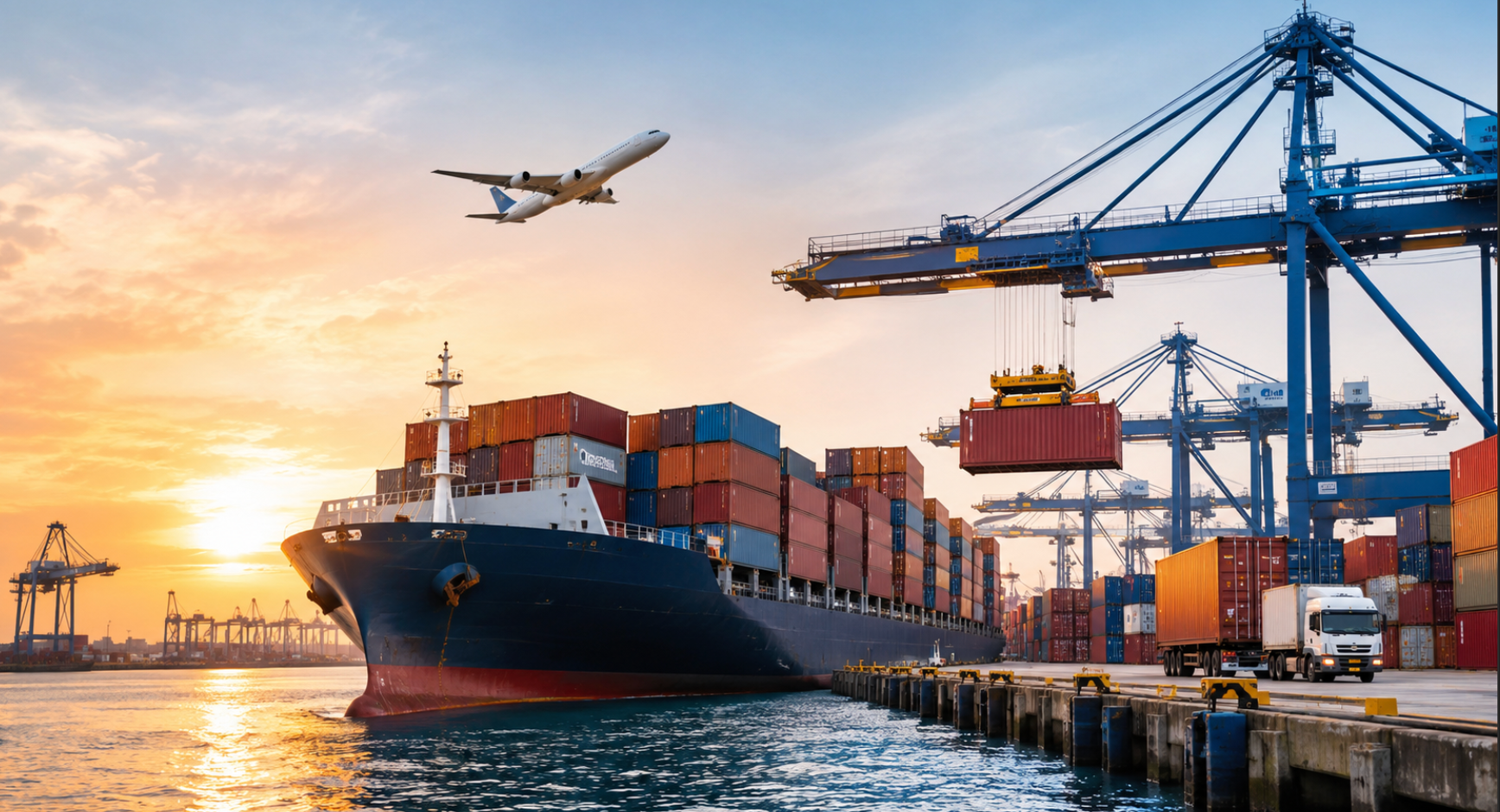
For decades, the basic logic of globalisation was relatively straightforward: companies searched the world for the most efficient places to manufacture products, source raw materials and assemble components. Cost, efficiency and scale largely determined where goods were produced.
That model is changing.
International trade is increasingly being shaped not only by economics, but also by geopolitics, national security, tariffs, energy security, industrial policy and supply-chain resilience. Governments are paying closer attention to where strategically important products come from, while businesses are reassessing the risks of relying too heavily on a single country, supplier or shipping route.
The result is not the end of globalisation. Instead, it is the emergence of a more fragmented and strategically organised global trading system.
UN Trade and Development (UNCTAD) says geopolitical tensions, changing trade policies and growing uncertainty are already restructuring global value chains. Governments are increasingly using trade, industrial, financial and technology policies to pursue both economic and national-security objectives.
And eventually, those changes can reach somewhere much closer to home: the consumer's wallet.
One of the most striking features of the current environment is that global trade continues to expand despite rising political and economic friction.
UNCTAD estimates that global trade in goods and services reached approximately $35 trillion in 2025, an all-time record. Trade grew by roughly $2.5 trillion, or 7.5%, compared with 2024. Goods contributed about $1.8 trillion of the increase, while services added approximately $700 billion.
Yet underneath that record lies a rapidly changing policy environment.
According to the World Trade Organization (WTO), members and observers introduced 1,048 new trade and trade-related measures during the first half of 2026 alone, compared with 1,229 during the whole of 2025. Importantly, those measures include both restrictions and policies designed to facilitate trade; they should not all be interpreted as new barriers.
Nevertheless, the accumulated restrictions are substantial. As of June 30, 2026, import-related restrictive and other non-facilitating measures introduced since 2009 and still in force covered approximately $5.4 trillion of trade - equivalent to 21.3% of world imports. The WTO says this represents the highest level recorded since its trade-monitoring exercise began.
At the same time, world trade has proved surprisingly resilient. The WTO now forecasts global merchandise trade volume to grow 3.9% in 2026, more than double its 1.9% baseline forecast issued in March.
That apparent contradiction - record trade alongside record trade restrictions, captures the complexity of the new global economy.
Businesses once optimised supply chains primarily around efficiency. Increasingly, they must also calculate political risk.
A factory may offer the lowest production cost, but what happens if tariffs suddenly rise? A supplier may be highly efficient, but what happens if exports are restricted? A shipping route may be the fastest, but what happens when conflict makes it unsafe or expensive?
These are no longer theoretical questions.
UNCTAD reported in 2026 that geopolitical tensions and disruptions to key shipping routes were increasing risks across the global economy, affecting energy flows, transportation costs and international commerce.
This is encouraging strategies commonly described as nearshoring, friendshoring and supplier diversification. Instead of sourcing almost everything from the cheapest possible location, companies may increasingly distribute production across several countries or move parts of their supply chains closer to major consumer markets.
That may sacrifice some short-term efficiency, but it can provide something increasingly valuable: resilience.
Tariffs and shipping disruptions can sound distant from everyday life, but international trade connects factories, farms, ports, retailers and consumers across thousands of kilometres.
When the cost of moving or importing products increases, businesses must decide whether to absorb those additional costs, reduce margins, redesign their supply chains or pass some of the expense to customers.
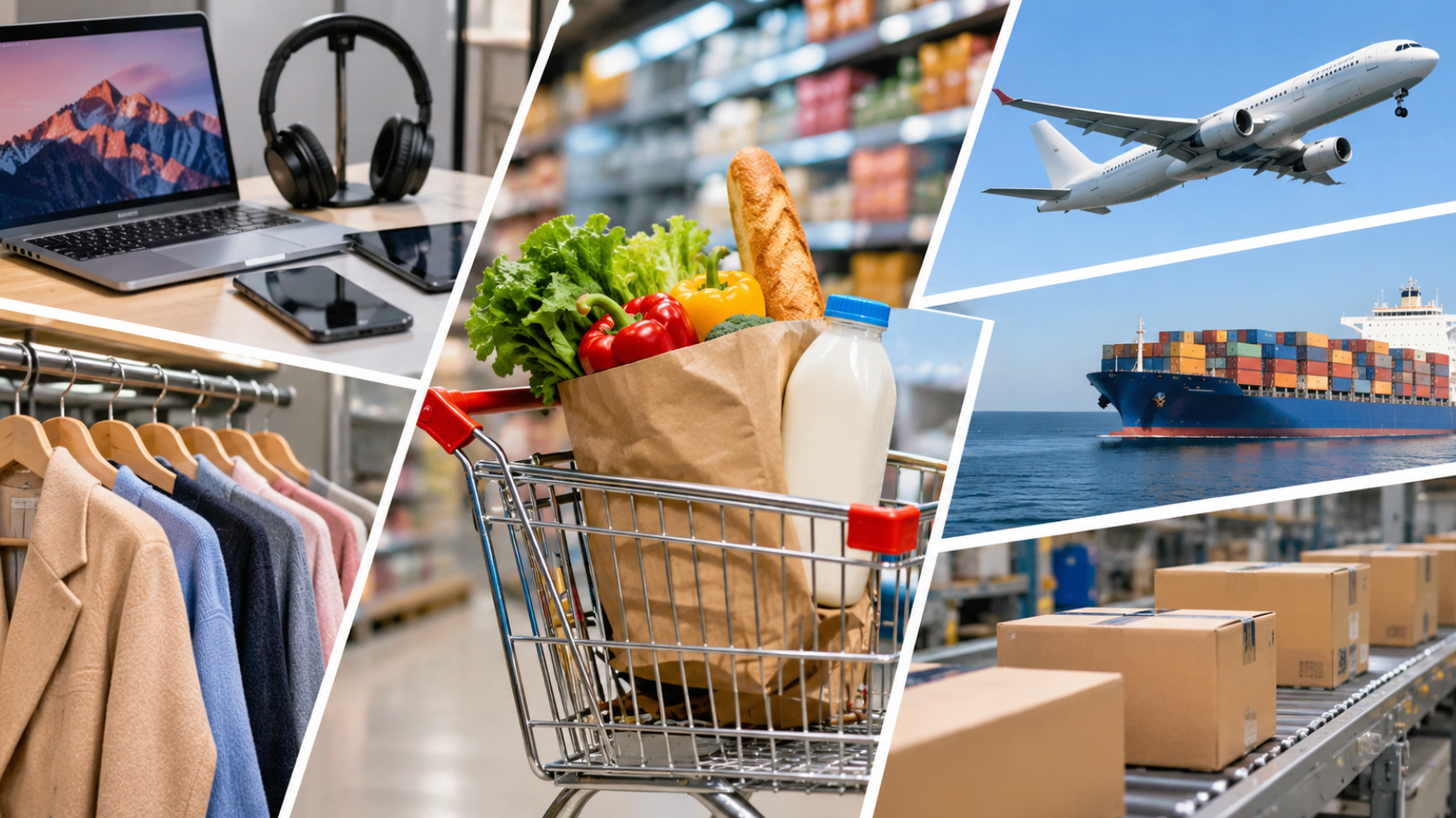
The effects can appear across multiple parts of household spending.
Electronics are particularly exposed because smartphones, computers, televisions and appliances often depend on complex international networks involving semiconductors, displays, batteries, minerals and components manufactured in different countries. Tariffs or export restrictions affecting one part of that chain can alter production costs elsewhere.
Food can also be affected indirectly. Agriculture depends on fuel, fertilisers, machinery, packaging and transportation. Disruption to energy or fertiliser supplies can therefore travel through the system from farms to processors, distributors, supermarkets and eventually consumers.
For fashion, the challenge is equally global. Many brands design products in one market, source materials from another and manufacture garments elsewhere. Changing tariffs, freight costs or geopolitical risks can encourage companies to shift manufacturing locations, reconsider inventories or adjust prices.
Travel is another area where international disruptions matter. Higher energy prices can raise operating costs for airlines and transportation companies. The WTO has already lowered its 2026 forecast for commercial services trade growth to 3.3% from 4.8%, citing the impact of Middle East conflict on transport and travel services among the reasons.
And in online shopping, consumers accustomed to ordering products directly from overseas sellers could increasingly encounter changing duties, shipping costs, sourcing patterns or delivery times as governments revise trade rules.
The defining business question may therefore be changing from “Where can we produce this most cheaply?” to “Where can we produce this reliably?”
Companies that depend heavily on one supplier, country or transportation corridor can find themselves vulnerable when conditions change unexpectedly.
That makes supplier diversification, regional sourcing, inventory visibility, scenario planning and logistics flexibility increasingly important.
Businesses may also need to communicate more effectively with consumers. When prices change because of tariffs, energy costs or supply disruptions, transparency can matter. Customers may be more accepting of price adjustments when brands clearly explain what is happening rather than allowing increases to appear arbitrary.
Supply-chain strategy is therefore becoming part of brand strategy.
The next phase of globalisation is unlikely to mean that companies simply abandon international production. Instead, global supply chains are likely to become more diversified, regionalised and strategically designed.
Consumers could increasingly see familiar products sourced from new manufacturing hubs as businesses spread production across Southeast Asia, South Asia, Latin America, Eastern Europe, Africa and other emerging locations.
Regional suppliers may become more important, while companies could deliberately maintain multiple sourcing options even when doing so costs slightly more.
The objective will increasingly be to avoid a situation in which one factory closure, one tariff, one border restriction or one disrupted shipping corridor can interrupt an entire business.
This represents a fundamental change in corporate thinking.
For much of the previous era of globalisation, efficiency was king. In the emerging era, resilience may command a premium.
A disruption in one strategically important shipping corridor can affect the cost of products thousands of kilometres away.
That is because the price of a product does not simply reflect what it costs to manufacture. It can also include shipping, fuel, insurance, warehousing, financing, customs, inventory and delivery costs. When ships must wait longer, reroute or pay higher insurance and fuel expenses, those additional costs can move through interconnected supply chains.
This is why an event occurring far from a consumer's home can eventually influence the price of a product on a local shelf.
Globalisation is not disappearing. The numbers show the opposite: international trade remains enormous, with $35 trillion in goods and services traded in 2025, while merchandise trade is still expected to expand in 2026.
But the rules governing that trade are changing.
Geopolitics now sits alongside economics. Security sits alongside efficiency. Resilience sits alongside cost.
For governments, the challenge will be balancing national interests with the economic benefits of open trade. For companies, it will be building supply chains capable of surviving an increasingly unpredictable world.
And for consumers, these enormous global shifts may ultimately become visible in a surprisingly ordinary place: the price tag.
For questions or comments write to contactus@bostonbrandmedia.com