Stay informed with our newsletter.


EN





The automotive industry is undergoing one of the most significant transformations in its history as artificial intelligence reshapes how vehicles are designed, manufactured and driven. While electric vehicles defined much of the industry's previous decade, the next wave of innovation is increasingly centered on autonomous driving, intelligent software and connected mobility. Automakers are investing heavily in AI-powered technologies, advanced driver-assistance systems and software-defined vehicles. This transformation is redefining competition, creating new business opportunities and changing what consumers expect from automobiles.
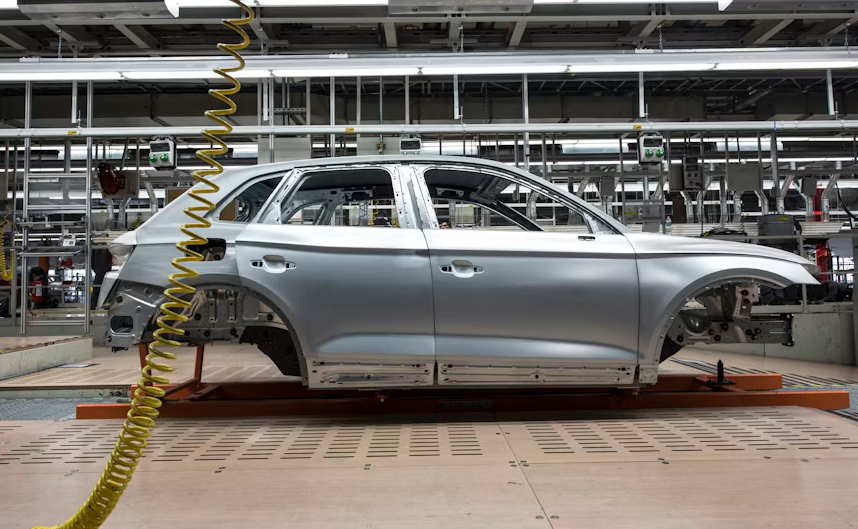
The automotive industry is approaching a technological turning point that could fundamentally change how people travel, how vehicles are manufactured and how automakers compete in the global marketplace. For more than a century, the industry has been defined by engineering breakthroughs in engines, manufacturing efficiency, vehicle design and performance. More recently, electrification emerged as the dominant force reshaping the sector, prompting traditional manufacturers and technology companies to invest billions of dollars in electric vehicle development. Now, a new transformation is taking shape, one increasingly driven by artificial intelligence, autonomous driving, advanced computing and software-defined vehicle architectures.
Artificial intelligence is no longer simply an experimental feature being tested by automotive technology departments. It is becoming a central component of the industry's long-term strategy. From intelligent driver-assistance systems and predictive maintenance to automated manufacturing and personalised in-car experiences, AI is influencing nearly every stage of the automotive value chain. The companies that successfully integrate software, data and advanced computing into their vehicles could gain a significant competitive advantage in a market where traditional measures of performance are no longer the only factors influencing purchasing decisions.
For established automakers, this transition represents both an opportunity and a challenge. Companies that built their reputations on mechanical engineering, manufacturing scale and established distribution networks must now compete in areas historically dominated by technology businesses. Software development, artificial intelligence, semiconductor capabilities and data infrastructure are becoming just as important as vehicle platforms and powertrain engineering. The boundaries between automotive manufacturing and the technology sector are consequently becoming less distinct.
One of the most visible developments in this transformation is the growing sophistication of autonomous driving technology. Companies including Tesla, Waymo, Mercedes-Benz, Toyota, Hyundai and China's XPeng are pursuing different approaches to intelligent mobility. Their investments range from advanced driver-assistance systems that support human drivers to highly automated vehicles designed to operate without continuous human intervention in specific operating environments.
Autonomous driving technology relies on a combination of cameras, radar, lidar sensors, high-performance computing and artificial intelligence models capable of interpreting complex road environments. These systems must recognise pedestrians, identify traffic signals, understand road markings, anticipate the movement of surrounding vehicles and respond to unexpected obstacles. Unlike conventional automotive software, which generally follows predetermined instructions, advanced AI systems must process large amounts of real-world information and make decisions within fractions of a second.
Despite considerable progress, fully autonomous driving remains a complex engineering and regulatory challenge. Road conditions vary considerably between countries, cities and even individual streets. Construction zones, unpredictable pedestrian behaviour, adverse weather and inconsistent road infrastructure can create situations that are difficult for automated systems to interpret reliably. Safety validation, regulatory approval, cybersecurity and public confidence will therefore play decisive roles in determining how quickly autonomous vehicles become commercially widespread.
Nevertheless, the commercial potential is substantial. Autonomous ride-hailing services could eventually reshape urban transportation, reduce the need for traditional vehicle ownership in certain markets and create new revenue opportunities for automakers and mobility companies. Robotaxis also introduce a different business model in which vehicles become part of a continuously operating transportation network rather than products sold exclusively to individual consumers. Companies developing these services are competing not only on vehicle technology but also on fleet management, route optimisation, passenger experience and operating economics.
Artificial intelligence is also transforming the experience inside the vehicle. Modern automobiles are increasingly becoming connected digital environments in which drivers and passengers interact with intelligent voice assistants, personalised entertainment systems and sophisticated navigation platforms. AI-powered interfaces can interpret natural language, recognise user preferences and provide contextual assistance. Instead of relying entirely on conventional dashboard controls and predefined commands, future vehicles are expected to offer more intuitive interactions between occupants and onboard systems.
These developments are changing consumer expectations. Vehicle buyers are increasingly evaluating digital features, connectivity, interface design and the ability to receive software updates alongside traditional considerations such as performance, comfort, safety and fuel efficiency. For automakers, the ability to continuously improve vehicle functionality after purchase could become an important source of customer loyalty and recurring revenue.
This evolution is closely connected to the emergence of software-defined vehicles, widely regarded as one of the most important structural changes in automotive engineering. Traditionally, vehicle functions were controlled through numerous separate electronic control units, each responsible for specific systems such as braking, engine management, infotainment and climate control. Software-defined architectures seek to consolidate and coordinate these functions through more centralised computing platforms, allowing manufacturers to manage vehicle capabilities through software.
The implications extend far beyond entertainment systems and navigation updates. Software-defined vehicles can support improvements to battery management, energy efficiency, driver assistance, vehicle diagnostics and performance. Over-the-air updates allow manufacturers to deliver selected software improvements remotely, reducing the need for customers to visit service centres for every update. This approach also creates opportunities for manufacturers to introduce new digital services throughout a vehicle's operating life.
For the automotive business model, the shift could be significant. Instead of generating revenue primarily through vehicle sales, manufacturers may increasingly explore subscription-based services, connected features, digital upgrades and software-enabled customer experiences. However, consumer acceptance will depend on transparent pricing, reliable functionality and a clear demonstration of value. Automakers that place essential features behind expensive subscriptions risk damaging customer trust, making commercial strategy as important as technological capability.
Artificial intelligence is equally influential behind the factory gates. Automotive manufacturing has already undergone several generations of automation, but AI is introducing new levels of intelligence into production environments. Machine-learning systems can analyse manufacturing data, identify defects, predict equipment failures and improve production scheduling. Computer vision can inspect vehicle components and finished products with considerable precision, helping manufacturers identify quality issues earlier in the production process.
The integration of AI-powered robotics is another area attracting considerable investment. Advanced industrial robots can perform repetitive assembly operations, while emerging humanoid robotics technologies are being developed for tasks that require greater flexibility. Companies such as Tesla and XPeng are exploring the potential applications of humanoid robots alongside their automotive and artificial intelligence programmes. Although widespread commercial adoption remains a longer-term proposition, the development reflects a broader convergence between robotics, manufacturing and intelligent computing.
Predictive maintenance offers another practical application. By analysing sensor readings, operating conditions and historical performance data, AI systems can identify patterns that may indicate component deterioration or equipment failure. Manufacturers and fleet operators can use these insights to schedule maintenance before problems become more serious, potentially reducing downtime and operating expenses. For commercial vehicle operators, where vehicle availability directly affects business performance, these capabilities could deliver considerable economic value.
The growing importance of artificial intelligence is also reshaping the competitive landscape between traditional automotive manufacturers and technology companies. NVIDIA, for example, has established an important position in automotive AI computing by providing platforms and technologies designed to support autonomous driving, simulation and intelligent vehicle development. Its role demonstrates how semiconductor companies and software providers are becoming strategic participants in an industry once dominated primarily by vehicle manufacturers and component suppliers.
At the same time, Chinese automotive companies are emerging as influential competitors in intelligent mobility. Manufacturers such as BYD, XPeng and other technology-oriented electric vehicle businesses are investing in advanced driver-assistance systems, connected vehicle platforms and AI-powered automotive features. Their ability to combine vehicle manufacturing with software development and competitive pricing is creating additional pressure on international automakers to accelerate innovation.
For traditional manufacturers in Europe, the United States, Japan and South Korea, the challenge is not simply to introduce new technologies but to transform their organisational structures and development strategies. Automotive product cycles have historically been measured in years, while software companies operate in much faster development environments. Successfully competing in the next generation of mobility will require automakers to build stronger relationships with semiconductor suppliers, technology companies, AI researchers and software developers.
The transition also raises important questions about cybersecurity and data protection. Connected vehicles generate substantial amounts of information relating to vehicle performance, location, driver behaviour and user preferences. While this data can improve safety, personalisation and predictive maintenance, it also introduces potential risks. Manufacturers must protect vehicle systems against cyberattacks, prevent unauthorised access and establish clear policies governing the collection and use of customer information. As vehicles become increasingly connected, cybersecurity will become a fundamental component of automotive safety rather than simply an information technology concern.
Regulation will be another decisive factor. Governments and transportation authorities must establish frameworks that address autonomous driving, vehicle liability, cybersecurity, data privacy and the testing of AI-powered systems. Different regulatory approaches across major markets could influence how quickly manufacturers introduce new technologies internationally. Companies operating across multiple jurisdictions will need to demonstrate that their systems meet local safety standards while maintaining consistent performance.
The economic implications of this transformation are equally significant. The automotive industry supports millions of jobs across manufacturing, engineering, logistics, software development and retail distribution. Greater automation could change workforce requirements, increasing demand for specialists in AI, robotics, cybersecurity, data science and advanced electronics while reducing reliance on certain repetitive manufacturing tasks. This shift will make technical training and workforce reskilling increasingly important for manufacturers and governments.
For consumers, the next generation of vehicles promises improvements in convenience, connectivity, safety and efficiency. Intelligent driver-assistance technologies can help reduce the risk of certain road accidents, while connected systems can provide more personalised driving experiences. Autonomous transportation could eventually expand mobility options for people who cannot drive independently. However, the pace of adoption will depend on affordability, reliability, infrastructure readiness and public confidence.
The industry's transformation also presents opportunities beyond passenger vehicles. Commercial transportation, logistics, public transit and industrial mobility are all potential beneficiaries of AI-powered systems. Autonomous trucks, intelligent fleet-management platforms and predictive logistics technologies could improve the movement of goods, reduce operational inefficiencies and support more connected supply chains. These developments could create entirely new markets for automotive manufacturers and technology providers.
Looking ahead, the automotive industry's competitive landscape is likely to be shaped by the companies that can successfully combine hardware engineering, artificial intelligence, software architecture and large-scale manufacturing. Electric vehicles will remain an important part of the transition, but electrification alone may no longer be sufficient to differentiate manufacturers. Battery performance, vehicle design and production costs will continue to matter, while software intelligence and connected capabilities increasingly influence the overall ownership experience.
The next decade will therefore be defined by a broader transformation in which the automobile evolves from a predominantly mechanical product into an intelligent, connected and continuously updated mobility platform. The transition will not happen uniformly, and conventional vehicles will remain important in many markets. However, the direction of investment across the industry indicates that artificial intelligence and software are becoming central to the future of automotive innovation.
For automakers, the challenge is to move beyond traditional manufacturing strengths and develop the technological capabilities required to compete in an increasingly software-driven economy. For technology companies, the opportunity lies in becoming essential partners in the design, operation and intelligence of future vehicles. And for consumers, the changes could fundamentally redefine the relationship between people, transportation and technology.
The automotive industry's next great competitive battle will not be determined solely by who builds the fastest car, produces the most affordable electric vehicle or operates the largest factory. It will increasingly be shaped by who develops the safest autonomous systems, the most intelligent software platforms and the most reliable connected mobility solutions. Artificial intelligence is no longer simply influencing the future of automobiles. It is becoming one of the forces defining what the automobile will be.
For questions or comments write to contactus@bostonbrandmedia.com