Stay informed with our newsletter.


EN





The global pasta industry is entering a new premium era as consumers increasingly seek bronze-cut textures, slow drying, quality durum wheat, authentic provenance and nutritional innovation. Italian icons including De Cecco, Barilla, Garofalo, Rummo and La Molisana continue to lead, while brands such as Felicetti, Rao’s and Banza are expanding the category in new directions. With the global pasta market continuing to grow, craftsmanship, authenticity and premiumization are reshaping this everyday staple.
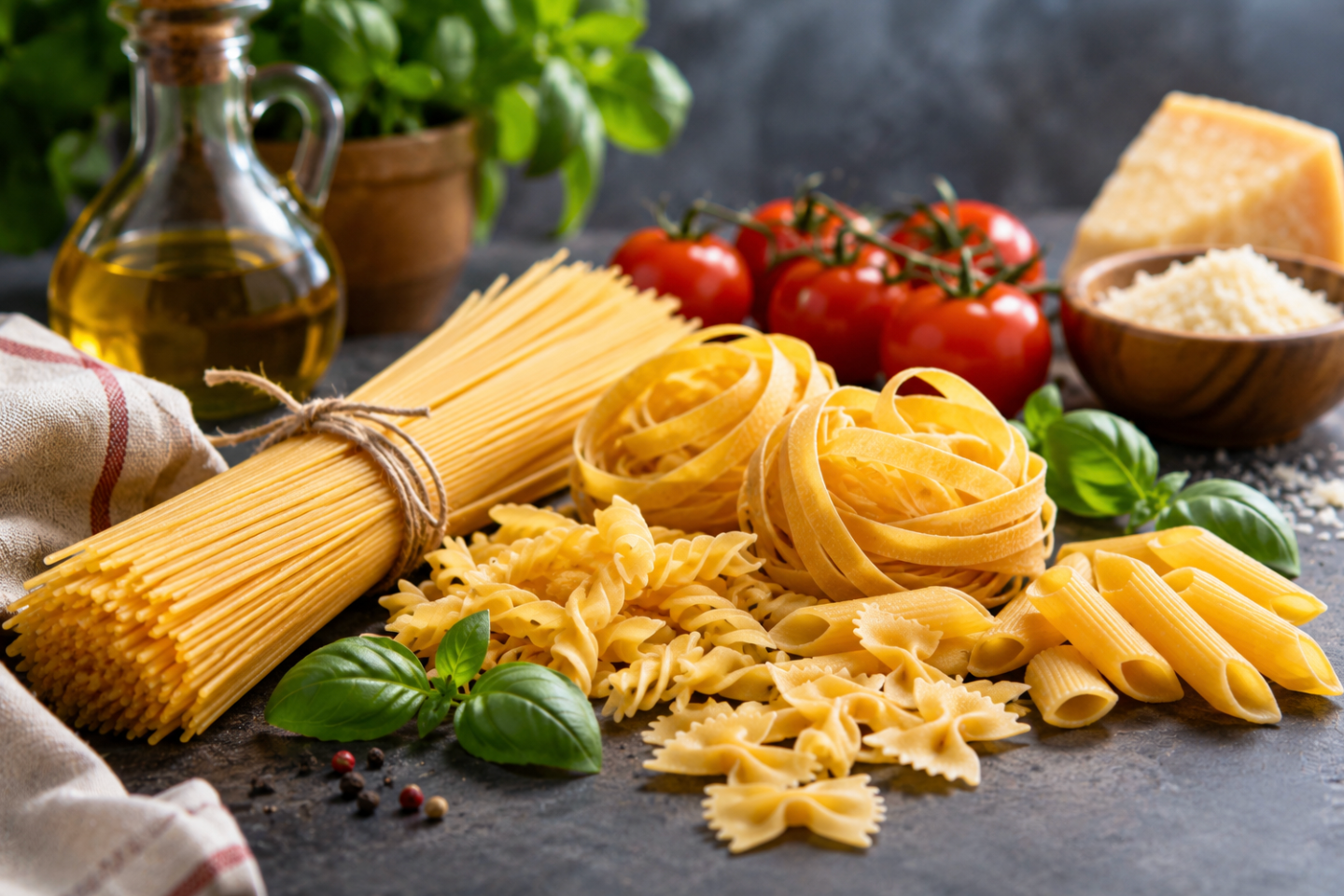
For generations, pasta has been one of the world's simplest foods: durum wheat, water and centuries of tradition. But in 2026, the humble packet of dried pasta is undergoing a transformation. Consumers are increasingly looking beyond price and familiar shapes toward bronze-cut textures, slow drying, premium durum wheat, geographical provenance, higher protein and artisanal production.
The result is a new global battle between established Italian giants and a growing premium segment.
A November 2026 ranking by Global Brands Magazine placed De Cecco, Barilla and Garofalo as its top three pasta brands, followed by names including Rummo, La Molisana, Pastificio Di Martino, Rao's, Felicetti and Banza. Importantly, the ranking assessed publicly documented production methods, ingredient transparency, protected status, scale and availability rather than conducting a blind taste test.
At the same time, the broader pasta industry is expanding. Fortune Business Insights estimates that the global pasta market will grow from $79.81 billion in 2026 to $120.13 billion by 2034, representing a projected compound annual growth rate of 5.24%.
Founded in 1886 in Fara San Martino, Abruzzo, De Cecco represents perhaps the clearest example of traditional manufacturing becoming a modern premium proposition.
The company continues to use bronze dies, which create the slightly rough surface that helps sauce adhere to pasta. De Cecco also uses cold mountain water from its own spring and says some pasta formats can take up to 36 hours to dry at low temperatures.
Its production philosophy stands in contrast to rapid industrial drying. De Cecco's sustainability reporting says rapid processes can take roughly 3–5 hours for short pasta and 4–6 hours for long pasta, while its own low-temperature system requires substantially longer periods depending on the shape.
That difference illustrates what increasingly defines premium dried pasta in 2026: how pasta is manufactured matters almost as much as the ingredients themselves.
De Cecco also openly discusses its wheat sourcing. Rather than claiming exclusively Italian grain, it says it selects durum wheat from Italy, California and Arizona, choosing different varieties for qualities including flavour, protein and the ability to maintain an al dente texture.
If De Cecco represents premium tradition, Barilla represents extraordinary global scale.
Founded in Parma in 1877, Barilla remains a dominant force in pasta. According to the company's 2025 annual report, its share of the global pasta market by volume reached 18.5%, while Barilla Group reported turnover of approximately €4.84 billion.
But the more interesting story is Barilla's movement into premium pasta.
Its Al Bronzo line uses bronze-cut processing to target consumers seeking a more textured, premium product. In Italy, Al Bronzo finished 2025 with a remarkable 65% increase in volume compared with the previous year, according to Barilla's annual report. The range also recorded strong progress in France's premium segment.
That growth points to a significant change in consumer behaviour. Pasta is still an affordable staple, but shoppers increasingly appear willing to trade up for texture, authenticity and restaurant-style cooking performance.
Few places are more closely associated with premium pasta than Gragnano, near Naples.
Garofalo traces its pasta-making history to 1789 and produces Pasta di Gragnano IGP, one of the strongest geographical credentials available in the pasta industry.
The European protected designation is far more than a marketing label. Pasta di Gragnano IGP must be produced within the municipality of Gragnano, extruded through bronze dies and manufactured according to defined production requirements. The protected status dates from 2013.
This combination of place, heritage and regulated production has become especially powerful as consumers seek food with identifiable origins.
Garofalo also demonstrates how artisanal positioning can coexist with international scale. The brand exports to more than 60 countries, while parent company Ebro Foods has continued investing in expanding Garofalo's production capacity in Gragnano.
Beyond the three largest names, several Italian producers are increasingly visible internationally.
Rummo has built its identity around its slow-processing philosophy and cooking performance. La Molisana, meanwhile, combines a long Italian heritage with an increasingly strong emphasis on grain sourcing and premium positioning.
Then there is Pastificio Di Martino, another Gragnano producer benefiting from the growing international appeal of Pasta di Gragnano IGP.
Together, these brands demonstrate that premiumization is not simply about charging more. It is increasingly about communicating where wheat comes from, how dough is extruded, how slowly pasta is dried and why those processes affect the finished product.
At the more artisanal end of the market sits Pastificio Felicetti, founded in 1908 in the Italian Dolomites.
Its premium Monograno range takes traceability further by focusing on specific wheat varieties and origins. Felicetti's production story, rooted in its high-altitude Trentino location, shows how pasta is increasingly adopting characteristics traditionally associated with categories such as wine, coffee and chocolate: terroir, provenance, craftsmanship and ingredient identity.
For premium consumers, pasta is no longer necessarily an interchangeable commodity.
Italian heritage remains enormously powerful, but the premium pasta boom has also created opportunities elsewhere.
American brand Rao's, better known historically for its premium sauces, has expanded its presence in pasta with bronze-cut products. Meanwhile, Banza represents an entirely different interpretation of premiumization.
Instead of competing primarily on Italian heritage, Banza built its proposition around chickpea-based, higher-protein and gluten-free pasta.
This reflects another important change in the market. Premium pasta is splitting into multiple directions: traditional Italian craftsmanship on one side and health-, nutrition- and ingredient-led innovation on the other.
Recent market analysis describes a similar fragmentation, with consumers increasingly seeking whole-wheat, legume-based and high-protein products alongside authentic bronze-die and specialty-durum pasta.
One phrase increasingly appearing on premium pasta packaging is "bronze cut."
Traditional bronze dies leave microscopic irregularities across the pasta's surface, producing its characteristically rough appearance. This can help sauce cling to the pasta rather than simply sliding off.
By comparison, high-speed industrial processes can produce smoother pasta more efficiently.
That distinction has become a powerful marketing tool because consumers can actually see and feel the difference. Premium pasta often looks paler, rougher and more floury than highly polished conventional varieties.
Combined with slow, lower-temperature drying, bronze extrusion has therefore become one of the clearest signals of the new premium pasta economy.
Despite growing international competition, Italy's position remains formidable.
According to Eurostat figures cited in the 2026 ranking, Italy produced approximately 4.2 million tonnes of pasta in 2023, accounting for around 68% of total EU pasta production. Global pasta production was nearly 17 million tonnes annually, while Italy exported more than 2.4 million tonnes in 2024, worth approximately €4.02 billion.
Europe more broadly remains the industry's biggest regional market. Fortune Business Insights estimates that Europe accounted for 38.4% of the global pasta market in 2025, while dried pasta represented more than 83% of the market by type.
But future growth will increasingly come from consumers viewing pasta as something more than a cheap pantry staple.
The biggest transformation underway in 2026 is therefore not necessarily how much pasta people eat. It is what kind of pasta they are prepared to buy.
In mature markets, analysts expect value growth increasingly to depend on premiumization, portfolio tiering and product innovation, rather than dramatic increases in per-capita consumption.
That gives established companies an opportunity, but also creates space for smaller specialist producers.
De Cecco can sell slow drying. Barilla can combine global scale with Al Bronzo. Garofalo and Di Martino can leverage Gragnano's protected heritage. Felicetti can emphasize traceability and specialized grains, while brands such as Banza can redefine pasta around nutrition.
The world's best pasta brands in 2026 therefore aren't competing on taste alone.
They are competing over craftsmanship, heritage, wheat quality, texture, nutrition, provenance and authenticity.
And that may be the most important development of all. One of the world's simplest foods is becoming one of its most interesting premium categories.
For questions or comments write to contactus@bostonbrandmedia.com