Stay informed with our newsletter.
.webp)


EN





The fake tanning industry is rapidly expanding as consumers seek a sun-kissed glow without the risks of UV exposure. Skincare-infused self-tanners, customizable drops, gradual lotions, and cleaner beauty formulas are attracting younger audiences and turning sunless tanning into a year-round routine. The trend reflects a wider shift toward health-conscious beauty, where people want visible results, skin benefits, convenience, and confidence without compromising long-term skin health or relying on traditional tanning beds and damaging sun exposure habits.
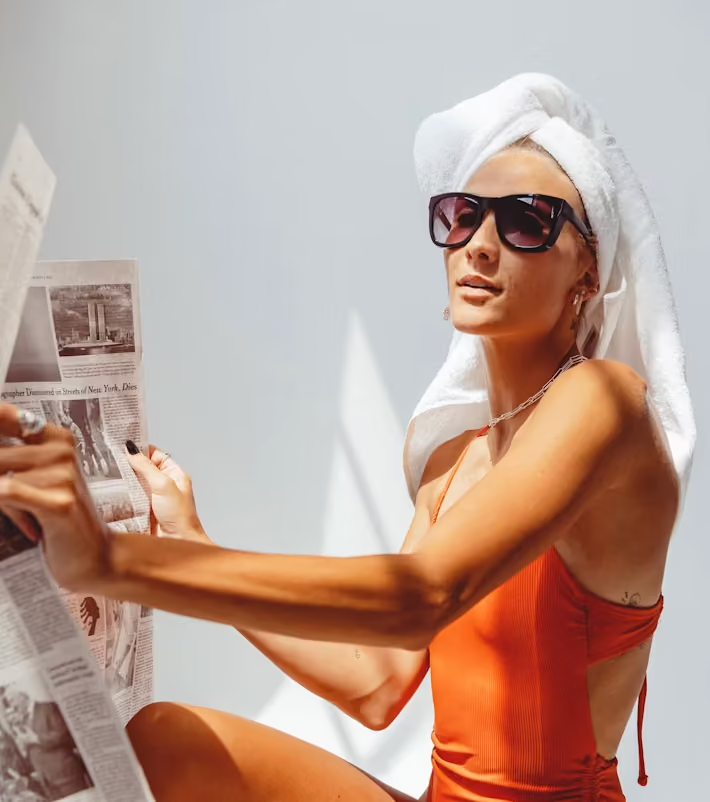
The fake tanning industry is having a major glow-up.
Once associated with streaky orange finishes, strong chemical smells, and last-minute holiday prep, sunless tanning has become one of beauty’s fastest-evolving categories. Today’s consumers are no longer just looking for a darker complexion. They want a healthy-looking glow, skin-friendly formulas, and a beauty routine that does not rely on harmful UV exposure.
This shift has pushed fake tanning from a seasonal niche into a year-round beauty movement. From self-tanning drops and gradual tanning lotions to skincare-infused bronzing serums, the category is being rebuilt for a new generation of consumers who care about appearance, convenience, and skin health at the same time.
The most important point is clear: the modern tanning consumer wants the glow without the damage.
The growth of the fake tanning industry is being driven by a powerful combination of beauty trends and health awareness. According to Fortune Business Insights, the global self-tanning products market was valued at US$1.16 billion in 2024 and is projected to grow from US$1.22 billion in 2025 to US$1.99 billion by 2032, at a CAGR of 7.2%.
Other market estimates also point to strong momentum. Persistence Market Research projects the global self-tanning products market to reach US$1.4 billion in 2026 and US$2.1 billion by 2033, growing at a CAGR of 6.1%. Meanwhile, The Insight Partners projects the market to rise from US$1.29 billion in 2025 to US$2.17 billion by 2034, citing rising focus on skin health, UV-safe beauty alternatives, and premium skincare-infused tanning formulations as key growth drivers.
The numbers may vary by research firm, but the direction is consistent: fake tanning is no longer a minor beauty segment. It is becoming a global consumer category.
For decades, a bronzed complexion was linked with holidays, glamour, and outdoor confidence. But the conversation around tanning has changed dramatically.
Health organizations have repeatedly warned about the risks of UV exposure. The International Agency for Research on Cancer classified UV-emitting tanning devices as “carcinogenic to humans” in 2009, placing them in its highest cancer-risk category. The American Academy of Dermatology also states that indoor tanning beds and lamps should be avoided because UV radiation from indoor tanning is a risk factor for skin cancer.
The American Cancer Society notes that exposure to UV rays from sunlight or tanning devices is a risk factor for all types of skin cancer.
This has created a major opening for the sunless tanning industry. Consumers still want the cosmetic effect of a tan, but many are now searching for safer-looking alternatives. The American Academy of Dermatology explains that a self-tanner can offer a tan-like appearance without increasing the risk of early wrinkles, leathery skin, and skin cancer caused by UV tanning.
In other words, fake tanning is benefiting from one of the biggest shifts in beauty: skin protection is becoming more desirable than sun damage.
One of the biggest reasons the category is expanding is product innovation.
Old self-tanners were often designed around one promise: color. New self-tanners are being designed around color plus care. Beauty brands are now adding ingredients commonly associated with skincare, such as hyaluronic acid, niacinamide, vitamin C, antioxidants, coconut water, and moisturizing oils.
Recent beauty coverage has highlighted tanning drops that can be mixed with moisturizers and include skincare benefits such as hydration and antioxidant support. Products from brands such as Tan-Luxe, Isle of Paradise, Tanologist, Coco & Eve, and L’Oréal Paris are being positioned not just as tanning products, but as part of a broader skincare routine.
Vogue recently described fake tanning as having a “big glow up,” noting that brands are moving beyond traditional mousse formats into daily serums, tanning drops, gradual mists, and customizable formulas. The same report also pointed to rising interest among younger consumers, male users, and buyers looking for more natural-looking results rather than the overly bronzed look of the past.
This is important because younger audiences, especially Gen Z and younger millennials, are highly ingredient-aware. They do not want a product that simply changes the color of the skin. They want one that fits into a cleaner, smarter, more skin-conscious beauty routine.
Social media has also played a major role in the category’s rise.
TikTok, Instagram Reels, beauty tutorials, influencer routines, “get ready with me” videos, and holiday prep content have made self-tanning highly visible. What was once a private bathroom routine has become a shareable beauty ritual.
Consumers now watch creators compare tanning drops, test overnight formulas, review transfer-proof claims, and show before-and-after results. This has made fake tan more accessible and less intimidating for first-time users.
The category also benefits from visual proof. Unlike many skincare products, where results can take weeks, self-tanners can produce visible results in hours. That makes them ideal for social media, where instant transformation drives engagement.
For brands, this is powerful. Fake tanning products are naturally suited to tutorials, testimonials, product demos, and influencer-led education. The more consumers see realistic application methods, the more confidence they gain in trying the category.
Another key trend is premiumization.
Fake tanning is no longer limited to low-cost drugstore lotions. While affordable products remain important, consumers are increasingly willing to pay more for formulas that promise better ingredients, smoother application, less odor, longer wear, and more natural color.
Vogue reported that modern fake tanning products now range widely in price, from budget options to premium products priced above US$100, reflecting the category’s move from simple body color to performance-led beauty.
This premium shift mirrors what has already happened in skincare, fragrance, and bodycare. Consumers are treating body products with the same seriousness once reserved for facial skincare. A 2026 Vogue report on bodycare noted that luxury bodycare is gaining momentum as consumers embrace holistic wellness routines and demand more research-backed, premium body products.
Fake tanning fits perfectly into this movement. It sits at the intersection of beauty, bodycare, confidence, wellness, and skin protection.
Although sunless tanning avoids UV tanning, it is not a replacement for sun protection.
The U.S. Food and Drug Administration says dihydroxyacetone, commonly known as DHA, is approved for external application to the human body in sunless tanning products. However, the FDA also advises consumers to avoid inhaling these products or applying them to the eyes, lips, or mucous membranes.
This means the industry must communicate responsibly. A self-tanner can help create a bronzed look, but it usually does not protect the skin from UV rays. Consumers still need broad-spectrum sunscreen, protective clothing, and careful sun exposure habits.
The most responsible message is not “tan safely in the sun.” It is: if you want a tan-like look, sunless tanning is a smarter cosmetic alternative to UV tanning, but sunscreen is still essential.
The explosion of the fake tanning industry reflects a broader cultural shift. Consumers are no longer choosing between appearance and health. They want products that deliver both.
This is why the category is expanding so quickly. Fake tanning offers confidence without requiring sun damage. It gives beauty brands a growing space for innovation. It attracts younger consumers through social media. It creates room for premium formulas. And it aligns with the global movement toward preventive skincare and health-conscious beauty.
The future of tanning is not about lying under UV rays or chasing the darkest possible result.
It is about customizable glow, skin-first formulas, year-round confidence, and safer beauty choices.
As consumers become more educated about UV risks and more demanding about product quality, the fake tanning industry is positioned for continued growth. The old tanning culture was about exposure. The new tanning culture is about control.
And that is why sunless tanning is no longer just a beauty trend, it is becoming a global skincare-powered business boom.
For questions or comments write to contactus@bostonbrandmedia.com



-v3.jpg)


-v3-02.jpg)