Stay informed with our newsletter.
.webp)


EN





Thousands of mourners filled Tehran's Grand Mosalla as funeral ceremonies for Iran's late Supreme Leader Ayatollah Ali Khamenei began with chants of "Death to America" and "Death to Israel." The six-day state funeral has become both a religious observance and a political demonstration, underscoring Tehran's continued hostility toward the United States and Israel. The emotionally charged event comes amid heightened regional tensions, renewed calls for revenge, and growing uncertainty over Iran's future leadership and foreign policy.
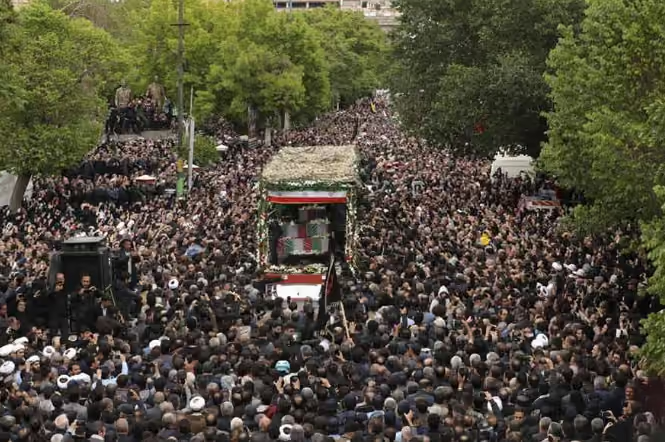
The funeral of Iran's late Supreme Leader Ayatollah Ali Khamenei opened with a familiar display of anti-Western rhetoric on Saturday, as tens of thousands of mourners packed Tehran's Grand Mosalla mosque chanting "Death to America" and "Death to Israel" during the first day of a six-day state mourning ceremony.
The gathering, broadcast live on Iranian state television, quickly evolved beyond a religious farewell into a powerful political spectacle. Waves of mourners carrying Iranian flags, red banners symbolizing martyrdom and vengeance, and portraits of Khamenei filled the sprawling religious complex while chants demanding revenge echoed throughout the crowd.
Iranian authorities have portrayed the funeral as a demonstration of national unity and resilience following Khamenei's death, while government officials expect millions to participate in ceremonies scheduled across multiple cities in the coming days. The coffin is expected to remain in Tehran before processions continue to other major religious centers ahead of his burial.
The slogans directed at the United States and Israel reflected decades of official rhetoric embedded in the ideology of the Islamic Republic. The funeral comes amid already strained relations between Tehran and Washington, with regional tensions remaining high following months of military confrontation and diplomatic uncertainty.
The emotionally charged atmosphere intensified further as speakers addressed the crowd with calls for retaliation against those blamed for Khamenei's death. Some attendees responded with repeated chants demanding revenge, underscoring the political significance of the event beyond its religious symbolism.
While Iranian state media highlighted the massive turnout as evidence of public solidarity, critics of the Islamic Republic argued the ceremonies also serve as a carefully orchestrated display of state power. Opposition figures outside Iran have described the funeral as a propaganda event, pointing to ongoing economic hardship and political divisions within the country.
Security across Tehran has been significantly tightened as Iranian officials prepare for additional funeral events expected to continue through the week. The ceremonies are being closely watched by governments across the Middle East and beyond, with analysts viewing them as an important indicator of Iran's domestic stability and the direction its leadership may take in the months ahead.
For questions or comments write to contactus@bostonbrandmedia.com



-v3.jpg)


-v3-02.jpg)