Stay informed with our newsletter.
.webp)


EN





Europe is facing another week of dangerous extreme heat, with temperatures climbing above 40°C in parts of Spain, Portugal and central Europe while Britain recorded its hottest day of the year. The heat is intensifying drought, raising wildfire risks and putting pressure on public health systems. Scientists say increasingly frequent and severe heatwaves are consistent with a warming climate. Millions of Europeans are confronting dangerous temperatures as governments urge residents to limit exposure and stay hydrated during the ongoing heat.
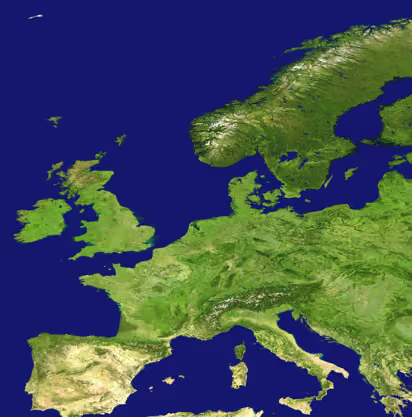
Europe is once again confronting the dangerous reality of a hotter climate as a powerful heatwave sweeps across large parts of the continent, pushing temperatures into the 40s Celsius and fueling wildfires, drought and growing concerns about public health.
The latest heatwave is affecting countries from the Iberian Peninsula to Central Europe and the Balkans. In southern Spain, temperatures have been forecast to reach roughly 42°C to 44°C in some areas, while Portugal and other parts of southern Europe are also experiencing exceptionally high temperatures.
Britain, which is generally less accustomed to prolonged extreme heat than southern Europe, recorded its hottest day of the year when temperatures reached 38.1°C at Kew Gardens in London. Parts of continental Europe simultaneously experienced temperatures above 40°C.
Extreme heat is more than an uncomfortable spell of summer weather. Prolonged periods of high temperatures can place significant stress on the human body, particularly among older adults, young children and people with existing vulnerabilities.
The danger can be especially severe when nighttime temperatures remain high, preventing the body from recovering from daytime heat.
The health consequences of Europe's extreme heat have already become a major concern. A recent analysis of mortality data estimated that around 16,000 excess deaths occurred across Europe during one week of extreme heat in late June. Researchers and public-health experts emphasize that heat-related deaths can be difficult to measure because extreme temperatures often worsen underlying health conditions.
The heatwave is also creating ideal conditions for wildfires.
France, Spain, Germany, Greece, Croatia, Belgium and other European countries have battled fires this summer, forcing evacuations and placing enormous pressure on firefighters and emergency services.
In western Germany, a major wildfire in North Rhine-Westphalia recently burned more than 300 hectares and forced more than 2,000 people to evacuate. Around 1,500 emergency personnel were involved in the response.
France has also faced extensive wildfire activity during an exceptionally dry year, while Spain and Greece have confronted fires threatening communities, forests and cultural landmarks.
Heat is arriving alongside increasingly severe water shortages in parts of Europe.
The Danube, one of the continent's most important rivers, has reached exceptionally low levels in parts of Central Europe. In Hungary, the combination of drought and extreme heat has damaged agriculture, threatened water supplies and even affected energy production.
Low river levels can have consequences far beyond the environment. They can disrupt shipping, agriculture, hydropower and industrial operations while increasing competition for increasingly scarce water resources.
Scientists have repeatedly warned that climate change is making extreme heat more likely and more intense.
Europe is warming particularly rapidly, and recent research has linked the continent's increasingly severe heatwaves to human-caused climate change. Heatwaves are already among Europe's deadliest weather hazards, creating risks that extend well beyond the days when temperatures peak.
The challenge for European governments is therefore no longer simply responding to occasional heatwaves. Cities and communities are increasingly being forced to adapt to a climate in which extreme heat may become a recurring feature of summer.
That means expanding access to cooling centers, protecting outdoor workers, improving urban design, strengthening early-warning systems and preparing hospitals for surges in heat-related illness.
For millions of Europeans, this week's heatwave is another reminder that extreme temperatures are becoming a defining feature of the continent's summers.
The immediate priority remains protecting lives: staying indoors during the hottest hours, drinking enough water, checking on vulnerable neighbors and following local heat and wildfire warnings.
But the larger question is harder to answer. As Europe experiences repeated heatwaves, droughts and wildfires in the same season, governments face growing pressure to determine how quickly their cities, infrastructure and economies can adapt.
For Europe, extreme heat is no longer simply a summer inconvenience. It is increasingly a test of how prepared the continent is for a warmer and more volatile future.
For questions or comments write to contactus@bostonbrandmedia.com



-v3.jpg)


-v3-02.jpg)