Stay informed with our newsletter.


EN





Global aviation is facing transformation on two fronts. easyJet shareholders have approved Apollo’s £5.7 billion takeover, potentially ending more than 25 years as a publicly listed airline, while the industry confronts a looming shortage of CORSIA-eligible carbon credits. With airlines expected to require more than 200 million emissions units by January 2028, rising carbon costs could add billions to industry expenses, reshaping airline investment, profitability, sustainability strategies and ultimately the economics of global air travel.
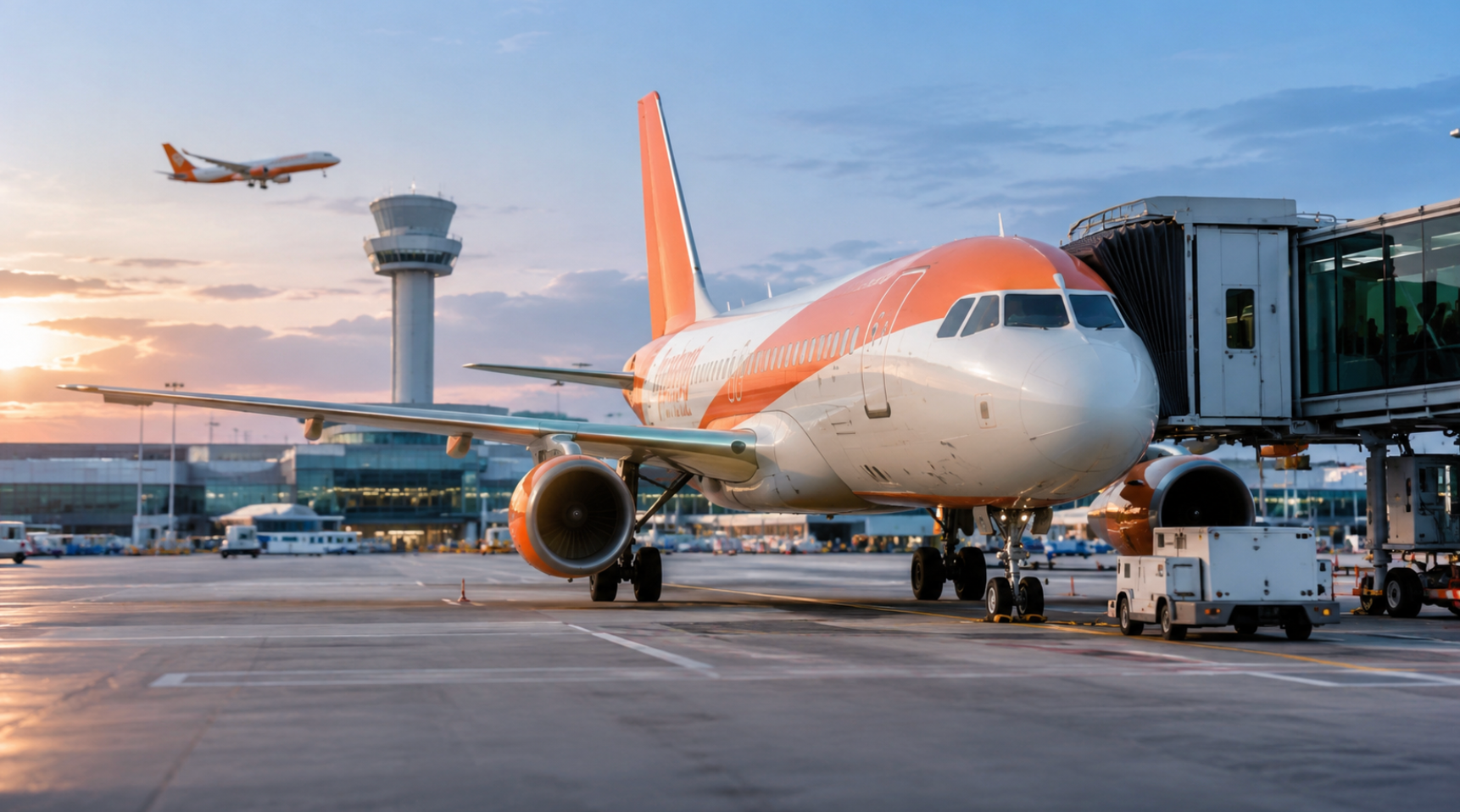
The global airline industry is entering a period in which the pressures shaping its future extend far beyond passenger numbers, ticket prices and new aircraft. Two major developments in November 2026 illustrate the scale of the transformation: easyJet shareholders have approved a £5.7 billion takeover by Apollo Global Management, while airlines worldwide are confronting a looming shortage of carbon credits needed to comply with the aviation industry's first global emissions-offsetting system.
At first glance, the stories appear unrelated. One concerns ownership, investment and consolidation; the other concerns climate regulation and the cost of carbon. Together, however, they reveal a fundamental shift in aviation. Airlines increasingly need enormous amounts of capital to modernise fleets and expand while simultaneously preparing for environmental obligations that could add billions of dollars to industry costs.
One of Europe's best-known low-cost carriers is approaching a historic change in ownership.
On November 11, easyJet shareholders approved Apollo's £5.7 billion ($7.61 billion) takeover proposal, clearing one of the biggest hurdles to taking the airline private. According to Reuters, 97.07% of scheme shares voted were cast in favour of the transaction, while 83.29% of voting shareholders supported it, comfortably exceeding the required threshold.
If regulatory approvals are secured and the transaction proceeds as planned, easyJet expects the acquisition to be completed before the end of the first quarter of 2027. That would bring an end to the airline's more than 25 years on the London stock market.
The agreed offer values easyJet at approximately £5.7 billion, with shareholders offered £7.15 per share in cash. According to easyJet, this represented an approximately 81% premium to its share price before takeover speculation began.
The road to the deal was competitive. Castlelake had previously approached easyJet with several proposals. After easyJet rejected earlier offers, Castlelake eventually proposed £6.90 per share. Apollo subsequently emerged with the higher £7.15-per-share proposal, ultimately winning the backing of easyJet's board.
The acquisition represents far more than a change of shareholders.
Apollo has indicated that it supports easyJet's existing strategy and sees opportunities to accelerate fleet modernisation, ancillary revenue, loyalty offerings and the growth of easyJet holidays. The investment group also intends to maintain the easyJet brand and its existing operating licences in the UK, Austria and Switzerland.
For private capital, aviation can offer enormous scale and valuable assets, but it is also notoriously difficult. Airlines face fuel-price volatility, geopolitical disruption, labour costs, aircraft shortages, regulatory pressure and enormous capital requirements.
That makes the easyJet transaction a significant test of whether private ownership can provide an airline of this scale with greater flexibility to make long-term investments without the constant scrutiny associated with public markets.
Shareholder approval does not mean the takeover is complete.
A particularly important challenge involves European Union airline ownership regulations.
Although easyJet is headquartered in Britain, it relies on EU operating licences to maintain bases and routes across the bloc. European rules impose restrictions intended to prevent non-European investors from exercising effective control over EU airlines.
At the time of the shareholder meeting, easyJet reported that EU persons held 35.07% of its shares, and the airline had suspended voting rights attached to some shares held by non-EU investors to comply with ownership requirements.
The takeover therefore arrives as European policymakers examine airline ownership rules and the influence foreign investors can exercise over carriers.
Labour representatives have also expressed concerns. easyJet's European Works Council has warned that the structure of the acquisition could potentially weaken the airline's resilience and expose employees to risks that have not been adequately addressed.
The final outcome could consequently influence how future private-equity acquisitions of European airlines are structured.
While easyJet navigates ownership regulation, the broader aviation industry faces another potentially expensive challenge.
The Carbon Offsetting and Reduction Scheme for International Aviation (CORSIA) is entering a critical stage.
Developed through the International Civil Aviation Organization (ICAO), CORSIA is designed to require airlines to compensate for certain international aviation emissions by purchasing eligible carbon credits.
Around 130 countries have joined the first broadly mandatory phase, which runs from January 2024 through the end of 2026. Airlines covered by participating jurisdictions will eventually have to obtain eligible credits for their obligations, with credits for the first phase required by the end of January 2028.
The problem is that there may not be enough qualifying credits.
Industry estimates cited by Reuters suggest the first phase could generate demand for credits covering as much as 200 million metric tons of carbon. Yet estimates based on ICAO data and industry participants indicate that available credits may satisfy only around one-quarter of expected demand, with just 11 countries currently positioned to supply CORSIA credits.
That mismatch could become one of aviation's biggest environmental and financial challenges.
Carbon credits currently eligible for the system have traded at roughly 12–13 per ton, but scarcity could drive prices higher.
Consultancy Roland Berger estimated that if prices eventually reach between $20 and $50 per credit, CORSIA compliance could cost airlines approximately $3.6 billion to $9 billion. That would be equivalent to roughly 5% to 12% of projected airline-industry profits for 2026.
For an industry accustomed to operating on relatively narrow margins, those figures are significant.
The issue is complicated further because not every carbon credit qualifies.
Following controversies surrounding the credibility of some voluntary carbon-offset projects, CORSIA applies stricter standards. Trafigura's Hannah Hauman told Reuters that only about 5% of historical carbon-credit inventories would qualify for mandatory systems such as CORSIA.
Governments must also authorise credits for international use while ensuring that the same emissions reduction is not counted twice, once by the airline and again toward the host country's own climate commitments.
Countries with significant potential to supply credits are still developing their frameworks. Brazil, for example, told Reuters that it had not yet begun authorising CORSIA projects and was still finalising the necessary rules.
Airlines therefore face a difficult decision: buy eligible credits early or wait for greater regulatory certainty.
Waiting could allow carriers to better understand their exact obligations. But if supply remains constrained and demand increases, airlines that delay purchasing credits could face substantially higher prices later.
The situation is particularly important because airlines are simultaneously investing heavily in newer aircraft, operational efficiency and sustainable aviation fuel (SAF).
SAF is widely considered essential to aviation's longer-term decarbonisation strategy, but production remains limited and costs remain considerably higher than conventional jet fuel. Carbon markets are therefore expected to remain an important bridge while cleaner technologies and fuels scale.
The industry could consequently face environmental costs from several directions simultaneously: carbon credits, sustainable aviation fuel, emissions-trading systems and fleet-renewal investments.
The easyJet takeover and CORSIA shortage ultimately tell the same larger story.
The airline industry of the coming decade will require vast amounts of capital.
Carriers need investment to purchase more efficient aircraft, expand networks, modernise technology, improve customer experiences and develop new revenue streams. At the same time, governments and regulators increasingly expect aviation to pay more directly for its environmental impact.
Apollo's proposed acquisition of easyJet demonstrates how private capital sees opportunities in aviation despite its risks. The CORSIA challenge demonstrates how environmental regulation is creating an entirely new category of financial exposure for airlines.
For passengers, the consequences could eventually become visible through ticket prices, route economics and airline investment decisions. If carbon costs rise significantly, carriers will have to absorb them, improve efficiency or pass at least part of those costs to travellers.
For investors, meanwhile, evaluating an airline will increasingly require understanding not only passenger demand and fuel costs but also carbon exposure, fleet efficiency, sustainable-fuel strategy and regulatory risk.
And for governments, the challenge will be balancing three objectives that do not always align easily: maintaining affordable global connectivity, supporting a financially sustainable aviation industry and achieving increasingly ambitious climate targets.
As 2026 draws toward its close, easyJet's £5.7 billion takeover and the emerging shortage of aviation carbon credits show an industry being reshaped from two directions simultaneously.
One transformation is happening in the boardroom. The other is happening in the carbon market.
Together, they suggest that the next era of global aviation will not be defined simply by how many people airlines can fly, but by who has the capital to own them, how efficiently they can operate, and how much the world ultimately requires them to pay for their environmental footprint.
For questions or comments write to contactus@bostonbrandmedia.com