Stay informed with our newsletter.


EN





Luxury fashion is undergoing a dramatic reset as creative leadership changes, financial pressures, and booming resale demand reshape the industry. Balenciaga’s rapid transition from Pierpaolo Piccioli to Martine Rose reflects growing pressure on creative directors, while Coperni’s closure demonstrates that viral popularity does not guarantee commercial sustainability. Meanwhile, surging demand for archival Chanel, Dior, Gucci and Balenciaga pieces shows consumers increasingly value designer eras, heritage and collectibility, transforming fashion’s past into a powerful marketplace.
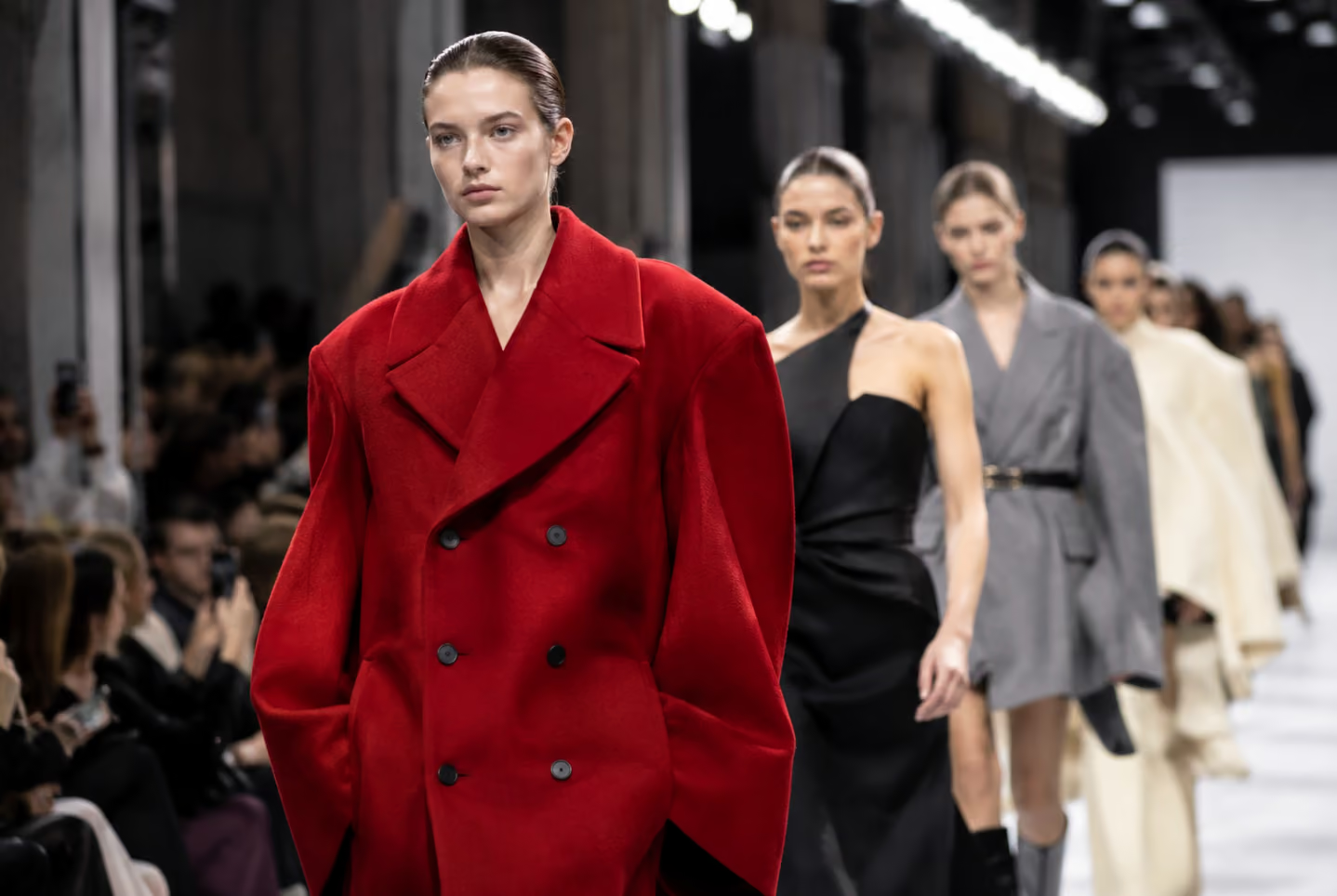
The global fashion industry is entering a period in which creative influence, commercial performance and cultural relevance are colliding faster than ever before. Within the space of days, three developments have captured the pressures reshaping the sector: another dramatic leadership change at Balenciaga, the shutdown of Coperni’s French operations, and extraordinary growth in demand for archival luxury pieces on the resale market.
Taken together, these stories reveal something much bigger than individual brands changing direction. Luxury fashion is undergoing a structural reset. Creative directors are being given increasingly limited time to deliver results, culturally influential independent labels are discovering that attention does not necessarily guarantee financial stability, and consumers are increasingly looking backward, to fashion archives and resale platforms, for the products they want.
One of the clearest signs of fashion's accelerating creative cycle came from Balenciaga.
On November 5, parent company Kering announced that Pierpaolo Piccioli would leave Balenciaga after less than 16 months as creative director. Piccioli, the celebrated former Valentino designer, had joined in July 2025 following the departure of Demna, who moved to Gucci.
His appointment represented an opportunity to reconnect Balenciaga with its couture heritage. Kering acknowledged this contribution when announcing his departure, saying Piccioli had reaffirmed the house's couture origins through his emphasis on craftsmanship, construction and creativity.
But the transition proved remarkably brief.
Just one day after announcing Piccioli's departure, Kering named Martine Rose as Balenciaga's new creative director, effective November 16. Rose, who established her own label in 2007, is known for drawing inspiration from subculture, music and unconventional interpretations of menswear. She also previously worked with Balenciaga during the Demna era.
The speed of the change illustrates a wider phenomenon. Luxury houses increasingly need creative directors to be designers, cultural strategists and commercial growth engines simultaneously.
The stakes are considerable for Kering. The group reported third-quarter 2026 revenue of €3.345 billion, down 1% on a comparable basis, and explicitly identified the renewal of Balenciaga and Alexander McQueen among its priorities.
Fashion's traditional model, allowing a designer several seasons to establish a visual language, is increasingly being challenged by a marketplace driven by social media, instant consumer reaction and enormous expectations surrounding every runway debut.
If Balenciaga's changes demonstrate the pressure facing giant luxury houses, Coperni's shutdown highlights the vulnerabilities confronting independent fashion brands.
Founders Sébastien Meyer and Arnaud Vaillant announced in early November that Coperni SAS would cease operations after failing to resolve a dispute with majority shareholder and distributor Tomorrow Ltd. The company had already entered court-supervised proceedings earlier in 2026 while seeking new financial backing.
The development is particularly striking because Coperni became one of fashion's most recognizable examples of viral runway marketing.
Its spectacular moments included the 2022 performance in which a dress was spray-applied onto Bella Hadid's body and, later, a runway production staged at Disneyland Paris. These events generated enormous online attention and helped position Coperni at the intersection of fashion, technology and entertainment.
Yet cultural visibility and financial resilience are very different things.
Coperni said Tomorrow had stopped paying licensing fees, leaving the design studio unable to fund operations. The founders sought new investors, but ultimately said no solution could be reached. Tomorrow also held a majority stake in the company alongside its manufacturing and distribution relationship with the label.
The episode offers a powerful lesson for the modern fashion industry: millions of views do not automatically translate into a sustainable business model.
Brands still require reliable distribution, working capital, manufacturing capacity, inventory management and profitable customer relationships. A fashion house can dominate social media conversation and still remain vulnerable behind the scenes.
While designers and companies face instability in the primary luxury market, something fascinating is happening in the secondary market.
Consumers are increasingly treating past designer eras as distinct collectible categories.
According to data highlighted by Vogue from eBay's Fall/Winter 2026 Watchlist, searches for Matthieu Blazy jumped 291% when his first Chanel collection reached stores. At the same time, listings for Karl Lagerfeld-era Chanel increased 87% year over year.
The pattern extends across fashion houses.
Following Jonathan Anderson's arrival at Dior, searches for him rose 92%, while average selling prices for John Galliano-era Dior increased 81%. Searches for Demna increased 42% following his first Gucci runway show, while listings for Tom Ford-era Gucci rose 49% year over year.
Perhaps the most dramatic example involves Balenciaga itself.
Global listings for its Le City bag surged 936%, according to eBay data reported by Vogue. The bag, introduced 25 years ago, has survived multiple creative eras and is once again at the center of fashion culture.
This creates a fascinating paradox.
Every time a luxury house appoints a new designer, attention doesn't only move forward. Consumers also look backward.
A new Chanel collection can revive demand for Lagerfeld-era Chanel. A new Dior chapter can make Galliano-era Dior more desirable. A creative transition at Balenciaga can encourage consumers to rediscover products associated with Nicolas Ghesquière, Demna or earlier periods.
The result is effectively a halo effect across fashion history.
Luxury consumers are increasingly buying not merely a brand, but a specific moment in a brand's history.
“Tom Ford Gucci,” “Galliano Dior,” “Phoebe Philo Chloé” and “Demna Balenciaga” function almost like sub-brands within the resale economy.
That matters because it changes how fashion heritage creates value.
Previously, a departing designer might have been viewed primarily as yesterday's chapter. Today, their departure can increase scarcity, nostalgia and collectibility, particularly when a successor dramatically changes the house's aesthetic.
Resale platforms are therefore becoming an unofficial archive of fashion histor and consumers are becoming increasingly sophisticated curators of it.
Balenciaga's leadership change, Coperni's closure and the booming resale market may initially appear to be separate stories. In reality, they are symptoms of the same transformation.
Fashion is moving faster, but consumers are simultaneously becoming more interested in its past.
Major luxury groups are searching for creative directors capable of producing almost immediate cultural and commercial momentum. Independent designers must convert visibility into financially sustainable businesses. Meanwhile, shoppers can bypass the current season entirely and search decades of previous collections for something with greater perceived individuality, history or value.
That creates an unusual competitive environment where a fashion house's newest collection isn't competing only against other brands.
It may also be competing against its own archive.
And that may be the defining fashion story of this new era: the future of luxury will increasingly depend on how successfully brands balance constant reinvention with the cultural and commercial value of their past.
For questions or comments write to contactus@bostonbrandmedia.com