Stay informed with our newsletter.
.webp)


EN





The Democratic Republic of Congo is battling its largest Ebola outbreak on record, with more than 6,000 confirmed infections and over 3,000 deaths reported by early September 2026. The outbreak, driven by the Bundibugyo strain, has spread across six provinces and is proving difficult to contain because of weak surveillance, insecurity and transmission occurring outside treatment centers. Health authorities and international partners are expanding testing, treatment and vaccination efforts, while scientists work to develop vaccines and therapies specifically targeting this strain.
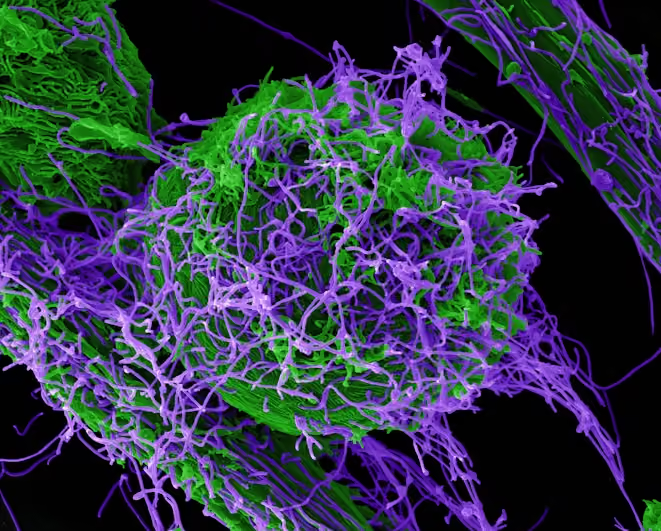
The Democratic Republic of Congo is facing its most devastating Ebola outbreak on record, as the virus continues to spread across several provinces and the death toll has surpassed 3,000.
The World Health Organization said on September 2 that the outbreak had passed 6,000 reported cases and 3,000 deaths, making it the second-largest Ebola epidemic ever recorded globally, behind the 2014–2016 West African outbreak.
The outbreak began in eastern Congo's Ituri province earlier this year and has since expanded to six provinces. Government figures reported more than 6,000 confirmed infections by the end of August, with thousands of deaths recorded.
The outbreak is being driven by the Bundibugyo species of Ebola, a strain first identified in Uganda in 2007.
One of the biggest challenges for health authorities is that there are currently no approved vaccines or treatments specifically targeting the Bundibugyo strain. Scientists are working on candidate vaccines and therapies, while health officials are using available tools to protect frontline workers and slow transmission.
The situation has made early detection and rapid treatment especially important. According to recent reporting, a significant proportion of people who have died did so outside treatment centers, highlighting how difficult it remains to identify cases early and bring patients into specialized care.
Several factors are working against Congo's health authorities.
Eastern Congo has faced years of armed conflict and insecurity, making some communities difficult for health workers and humanitarian organizations to reach. Weak health surveillance and difficulties tracing contacts have also allowed transmission chains to continue.
Unsafe burials remain another concern. Because Ebola can spread through contact with infected bodily fluids, traditional funeral practices can become particularly dangerous when the cause of death is not recognized quickly.
Health officials are also dealing with the movement of people between communities. In an innovative response, authorities are using anonymized mobile-phone data to study population movements and identify areas that could face increased transmission risk.
The Congolese government, WHO, Africa CDC and humanitarian partners have intensified their response.
On September 4, WHO and Congo announced a revised 180-day response plan designed to strengthen coordination and accelerate efforts to stop transmission.
Health workers are expanding testing and infection-control measures, while treatment capacity and surveillance are being strengthened in affected areas.
WHO Director-General Tedros Adhanom Ghebreyesus has warned that the response must be scaled up significantly. The agency has also called for additional international funding to expand treatment capacity and maintain the emergency response.
The health emergency has also highlighted the risks faced by communities living in areas affected by conflict.
On September 4, a new Ebola case was reported in an eastern Congolese area controlled by the AFC/M23 rebel group, shortly after that region had declared its outbreak over. The development raised concerns about the possibility of renewed transmission in areas where access for health workers can be extremely difficult.
For Congo, the immediate priority is to break transmission chains before the outbreak becomes even more difficult to control.
That means finding cases quickly, tracing contacts, improving infection prevention, supporting health workers and communities, and ensuring patients can receive specialized care as soon as possible.
The outbreak is also a reminder that infectious diseases can become especially dangerous when they collide with conflict, fragile health systems and limited access to medical care.
While the current situation is severe, health officials stress that Ebola outbreaks can be controlled when governments, communities and international partners have sufficient resources and coordinate effectively. The coming weeks will be critical in determining whether Congo can reverse the trajectory of its largest Ebola crisis yet.
For questions or comments write to contactus@bostonbrandmedia.com



-v3.jpg)


-v3-02.jpg)