Stay informed with our newsletter.
.webp)


EN





Gen Z is transforming how people shop by embracing second-hand fashion, vintage furniture, resale platforms, repairs and upcycling. Driven by affordability, individuality and sustainability, younger consumers are extending product life instead of constantly buying new. Major retailers are responding with repair services, workshops and resale initiatives, while the global second-hand market continues to expand rapidly. This shift is helping turn circular consumption from a niche habit into a mainstream economic and cultural movement worldwide today.
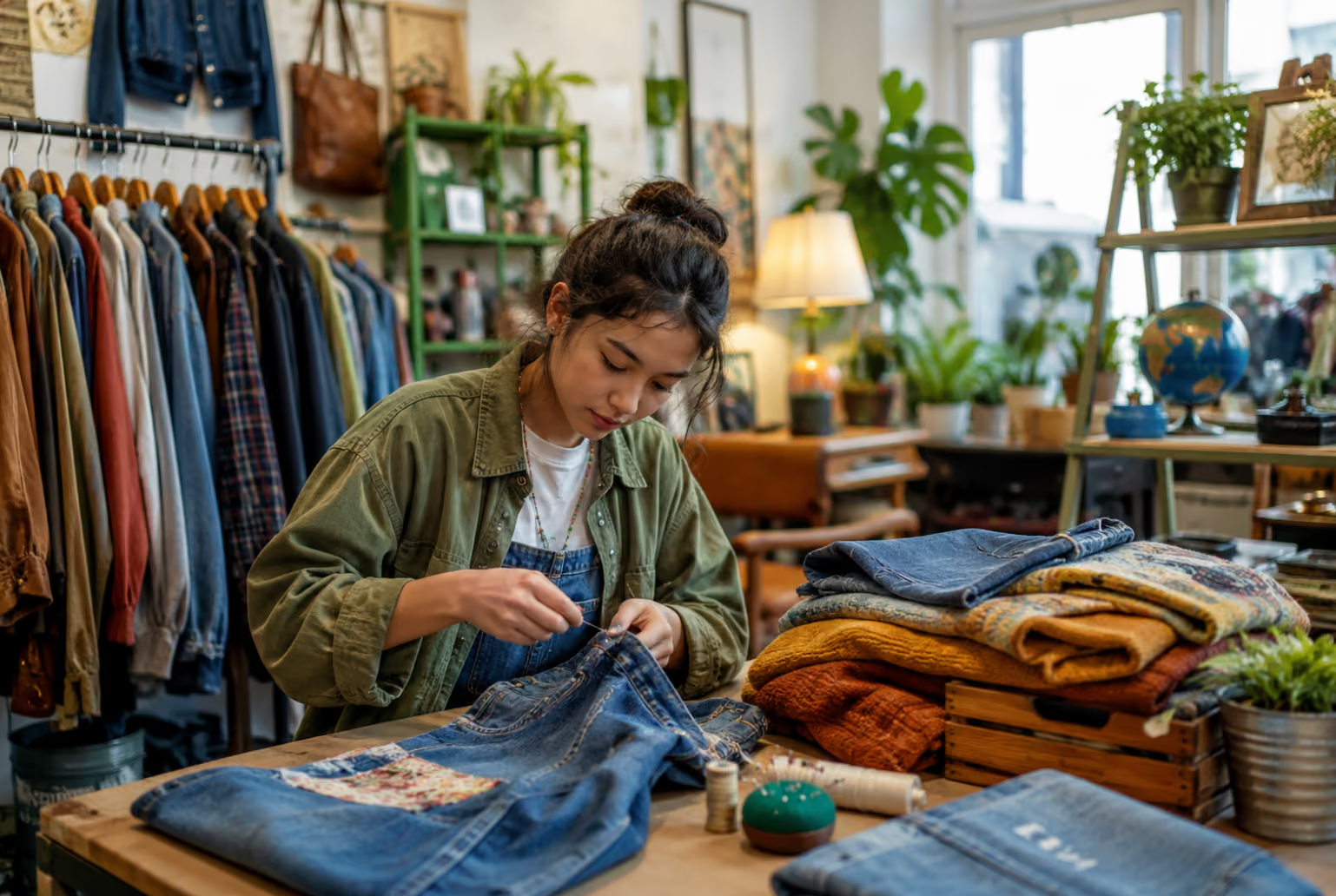
For decades, fashion and home retail were built around one powerful idea: buy new, use it, replace it. Generation Z is helping disrupt that model. Across clothing, furniture, homeware and collectibles, younger consumers are increasingly embracing second-hand shopping, resale, repair and upcycling as part of a growing circular economy.
The shift is no longer confined to charity shops or vintage enthusiasts. The Guardian reported in August 2026 that more than 60% of 18- to 29-year-olds in a recent survey said they were fans of second-hand fashion, homeware and furniture, while around one-third said they went thrift shopping every week. Pre-owned products are moving from a budget alternative toward a mainstream lifestyle choice.
ThredUp’s 2026 Resale Report projects that the global second-hand apparel market will reach $393 billion by 2030, expanding at about twice the pace of the overall apparel market. It estimates that Gen Z will account for roughly 40% of future second-hand market growth, with Gen Z and Millennials together responsible for 71% of market growth through 2030.
This is changing the meaning of ownership. Clothes are increasingly viewed not simply as items to consume until they wear out, but as products with potential resale value. A consumer can buy a jacket, sneaker, handbag or dress, use it and later resell it to finance another purchase. Digital platforms have made that behaviour easier, turning second-hand shopping into an increasingly accessible part of everyday retail.
Price matters, especially as young adults face pressure from living costs. But affordability does not fully explain the attraction.
For Gen Z, thrift shopping can also offer individuality. Second-hand stores, vintage markets and resale apps make it possible to find products that are less likely to be owned by everyone else. The Guardian’s survey coverage found young people were drawn to thrifted goods partly because they believed older and second-hand objects added more character to wardrobes and homes.
That preference extends beyond clothing. Vintage furniture, retro homeware, collectibles and antiques are gaining a younger audience. Consumers can combine modern basics with restored tables, vintage lamps or second-hand artwork rather than furnishing a home entirely from one retailer. The result is a consumption culture where the story, uniqueness and previous life of an item may enhance rather than diminish its appeal.
Perhaps the most interesting development is that brands selling new clothing are now encouraging customers to keep existing garments for longer.
The Associated Press reported in August 2026 that Levi Strauss, Uniqlo, Primark and Zara are among retailers expanding repairs, sewing education or clothing-aftercare initiatives as they appeal to young consumers interested in saving money and reducing waste.
Levi’s has developed a 90-minute hand-stitching course for high-school students that teaches four practical skills: sewing on a button, hemming, patching a hole and repairing a tear. Its wider “Wear Longer” initiative builds on repair and customisation services available at hundreds of Levi’s stores worldwide.
Primark has held more than 730 free “Love It For Longer” workshops across nine countries, teaching customers skills such as replacing zippers and buttons. In 2026, it also tested in-store repair services at three UK locations.
Uniqlo has taken a similar approach through RE.UNIQLO Studio. Its aftercare services include repairs, embroidery, decorative sashiko mending and creative restyling. AP reported that these services are available in 75 of Uniqlo’s roughly 2,500 stores, while its US website lists selected basic repairs starting at $5.
The environmental case for extending product life is substantial. The United Nations Environment Programme (UNEP) says around 92 million tonnes of textile waste are generated globally every year. That is equivalent to a garbage truck full of clothing being incinerated or sent to landfill every second.
UNEP estimates that the fashion and textile sector generates 2% to 8% of global greenhouse-gas emissions and consumes enormous quantities of natural resources. Between 2000 and 2015, clothing production roughly doubled while the average number of times a garment was worn fell by about 36%, according to Ellen MacArthur Foundation figures cited by AP and UNEP.
Repair, reuse and resale therefore follow a simple principle: keep products in circulation for longer. If repairing a damaged jacket delays the purchase of a replacement, its useful life increases and demand for additional production may be reduced. UNEP has specifically identified reuse, repair, greater durability and circular production as important elements in reducing fashion's waste burden.
This creates an unusual challenge for retailers. Traditional fashion economics rewards frequent purchases; repair encourages customers not to replace products.
Yet brands increasingly see longevity as a way to build trust and loyalty. A company that helps customers repair jeans may sacrifice one immediate sale but strengthen a longer-term relationship. Repair workshops can also bring people back into stores and give retailers another opportunity to interact with customers after the initial purchase.
There are limits. Sustainability experts caution that repair programmes cannot compensate for continually rising production volumes. AP cited Manchester Metropolitan University professor Kate Fletcher arguing that fashion’s core environmental impact remains linked to overproduction; repairing garments while production keeps expanding cannot solve the problem alone.
The economics are also difficult. Repair is labour-intensive, while mass-produced new clothing can sometimes be cheaper to manufacture than an existing garment is to professionally mend. H&M, Primark, ThredUp and other companies have consequently supported calls for policies that would make repair, resale and other circular services more commercially viable.
The Gen Z effect reaches beyond fashion. Growing interest in thrifted furniture, collectibles and homeware suggests a cultural shift away from automatically equating “new” with “better.” The recent survey highlighted by The Guardian points to young shoppers embracing second-hand products across their wardrobes and their homes.
Digital platforms make it easier to discover, price, sell and ship used goods. Social media adds another layer: thrift hauls, restoration videos, furniture transformations and upcycling tutorials can turn repair and reuse into entertainment as well as commerce.
For brands, this raises a new question. It is no longer only, “How do we sell more products?” Increasingly, it is, “How do we remain part of the customer relationship throughout the product’s life?”
Gen Z is not ending fast fashion or mass consumption. Many young shoppers still buy inexpensive new clothing, and industry analysts note that fast fashion remains accessible even for consumers who simultaneously participate in resale and repair.
But the direction is significant. Second-hand is becoming mainstream, repair is moving into major retail stores, and resale is becoming part of purchasing decisions. The scale of the projected resale market suggests these behaviours are becoming economically important rather than remaining niche sustainability practices.
The generation raised on one-click shopping and constant product drops may ultimately help popularise something much older: take care of what you own, repair what breaks, pass on what you no longer need and find value in what someone else has finished using.
That could make the repair and second-hand economy more than a passing Gen Z trend. It could become an important part of how the next generation defines value, style, ownership and responsible consumption.
For questions or comments write to contactus@bostonbrandmedia.com



-v3.jpg)


-v3-02.jpg)