Stay informed with our newsletter.
.webp)


EN





Alibaba is expanding its data center footprint across Europe and the Middle East as part of a broader push to strengthen its global artificial intelligence and cloud computing capabilities. The move reflects rising demand for AI infrastructure, faster regional data processing, and improved cloud services for businesses. By adding capacity in key international markets, Alibaba aims to support more AI workloads, enhance service reliability, and compete more aggressively with global cloud providers in high-growth regions.
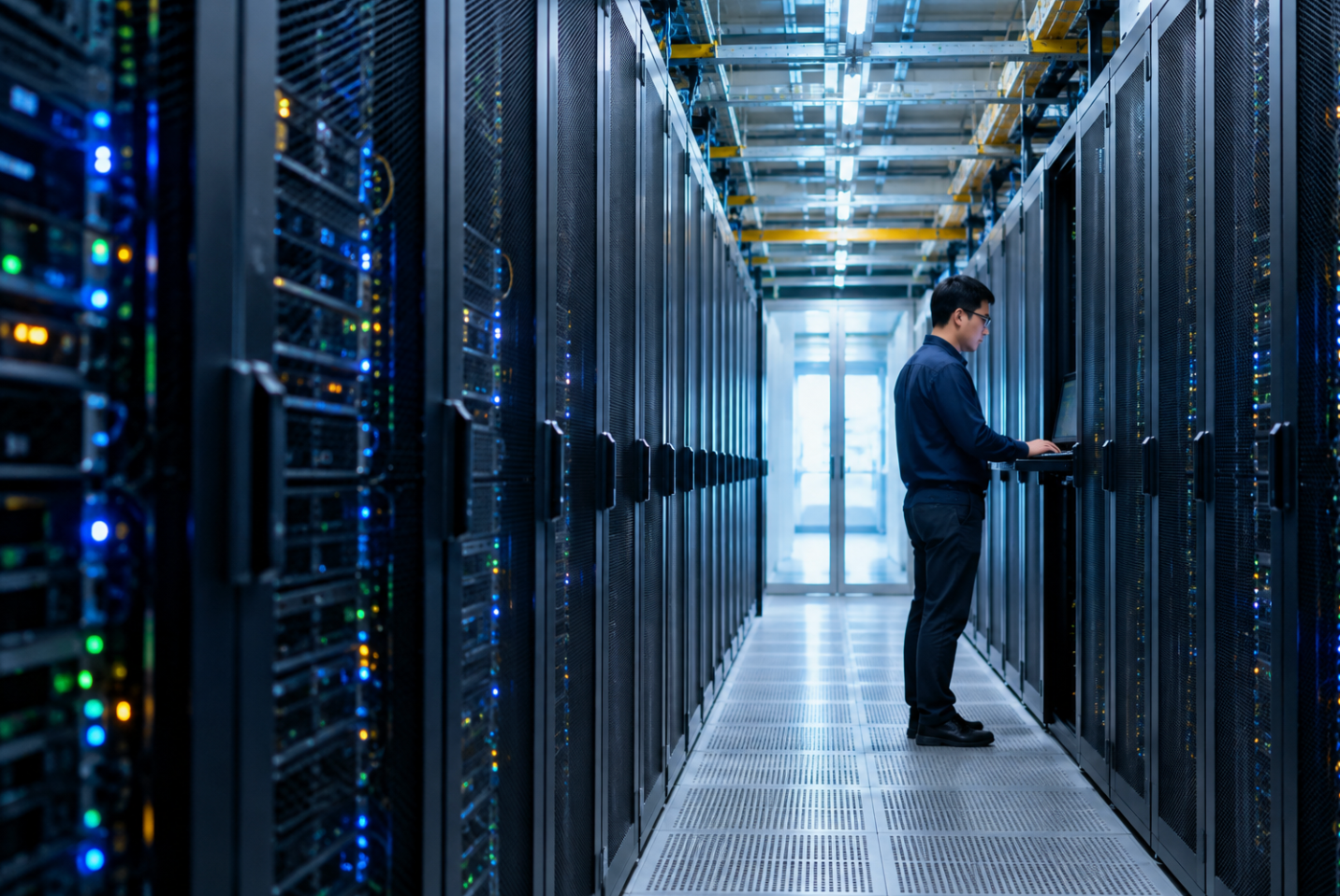
Alibaba is preparing a major expansion of its international cloud presence, with new infrastructure planned across Europe and the Middle East as the Chinese technology group intensifies its investment in artificial intelligence.
The company is pushing ahead with a broader plan to develop a 20-gigawatt global data center network, at a time when competition between China and the United States is becoming increasingly intense across AI models, semiconductors, and computing infrastructure.
Alibaba Cloud executive Li Feifei announced that the company expects to establish its first cloud regions in Turkey, Finland, and the Netherlands within the next 12 months.
The expansion will not stop there. Alibaba also intends to increase its data center capacity in Malaysia, Germany, the United Arab Emirates, France, and Hong Kong, giving businesses in those markets greater access to locally delivered cloud computing and AI services.
By building more infrastructure outside China, Alibaba is positioning itself to compete more directly with global cloud giants such as Amazon Web Services and Google Cloud, particularly in markets beyond its traditional Asian base.
The international strategy also reflects China's broader ambition to export more of its technological capabilities, even as the United States encourages governments and businesses around the world to rely on American technology rather than Chinese alternatives.
Alibaba's cloud infrastructure already stretches across Japan, Southeast Asia, and the Middle East, creating an increasingly interconnected international network.
The company has continued adding capacity in recent months, including new infrastructure in Brazil and France, as it seeks to make generative AI tools and cloud services more accessible to local businesses.
Li said Alibaba intends to work closely with partners across its international ecosystem to make artificial intelligence easier to scale, more practical to deploy, and more widely available to enterprises.
The announcement came during Alibaba's annual Apsara technology conference in Hangzhou, where the group showcased capabilities spanning AI models, computing infrastructure, chips, and cloud services.
The event highlighted Alibaba's ambition to control more layers of the AI technology stack rather than relying solely on outside hardware and software providers.
One of the most significant announcements was a new generation of AI processors that Alibaba says rank among the most powerful chips developed in China for training advanced AI systems.
Developing domestic AI hardware has become increasingly important for Chinese technology companies as access to some of the world's most advanced US-designed semiconductors faces restrictions.
Alibaba also revealed that it is developing new foundation models containing between 5 trillion and 10 trillion parameters, potentially placing them among the largest AI models being developed globally.
These models would be significantly larger in parameter count than many existing open-weight AI systems, demonstrating the enormous computing resources Alibaba expects to dedicate to future AI development.
Supporting these ambitions is the company's long-term plan to establish approximately 20 gigawatts of global data center capacity by 2032.
The scale of that infrastructure could have major financial implications. Citigroup has estimated that Alibaba's expanding cloud network could eventually support more than $160 billion in external cloud revenue.
Alibaba has already emerged as one of China's most aggressive investors in computing infrastructure, viewing massive cloud capacity as an essential foundation for the development of increasingly advanced artificial intelligence.
The company has repeatedly connected its infrastructure strategy with the longer-term pursuit of artificial general intelligence, where AI systems could potentially perform a much wider range of intellectual tasks.
In 2025, Alibaba outlined plans to invest approximately $53 billion over three years in AI and cloud infrastructure, underscoring the enormous capital requirements behind its technology strategy.
Since then, management has signaled that investment spending could continue rising as demand for AI computing power, cloud capacity, advanced chips, and foundation models accelerates.
Taken together, Alibaba's data center expansion, semiconductor development, and increasingly powerful AI models show that the company is no longer concentrating primarily on e-commerce.
Alibaba is increasingly positioning itself as a global AI and cloud infrastructure company, one determined to compete for the computing capacity that could power the next generation of artificial intelligence.
For questions or comments write to contactus@bostonbrandmedia.com
Source: NDTV



-v3.jpg)


-v3-02.jpg)





.png)