Stay informed with our newsletter.
.webp)


EN





Airbus has taken a major step into the next generation of global air cargo with the maiden flight of its A350F freighter. Designed to challenge Boeing’s long-standing dominance, the aircraft combines high payload capacity, modern fuel efficiency and advanced materials. With strong early orders and certification testing now underway, the A350F could reshape competition in the widebody freighter market as airlines replace ageing fleets and air cargo remains vital to high-value global trade and commerce.
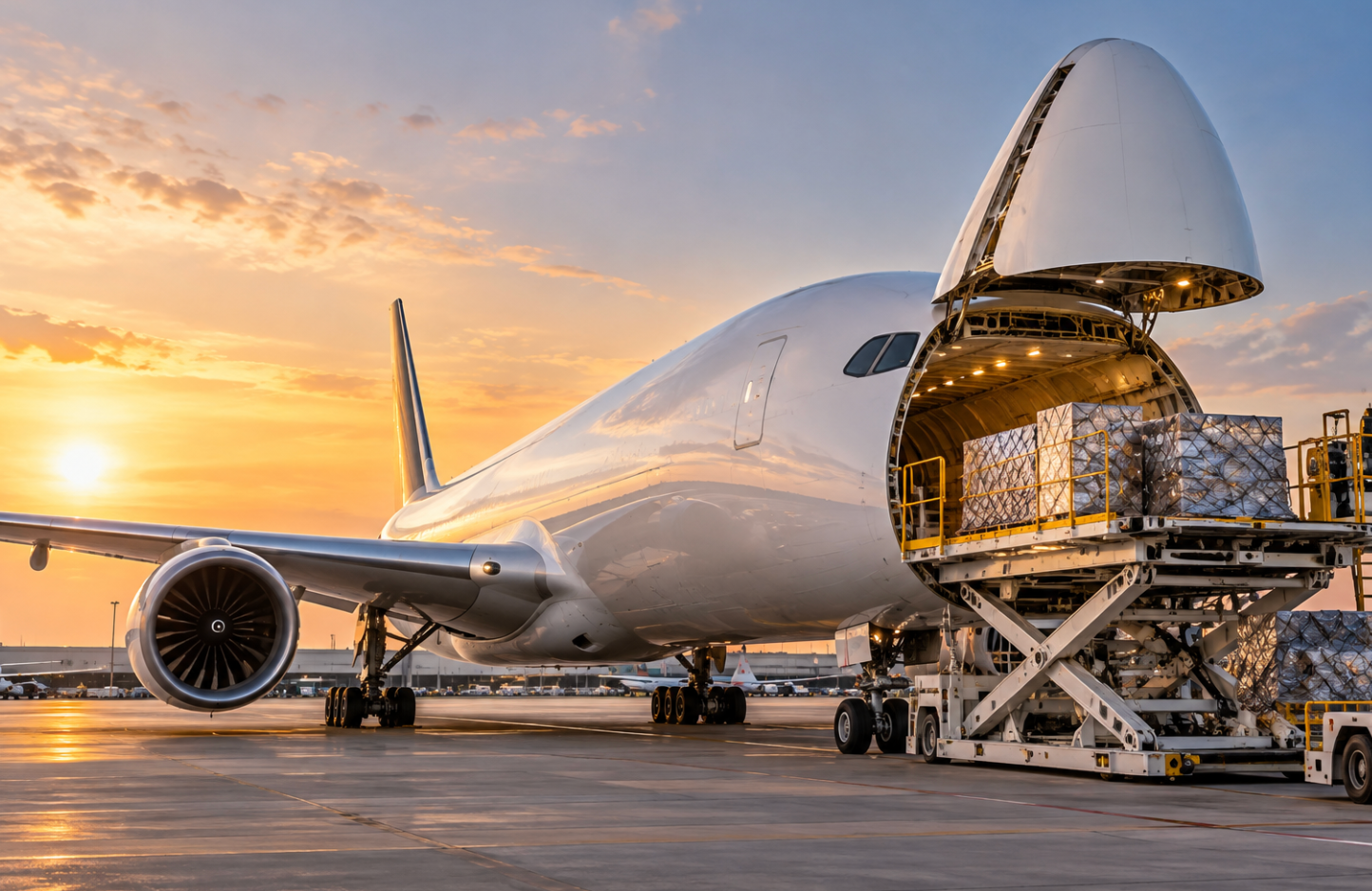
The battle for control of the world's air-cargo market has entered a new phase. On September 29, 2026, Airbus sent its long-awaited A350F freighter into the skies above Toulouse for the first time, marking one of the most important milestones yet in the European manufacturer's attempt to challenge Boeing's decades-long dominance of large cargo aircraft.
The windowless freighter began a roughly four-hour maiden flight from Airbus headquarters in Toulouse, formally opening a certification campaign expected to last approximately nine months. If testing proceeds as planned, the A350F is scheduled to enter commercial service in 2027. Reuters reports that Airbus has already accumulated 115 orders for the A350F, compared with 81 orders for Boeing's competing 777-8 Freighter, giving Airbus notable early commercial momentum in a market Boeing has historically controlled.
But this is much bigger than another chapter in the Airbus-versus-Boeing rivalry. Air freight carries some of the world's most valuable goods, including semiconductors, pharmaceuticals, electronics, luxury products, industrial components and time-sensitive e-commerce shipments. According to the International Air Transport Association, airlines move more than 62 million tonnes of cargo annually, representing more than 33% of world trade by value, despite accounting for less than 1% of global trade by physical volume. That equates to approximately $8.3 trillion worth of goods every year.
Airbus may compete fiercely with Boeing in passenger aircraft, but the large dedicated-freighter market has historically been a different story.
Aircraft such as the Boeing 747 Freighter, 767 Freighter and 777F helped establish Boeing as the dominant manufacturer in long-haul cargo aviation. Airbus previously attempted to compete with dedicated freighter programmes, but never built the same commanding position.
The A350F is Airbus's most serious attempt yet to change that.
Based on the successful A350 family but substantially redesigned for freight operations, the aircraft is intended to give cargo airlines the capacity of a large widebody while delivering the fuel efficiency associated with a modern composite airframe.
Airbus says the A350F can carry up to 111 tonnes of payload over approximately 4,700 nautical miles, or 8,700 kilometres. More than 70% of the aircraft is constructed using advanced materials, including carbon fibre and titanium, helping reduce weight significantly compared with older freighter designs.
That combination matters because cargo airlines are under growing pressure to reduce fuel costs while replacing ageing aircraft.
One of the A350F's most distinctive engineering features is something passengers would rarely think about: its door.
Airbus has developed what it describes as the largest main-deck cargo door in the commercial aviation industry, with a clear opening approximately 4.3 metres wide. The huge composite structure is designed to make it easier to load oversized freight, pallets and equipment while reducing turnaround time on the ground.
The aircraft's door is roughly 15% wider than main-deck doors on current competing large widebody freighters, according to Airbus. Its enormous dimensions required complex engineering because cutting such a large opening into a pressurised carbon-fibre fuselage changes how structural forces move through the aircraft.
For freight operators, however, the benefit is straightforward: the faster aircraft can be loaded and unloaded, the faster they can return to the sky earning revenue.
The A350F has also been designed around standard industry pallets and containers and can accommodate cargo ranging from express packages to large aircraft engines.
The maiden flight may be visually dramatic, but it is only the beginning.
Airbus plans an approximately 400-flight-hour certification campaign involving two test aircraft, MSN700 and MSN701. The programme will test aerodynamics, handling characteristics, autopilot systems, climate performance, cargo operations and crucial fire- and smoke-detection systems. European aviation regulator EASA is already involved in the certification programme.
The unusual dimensions of the freighter mean Airbus cannot simply rely on certification inherited from existing passenger A350s.
The A350F effectively combines elements of the A350-900 and A350-1000, giving it its own aerodynamic characteristics. Airbus therefore has to validate how the aircraft responds across different operating conditions before airlines can begin carrying commercial freight.
That process helps explain why the programme has taken longer than initially anticipated. Airbus launched the A350F project in 2021, but supply-chain challenges and development work around systems including its enormous cargo door contributed to delays. Commercial entry is now planned for 2027.
Cargo aircraft often remain in service for decades, meaning large numbers of older, less efficient freighters still operate around the world.
That creates a huge replacement opportunity.
Airbus says the A350F could deliver up to 40% lower fuel consumption and CO₂ emissions compared with older freighters currently in service, depending on the comparison. The aircraft uses Rolls-Royce Trent XWB-97 engines and is designed to meet ICAO's newer aircraft CO₂ standards. It will also be capable of operating with blends containing up to 50% Sustainable Aviation Fuel at entry into service, with Airbus targeting full SAF capability across its aircraft portfolio by 2030.
Fuel efficiency has become especially important because fuel represents one of the largest operating expenses for cargo airlines.
Even relatively small percentage improvements can translate into enormous savings across fleets flying thousands of hours annually.
Airbus will not have the next-generation freighter market to itself.
Boeing is developing the 777-8F, based on its new-generation 777X platform. The confrontation between the two manufacturers could define the widebody cargo market for decades.
For now, Airbus has an intriguing commercial advantage. Reuters reports 115 orders for the A350F against 81 for the Boeing 777-8F. But aircraft orders can change, delivery schedules matter, and Boeing retains deep relationships with many of the world's largest freight carriers.
The overall opportunity is substantial.
Boeing's own 2026 Commercial Market Outlook forecasts demand for approximately 930 new freighter aircraft between 2026 and 2045. It expects global air-cargo traffic to grow around 3.7% annually, supported by cross-border e-commerce, supply-chain diversification and demand for transporting high-value and time-sensitive goods.
Recent figures reinforce that momentum. IATA reported that worldwide cargo tonne-kilometres increased 3.9% year-on-year in July 2026, while international cargo traffic grew 4.7%.
There is another unexpected factor supporting long-term freight demand: artificial intelligence.
The AI boom has created enormous demand for advanced semiconductors, servers and specialised electronic components. Many are extremely valuable relative to their weight and need to reach manufacturing plants and data-centre projects quickly, precisely the type of cargo suited to air transport.
Reuters noted that semiconductor logistics linked to expanding AI infrastructure is among the forces supporting air-freight demand, alongside e-commerce, pharmaceuticals and changing global supply chains.
A single aircraft therefore increasingly sits inside a much larger economic ecosystem connecting chip factories, online retailers, pharmaceutical producers, manufacturers and consumers across continents.
The A350F's first flight is significant not simply because Airbus has built another aircraft.
It represents a challenge to one of Boeing's strongest remaining commercial aviation territories.
For Airbus, successfully certifying and delivering the A350F would allow it to compete simultaneously across passenger and dedicated cargo markets with modern widebody platforms. For cargo operators, greater competition could provide more choice at precisely the moment many ageing freighters need replacement.
And for the global economy, the stakes extend far beyond Toulouse and Seattle.
When more than one-third of world trade by value depends on air cargo, the aircraft transporting those goods become part of the infrastructure of globalisation itself.
The A350F has now left the ground.
The much bigger question is whether it can change who rules the skies above the world's most valuable trade routes.
For questions or comments write to contactus@bostonbrandmedia.com



-v3.jpg)


-v3-02.jpg)