Stay informed with our newsletter.
.webp)


EN





Luxury fashion is confronting a changing definition of value as consumers increasingly prioritise travel, wellness and memorable experiences over traditional status purchases. Against slowing demand, major houses are spending heavily on runway spectacles, private client experiences and brand reinvention to restore desire. At the same time, moves such as Gucci’s China-made luxury sneakers highlight deeper questions around provenance, craftsmanship and pricing. The industry’s challenge is clear: luxury must now compete for both money and meaning.
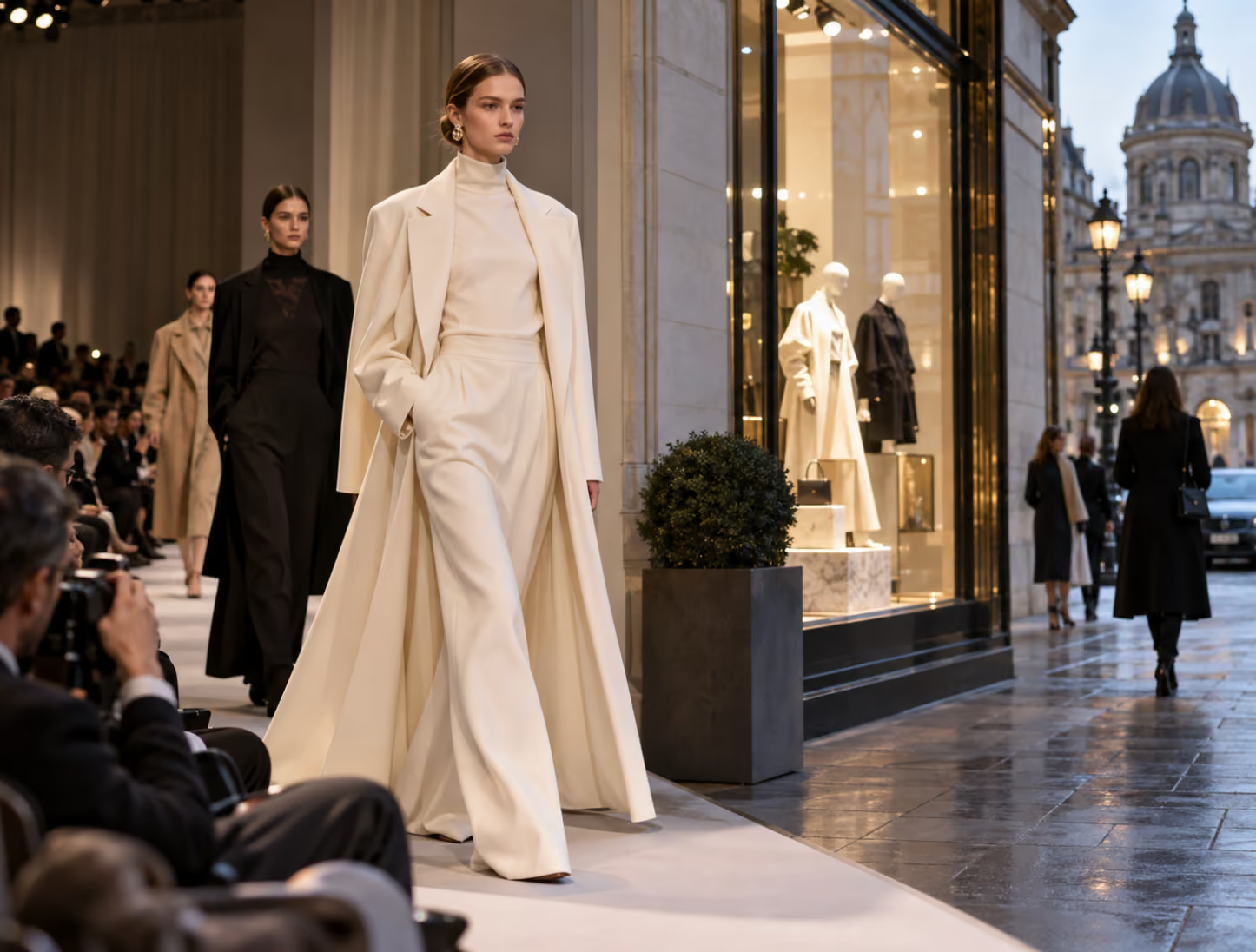
The catwalks of Milan and Paris are designed to project confidence. Crystal-covered gowns, celebrity-packed front rows, theatrical sets and meticulously choreographed productions still communicate the familiar message that luxury fashion exists above ordinary economic concerns.
Behind the spectacle, however, the industry is confronting a much less glamorous reality.
As Milan Fashion Week and Paris Fashion Week showcase the collections expected to shape 2027, some of the world's most powerful luxury houses are battling slowing demand, cautious consumers and growing questions about whether extremely high prices still represent genuine value. Runway productions themselves can cost as much as €10 million, according to industry experts cited by Reuters, making every show a significant investment at a moment when investors increasingly want evidence that glamour can translate into growth.
The pressure is visible in the stock market. As of September 22, 2026, LVMH shares were down about 37% since the beginning of the year, while Gucci owner Kering had surrendered the gains made following Luca de Meo's arrival as chief executive. Earlier in September, the STOXX Europe Luxury 10 index was down 19% for the year, underlining how widespread investor concerns have become.
For much of the previous decade, luxury companies discovered an extraordinarily profitable formula: sell fewer products at dramatically higher prices while cultivating exclusivity around the world's most famous fashion houses.
That strategy becomes harder when customers begin asking whether the product has actually improved enough to justify the price.
McKinsey's State of Fashion 2026 describes a luxury sector undergoing a “recalibration,” with companies reducing their reliance on price-led expansion and returning attention to creativity, craftsmanship and customer experience. The report argues that value-focused brands have improved their products and stores at the same time that some luxury companies increased prices without equivalent improvements in quality or innovation.
This is particularly significant for the so-called aspirational luxury customer, shoppers who may purchase an expensive handbag, pair of shoes or accessory occasionally rather than treating luxury purchases as routine.
Economic uncertainty and inflation can quickly push that consumer out of the market. Reuters reports that middle-class shoppers have reduced luxury spending, leaving major fashion houses increasingly dependent on the world's wealthiest clients. That has encouraged brands to invest even more heavily in private shopping spaces, personalised services and invitation-only experiences.
The irony is difficult to miss: as fewer people can comfortably participate in luxury consumption, luxury companies are spending more money trying to make their most valuable customers feel even more special.
Historically, Louis Vuitton competed with Gucci. Chanel competed with Dior. Rolex competed with Cartier.
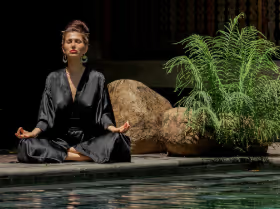
Increasingly, the competitor for a luxury handbag may be a holiday in the Maldives, a wellness retreat, a boutique hotel, fine dining, private fitness or an investment in health and longevity.
McKinsey's 2026 research found that travel was the top destination for additional discretionary spending among luxury consumers in both the United States and China, ahead of any luxury-product category. The consultancy argues that consumers increasingly associate luxury with experiences that feel personal, memorable and difficult to replicate.
The wider wellbeing economy strengthens that trend. In McKinsey research, 84% of surveyed U.S. consumers described wellbeing as a top priority, while more than half said they intended to continue spending on themselves even if their discretionary income declined. The wellbeing market has expanded at roughly 6% annually since 2019, with similar growth expected through 2028.
That creates a fascinating challenge for fashion houses. Consumers have not necessarily stopped wanting beautiful things. But an expensive object must now compete with an expanding universe of experiences promising health, memories, self-improvement and emotional value.
Luxury is no longer simply competing for the wardrobe.
It is competing for the consumer's life.
That helps explain why fashion shows are becoming even more important rather than disappearing during the slowdown.
A major runway event is no longer just a presentation to buyers and editors. It is a global content engine, producing social-media clips, celebrity photographs, livestreams, influencer reactions and millions of digital impressions.
But with some productions costing up to €10 million, brands need considerably more than online attention. They need shows to rebuild desire.
Reuters reported that brands including Gucci, Dolce & Gabbana and Giorgio Armani were presenting collections in Milan, while Dior, Louis Vuitton and Chanel were among the most closely watched names in Paris. Industry executives increasingly face a simple strategic choice: invest in innovation, cultural relevance and customer experience to defend premium pricing, or reconsider those prices and accept pressure on margins.
That makes today's fashion week runway something closer to a corporate turnaround presentation wrapped in couture.
Every collection must answer an increasingly difficult question:
Why should someone desire this enough to pay the price?
Few products illustrate that debate as neatly as Gucci's new Drip sneaker.
The shoe is described by Gucci as Demna's first sneaker for the house and carries a label that is highly unusual within Gucci footwear: “Made in China.” Gucci's own product listing confirms the manufacturing origin.
The Drip sells for roughly €800 in Europe and around $1,000 in the United States, positioning it firmly within luxury even while remaining less expensive than many other Gucci shoes. A second slip-on model from the same collection is also produced in China. Gucci has said the decision reflects the specialist technical capabilities required for the designs and that there are no broader plans to move its manufacturing model away from Italy.
The episode is interesting precisely because “Made in Italy” has historically functioned as part of luxury's emotional architecture.
Luxury pricing is rarely based entirely on materials or manufacturing cost. Consumers also purchase heritage, place, craftsmanship, exclusivity and storytelling.
If a globally recognised Italian fashion house can sell a China-made sneaker for around €800, it invites a larger question: what exactly is the customer paying for?
For Gucci, the answer may increasingly be design, technology, brand identity and Demna's creative vision rather than geography alone.
The shift does not necessarily mean the death of traditional luxury. In fact, genuinely distinctive luxury may become more valuable.
McKinsey's research suggests craftsmanship and quality remain fundamental, but they are increasingly the minimum expected rather than sufficient reasons to buy. Consumers also want cultural relevance, distinctiveness and products that generate immediate emotional desire.
Even scarcity is changing. Being difficult to obtain is no longer automatically enough. Luxury customers increasingly value something recognised by the right community, rather than products that simply broadcast wealth to everybody.
That helps explain the renewed appeal of heritage brands, vintage products, resale, limited collections and quieter forms of luxury. Consumers who can afford almost anything may increasingly want objects with stories rather than simply prices.
The industry's current slowdown may therefore represent something deeper than an ordinary economic cycle.
For decades, the luxury business encouraged consumers to demonstrate success through what they owned. The next generation of premium consumption may increasingly communicate success through where people travel, how they spend their time, how healthy they feel and which experiences they can access.
A €5,000 handbag can last for years.
But so can the memory of an extraordinary journey.
That is the strategic challenge now confronting the world's most famous fashion houses. Their future competitors may not be sitting beside them at Milan or Paris Fashion Week. They may be operating luxury resorts, restaurants, wellness clinics, private clubs, travel companies and experience businesses.
Fashion will not disappear from luxury. But the definition of luxury is expanding around it.
And in an era when consumers are becoming more selective about both money and meaning, spectacle alone may no longer be enough.
The next great luxury product may not simply be something consumers can own. It may be something they can feel, remember or experience.
For questions or comments write to contactus@bostonbrandmedia.com



-v3.jpg)


-v3-02.jpg)