Stay informed with our newsletter.


EN




Cyberattacks targeting internet-connected supermarket refrigerators across Europe are exposing a new frontier in digital security. Hackers have manipulated refrigeration temperatures, causing food spoilage and financial losses across stores in Sweden, Belgium, France and other countries. The incidents highlight vulnerabilities in the rapidly expanding Internet of Things and operational technology. As everyday infrastructure becomes increasingly connected, cybersecurity is no longer just about protecting data, it is becoming essential to protecting physical systems, supply chains and consumer safety.
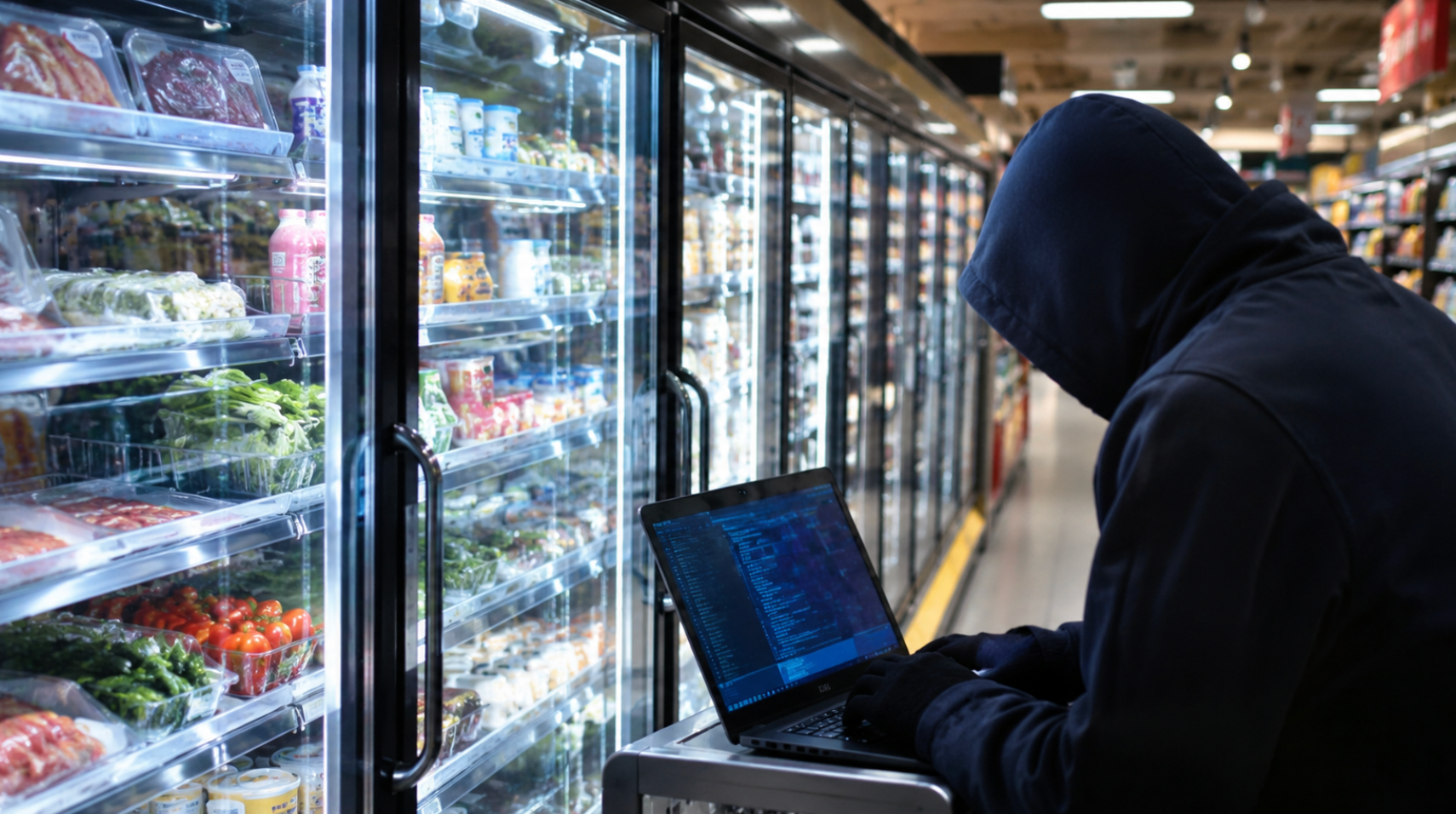
Cyberattacks once conjured images of stolen passwords, frozen computer screens and compromised bank accounts. But a strange wave of attacks sweeping through European supermarkets is exposing a far more physical and potentially more dangerous, dimension of cybersecurity.
Hackers are targeting internet-connected refrigeration systems, remotely changing temperatures inside supermarket refrigerators and freezers and turning ordinary grocery equipment into a new cybersecurity battleground.
On November 2, supermarkets across Sweden, Belgium, Luxembourg, Ireland and Estonia reported refrigeration problems linked to apparent cyberattacks. In some locations, attackers reportedly pushed freezer temperatures as high as 50°C (122°F), forcing retailers to discard food that could no longer safely be sold.
The incidents may sound bizarre, but they illustrate a serious technological reality: the Internet of Things has connected the physical world to the internet and every connection can potentially become a doorway for attackers.
In Stockholm, the consequences became apparent after an attack reportedly began around 2 a.m.
At one ICA supermarket, employees discovered hours later that freezer temperatures had reached 50°C. Sweden's ICA confirmed that a limited number of stores had experienced incidents affecting refrigeration systems. Coop said seven of its approximately 800 stores were affected by unauthorized interference with refrigeration equipment.
The disruption stretched across Europe.
In Belgium, Carrefour said 15 of its roughly 700 stores were affected, while Colruyt Group reported attacks involving refrigerators at five stores. Delhaize was also affected across dozens of locations.
Ireland's Musgrave reported problems with refrigeration systems at 13 SuperValu stores, requiring chilled and frozen products to be removed from sale. An IKEA location in Belgium was affected as well.
For retailers, the damage can accumulate remarkably quickly.
A Belgian butcher reported finding refrigerators turned up to 18°C, ruining an estimated €15,000 worth of meat. Once food spends too long outside safe temperature ranges, retailers often have little choice but to dispose of it.
Cybercrime, in other words, can now cause damage without stealing a single credit-card number.
Europe had seen an even more alarming version of the same phenomenon just weeks earlier.
In October, hackers targeted connected refrigeration systems across France, affecting at least 350 supermarkets. Retailers including Carrefour, Monoprix, Intermarché and Cooperative U were caught in the disruption. Attackers manipulated temperatures, reportedly pushing some systems as high as 50°C, resulting in spoiled food and, in some cases, fires.
France's cybersecurity agency subsequently said refrigeration equipment involving Copeland and Dixell systems had also been compromised.
No group had publicly claimed responsibility for the French attack, and investigators were puzzled by the apparent absence of a conventional ransom demand.
The November incidents have similarly left authorities without a confirmed perpetrator. Reuters reported that investigators had not established whether the latest attacks were connected to the earlier French campaign.
That uncertainty raises an uncomfortable possibility: not every cyberattack is necessarily about stealing money. Disruption itself can be the objective.
Connecting a freezer to the internet may initially seem unnecessary. For a modern supermarket, however, remote monitoring can be extremely useful.
Large stores operate dozens or even hundreds of refrigerators, freezers and display cases. Connected controllers allow technicians to monitor temperatures, adjust equipment, detect failures, schedule defrost cycles and manage energy consumption remotely.
That can improve efficiency and reduce food waste.
But convenience creates exposure.
Cybersecurity company Forescout identified 12,976 refrigeration-management services exposed online across 6,017 internet addresses in 99 countries and territories, according to research reported by Euronews. The systems were not necessarily compromised, but their accessibility demonstrates the potential scale of the attack surface.
Researchers found thousands of exposed systems associated with widely used refrigeration-management technologies. Particularly concerning was the finding that 80% of the exposed Danfoss services identified were running firmware older than the version addressing known security vulnerabilities.
This is where an ordinary refrigerator becomes part of a much bigger cybersecurity problem.
Corporate cybersecurity traditionally concentrated on information technology, or IT: laptops, databases, servers, email systems and financial information.
But supermarkets also depend on operational technology, or OT, digital systems that control physical processes.
Refrigeration controllers are OT. So are industrial machines, elevators, building-management systems, traffic equipment, water pumps and manufacturing robots.
As these systems become connected, the boundary separating cyberspace from the physical world begins disappearing.
Reuters noted that refrigerators, heating systems, security cameras and alarm networks that were once largely mechanical can increasingly be monitored or controlled remotely.
That transformation means a successful hacker might no longer simply steal information, they can potentially manipulate the physical environment.
The refrigeration attacks matter because similar connected controllers are not confined to grocery stores.
They can appear in food-processing facilities, farms, wineries, warehouses and hospitals.
Imagine the implications if attackers manipulated refrigeration protecting pharmaceuticals, vaccines, biological samples or temperature-sensitive chemicals.
The broader Internet of Things dramatically expands the number of potential targets. Buildings increasingly contain connected heating and cooling systems. Factories operate networked machinery. Homes contain smart locks, cameras, thermostats and appliances. Vehicles have become computers on wheels.
The danger isn't theoretical.
In 2015, cybersecurity researchers remotely compromised a Jeep through its connected entertainment system, leading to the recall of roughly 1.4 million vehicles and software updates. Researchers that same year also demonstrated vulnerabilities involving a Samsung smart refrigerator.
The supermarket incidents demonstrate how those long-discussed risks are becoming increasingly tangible.
Retail environments present attackers with an unusual combination of scale and vulnerability.
Large chains can operate enormous networks of refrigeration controllers, point-of-sale systems, building-management equipment, access controls and other connected devices.
And unlike an ordinary computer outage, refrigeration failure immediately starts a clock.
Frozen meat, dairy products, seafood and other perishables cannot simply wait several days for technicians to solve a cybersecurity problem. Temperatures rising for even a relatively short period can force stores to discard valuable inventory.
Cybersecurity researcher Tom Hegel described retail as an “easy target”, noting that attackers accessing exposed control panels may also leave relatively little forensic evidence behind.
This creates an asymmetric threat: a small digital intrusion can produce large physical and financial consequences.
The European Commission has warned that repeated refrigeration attacks threaten more than individual supermarkets.
EU Agriculture Commissioner Christophe Hansen characterized the incidents as an attempt to disrupt the food supply chain and consumer confidence, warning that repeated attacks should be taken seriously.
That distinction is important.
If refrigeration cyberattacks expanded substantially, the consequences could extend beyond spoiled food to disrupted inventories, logistical complications, shortages and higher costs.
The attacks therefore expose a new dimension of supply-chain resilience. Businesses must protect not only databases and payment systems but also the digital equipment keeping products safe.
The most important lesson from Europe's hacked freezers isn't really about refrigerators.
It is about connectivity.
Businesses spent the past decade putting sensors, software and remote controls into almost everything because connected devices promised efficiency, automation and visibility.
Those advantages are real. But every connected machine also creates another potential entry point.
Protecting these systems increasingly means updating outdated firmware, removing unnecessary equipment from the open internet, implementing secure remote-access tools, replacing shared passwords with individual credentials, and introducing stronger authentication and monitoring.
For years, cybersecurity was treated largely as an IT department problem.
That era is ending.
The next cyberattack may not announce itself through a ransom message on a computer screen. It may appear as a freezer mysteriously getting warmer, a building losing climate control or a machine behaving in a way nobody instructed it to.
Europe's supermarket incidents provide an unusually vivid warning.
When everything becomes connected, cybersecurity becomes physical and protecting the internet increasingly means protecting the real world.
For questions or comments write to contactus@bostonbrandmedia.com