Stay informed with our newsletter.


EN





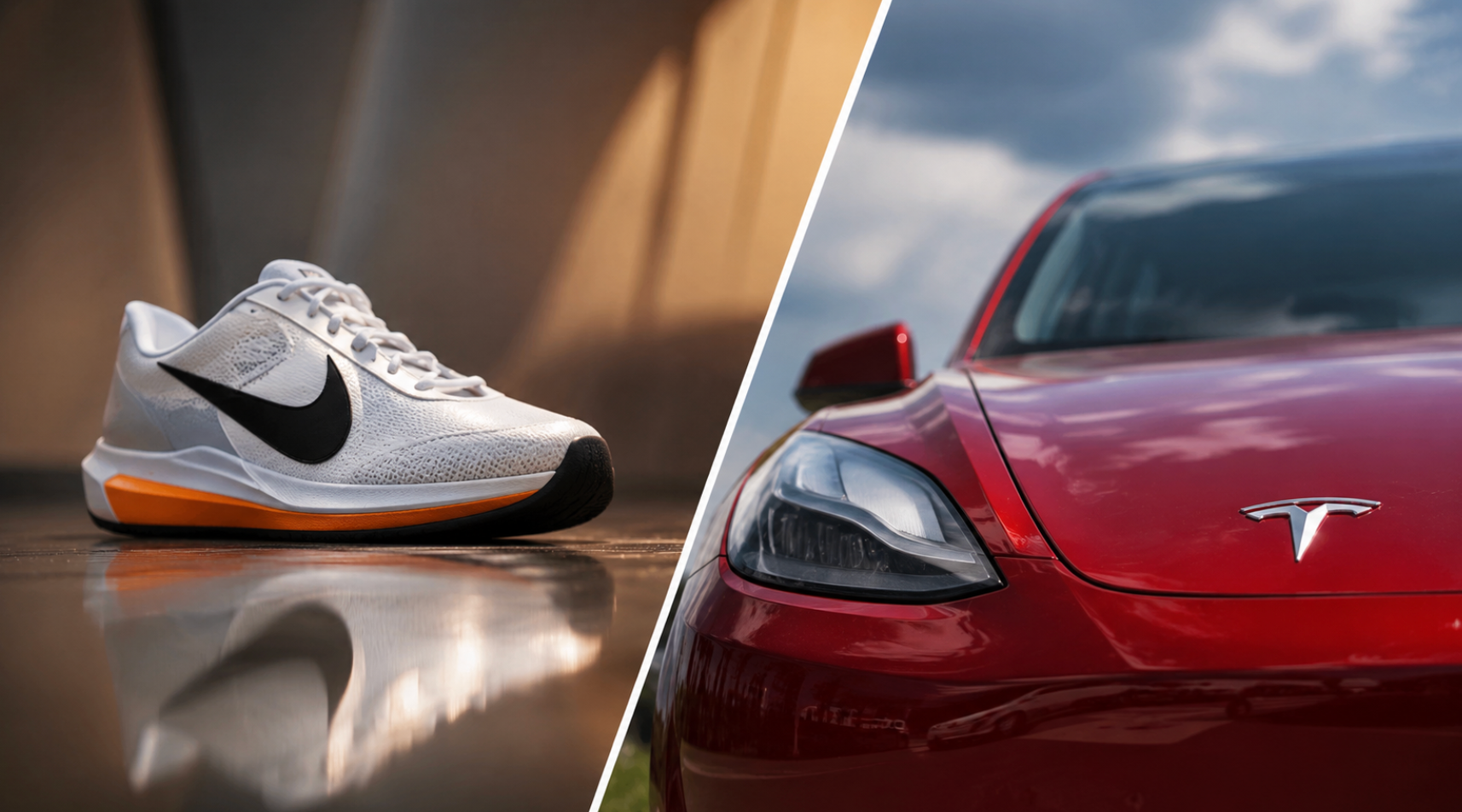
Nike and Tesla, two of the world’s most recognizable brands, have suffered significant brand-value declines in 2026, falling 35.5% and 37.8% respectively. While Nike is rebuilding momentum through performance innovation, restructuring and collaborations such as Nike × LEGO, Tesla faces intensifying competition across the rapidly evolving electric-vehicle market. Meanwhile, brands including NVIDIA, Spotify and Uber are surging, highlighting a fundamental shift in global brand power where innovation, relevance and consumer connection increasingly outweigh legacy and fame.
For decades, the most powerful global brands seemed almost untouchable. Their logos transcended products, their names became cultural shorthand, and their reputations created enormous economic value. But the latest Best Global Brands 2026 ranking from Interbrand offers a reminder that even iconic brands can lose momentum surprisingly quickly.
Two of the most striking examples are Nike and Tesla.
Nike’s estimated brand value plunged 35.5% to $21.7 billion, leaving the sportswear giant at No. 32 in Interbrand’s global ranking. Tesla suffered an even larger 37.8% decline, falling to $18.3 billion and No. 50.
The declines are especially remarkable because neither company suffers from a lack of recognition. The Nike Swoosh remains one of the world's most recognizable symbols, while Tesla fundamentally changed how consumers and competitors thought about electric vehicles.
Their problem illustrates something more complicated: being famous and being valuable are not necessarily the same thing.
Nike remains a sporting and cultural powerhouse, but its latest financial performance demonstrates why its brand value is under pressure.
For the quarter ended August 31, 2026, Nike reported revenue of $11.2 billion, down 4% year-on-year, or 5% on a currency-neutral basis. Nike Direct revenue dropped 8% to $4.1 billion, including a particularly concerning 13% decline in Nike Brand Digital revenue. Converse revenue collapsed 28% to $263 million.
Geographically, the challenge is particularly severe in China. Reuters reported that Nike's Greater China sales declined 26% on a constant-currency basis during the quarter. Analysts have also pointed toward insufficient new and compelling products as one factor behind Nike's difficulties, contributing to greater reliance on promotions and discounting.
This matters because Nike historically built its power not simply by selling sneakers, but by creating desire.
Air Jordan, Air Max, Dunk, Pegasus and countless athlete partnerships helped Nike turn performance footwear into culture. When consumers camped outside stores for sneakers or treated releases as collectibles, Nike possessed something considerably more valuable than distribution: scarcity, excitement and cultural authority.
Restoring those qualities is becoming central to its turnaround.
Nike is not responding by retreating.
Under its current strategy, the company is placing renewed emphasis on performance categories and what it calls its “Sport Offense.” It is simultaneously restructuring its operations through Pace, a transformation designed to modernize the supply chain, simplify the organization and generate approximately $2.5 billion in cumulative savings through fiscal 2031.
But cost reduction cannot rebuild a brand by itself. Nike also needs products and stories capable of making consumers excited again.
One interesting example arrived on October 30, 2026, when Nike and the LEGO Group unveiled a new space-inspired Nike × LEGO basketball collection.
The collaboration combines basketball, space exploration and LEGO's playful design language across footwear and apparel aimed at younger athletes. It includes imaginative versions of the Nike Air Force 1 Low LV8 and S.T. Dynamite, alongside basketball-inspired clothing. The collection launched November 2 across selected international markets, with its North American launch scheduled for November 24.
The partnership is more than another sneaker collaboration. It shows Nike attempting to reconnect sport, storytelling, childhood imagination and cultural relevance, precisely the emotional territory where great brands create value beyond their products.
Tesla's 37.8% brand-value decline to $18.3 billion is part of a much broader transformation occurring across the global automobile industry.
Interbrand's 2026 ranking shows remarkable weakness among several established automotive names. Toyota fell 19.9%, Mercedes-Benz 18.6%, BMW 17.9%, Honda 21.8%, Audi 19.5%, Porsche 17.5%, Volkswagen 23% and Nissan 23.2%.
Tesla therefore isn't falling in isolation.
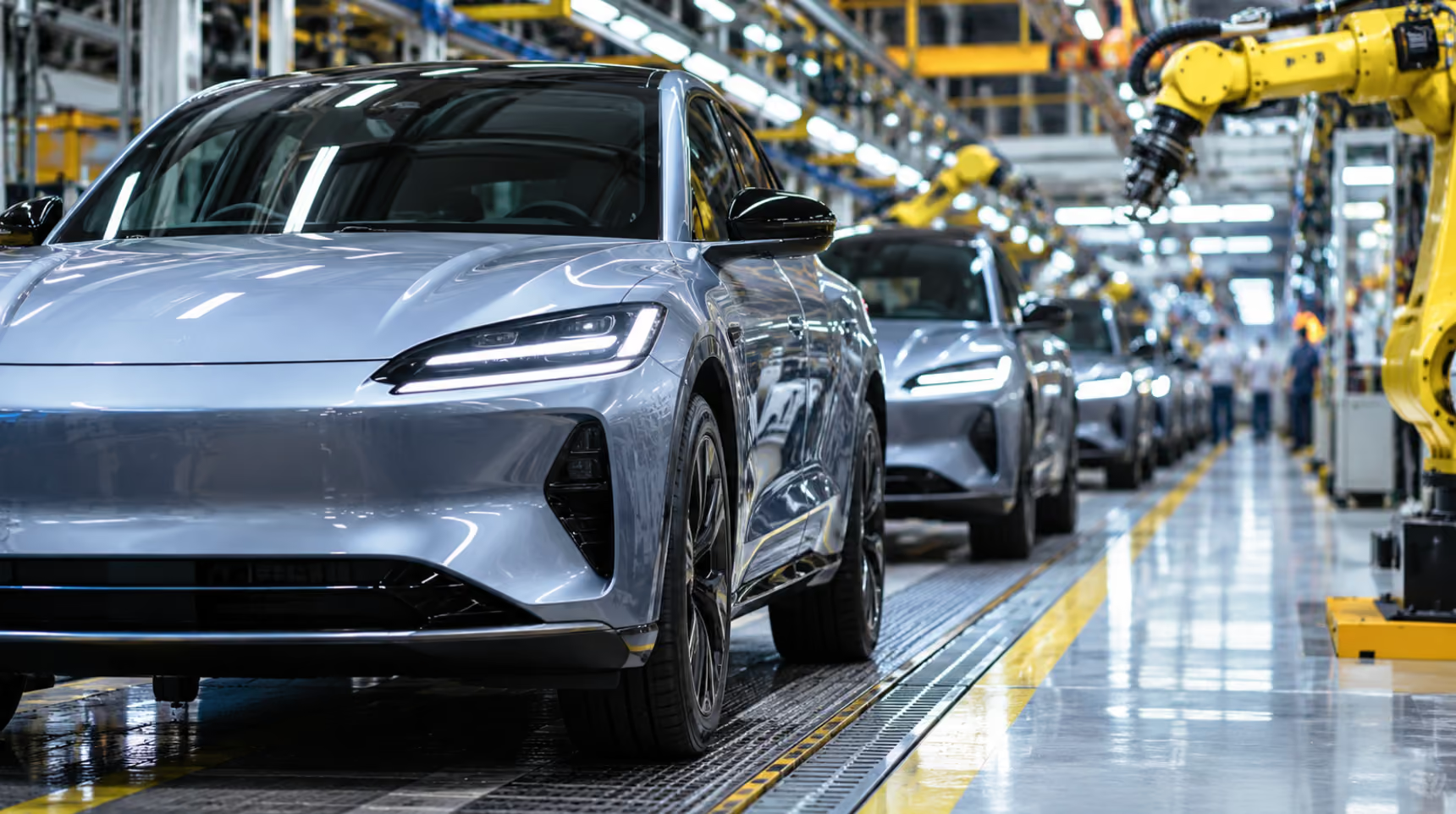
The global automotive industry is being reshaped simultaneously by electrification, software, autonomous-driving ambitions, Chinese competition, changing consumer expectations and intense pricing pressure.
Chinese manufacturers are becoming particularly formidable. BYD sold more than 1.32 million vehicles during the third quarter of 2026, up 18.8% year-on-year, while its overseas shipments more than doubled. In October alone, BYD sold 490,168 vehicles, with overseas shipments jumping 102.8% to 170,194 units.
That kind of expansion changes the competitive equation for Tesla.
Tesla once enjoyed the enormous branding advantage of being almost synonymous with the modern electric car. Today, consumers have dramatically more choices.
A falling brand valuation should not be confused with commercial disappearance.
Recent European data demonstrates how uneven Tesla's position has become. In Portugal, Tesla registrations jumped 186.1% year-on-year in October 2026, reaching 412 vehicles. Across the first ten months of the year, Portuguese Tesla sales rose 62.5% to 9,673 units.
In Italy, October registrations increased 94% year-on-year to 497 vehicles, while registrations for January through October were 21% higher than the corresponding 2025 period.
The picture, therefore, is more nuanced than a simple narrative of decline.
Tesla remains one of the world's most closely watched companies, but it increasingly operates in a market where technological leadership must constantly be re-earned. The EV revolution Tesla helped accelerate has created competitors capable of challenging the company that once defined it.
Perhaps the biggest lesson comes from looking at which brands are moving in the opposite direction.
While Nike fell 35.5% and Tesla 37.8%, NVIDIA surged 71.5% to $74 billion, Spotify climbed 37.8%, Uber rose 34.7%, Shopify advanced 28.4%, Google increased 22.8% and YouTube gained 21.7%.
The contrast reveals where economic and cultural momentum is shifting.
Technology platforms, digital ecosystems, AI infrastructure and experience-driven businesses are gaining influence, while some historically dominant consumer and automotive brands are being forced to reinvent themselves.
Even within traditional industries, however, decline is far from inevitable. Ferrari's brand value increased 14.7%, while Zara rose 11.2% and LEGO gained 13.7%.
The dividing line therefore isn't simply between old industries and new ones.
It is increasingly between brands that can maintain distinctiveness, innovation and cultural relevance and those struggling to translate historic strength into current momentum.
Nike and Tesla remain extraordinary brands. Their current difficulties do not erase decades of innovation, cultural influence or consumer recognition.
But that is exactly why their declines matter.
Brand value ultimately reflects expectations about a company's ability to influence choice and generate economic returns into the future. Heritage can open doors, but it cannot guarantee future relevance.
Nike must prove that it can once again consistently create products and cultural moments consumers urgently want. Tesla must demonstrate that it can remain distinctive as electric vehicles become mainstream and global competition intensifies.
The 2026 rankings therefore carry a warning for every established company: brand leadership is rented, not owned.
In an era when NVIDIA can climb 71.5% in a year while Nike and Tesla lose more than a third of their brand value, global brand hierarchies can change faster than corporate reputations suggest.
The Swoosh remains famous. Tesla remains synonymous with disruption. But today's marketplace is asking both companies the same uncomfortable question:
What will you do next?
For questions or comments write to contactus@bostonbrandmedia.com