Stay informed with our newsletter.
.webp)


EN





The State of Global Branding in 2025 highlights how brand reputation shifted toward authenticity, transparency, and credible recognition. This year, consumers favored real stories over polished narratives, while creator partnerships evolved into long-term strategic collaborations. Rising misinformation increased the importance of trust signals such as awards and verified reviews. Despite market fragmentation, strong brands maintained consistency while adapting locally. These trends reveal how reputation was truly defined in 2025.

The year 2025 reshaped the foundations of global branding. For more than a decade, companies invested in polished imagery, high-budget campaigns, and flawless narratives. But this year marked a dramatic shift. Consumers, fatigued by perfection and hyper-produced advertising, demanded realness. Trust, not aesthetics, became the most valuable currency. As brands navigated an era defined by digital saturation, AI-generated content, misinformation, and cultural fragmentation, the strongest reputations were built on authenticity, transparency, credible recognition, and meaningful partnerships.
From unfiltered storytelling to deeper creator collaborations and the growing importance of third-party awards like those issued by Boston Brand Research & Media (BBRM), 2025 became the year brands learned that reputation is earned, not crafted.
Below, we explore the key global branding shifts of 2025 and what they signal for the future.
For years, branding revolved around curated visuals and flawless messaging. But 2025 marked a turning point as consumers gravitated toward brands that felt human, not manufactured.
Instead of glossy campaigns, winning brands prioritized:
This movement took off largely due to content fatigue. With the rise of AI-generated videos and perfectly edited imagery saturating every platform, audiences began craving honesty. A global study found that 71% of consumers trusted brands more when they showcased imperfections, compared to only 29% who preferred highly polished content.
Brands that dropped the facade and communicated openly built stronger emotional connections. Their messaging felt relatable rather than aspirational. Their mistakes became moments of bonding. Their transparency, rather than their perfection, fueled loyalty.
In 2025, authenticity was not a branding “trend”, it became the expectation.
Creator partnerships have existed for years, but 2025 witnessed their most significant transformation. The term “influencer” rapidly faded. This year, creators became:
Brands no longer sought creators for one-off promotional posts. Instead, they co-developed:
More importantly, creators became cultural translators, bridging the gap between brands and niche audiences. Their insights shaped brand voice, values, and global expansion strategies. In markets such as Southeast Asia, the Middle East, and Latin America, creator-led brand communities became more powerful than traditional advertising.
Long-term partnerships performed significantly better. Research across the retail and lifestyle sectors revealed that brands with multi-year creator collaborations saw 35% higher retention rates and a stronger sense of community belonging.
For brands in 2025, working with creators was no longer a marketing tactic, it was a reputation strategy.
The explosion of synthetic content, deepfakes, AI-written reviews, and manipulated product claims created an environment where trust became unstable. As a result, consumers relied heavily on verified, credible, third-party signals when evaluating a brand’s reputation.
These trust signals included:
In 2025, these factors played a larger role in purchase decisions than traditional advertising. Brands understood that without external validation, claims of “best,” “leading,” or “innovative” held little weight.
This shift directly elevated the importance of highly respected award bodies, particularly those offering research-backed recognition such as the Boston Brand Research & Media Awards (BBRM Awards). These awards gained traction not just as PR assets but as powerful trust indicators that influenced consumer confidence, investor decisions, and B2B partnerships.
A cross-industry survey revealed that 68% of consumers and 74% of business buyers trusted brands more when they were recognized by credible third-party institutions. This reinforced the urgent need for external validation in reputation building.
In 2025, trust was no longer assumed, it had to be verified.
Political divides, cultural nuances, economic variations, and shifting digital behaviors led to increasing global fragmentation. Yet paradoxically, the strongest global brands successfully expanded, not by being uniform, but by being consistent and adaptable.
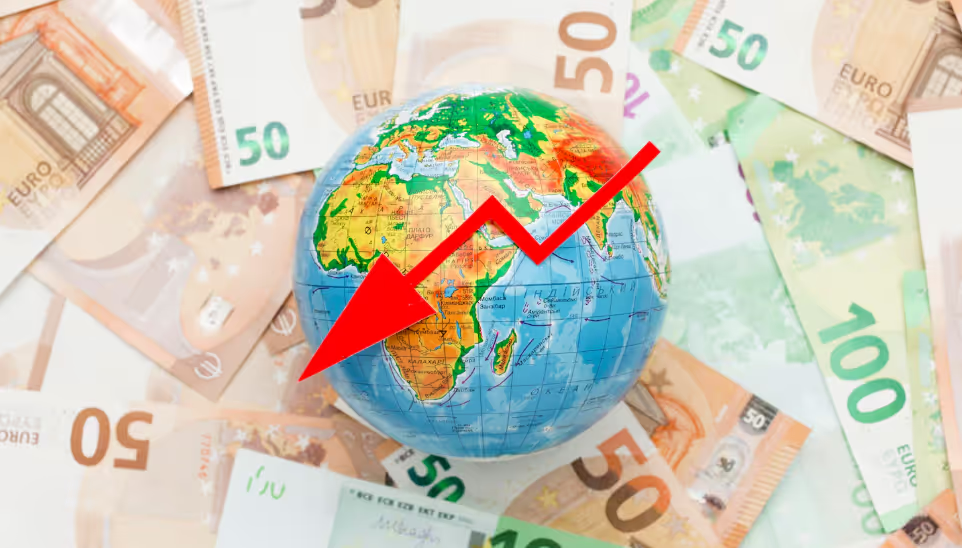
The winning formula in 2025 combined:
Brands that failed to adapt faced backlash, disengagement, or irrelevance.
Examples of leading global strategies included:
The lesson of 2025 was clear: global branding cannot rely on one-size-fits-all messaging. Companies must strike a delicate balance, remaining globally recognizable while becoming culturally relevant.
2025 redefined what it means to build a global reputation. The shift was not driven by technology alone but by consumer expectations for truth, purpose, and credible proof.
The year’s most successful brands shared several characteristics:
They communicated openly about:
They invested in:
They built ecosystems powered by:
By embedding these elements into their strategy, brands created reputations anchored in stability and trust, not trends.
Looking ahead, the future of branding is not about being the loudest or most visually perfect. It is about being:
The era of “brand image” has evolved. In 2026, success will belong to brands that prioritize integrity, credibility, and meaningful emotional connection.
For questions or comments write to contactus@bostonbrandmedia.com



-v3.jpg)


-v3-02.jpg)