Stay informed with our newsletter.
.webp)


EN





Global shipping is facing major disruptions as geopolitical conflicts threaten key trade routes like the Red Sea and the Suez Canal. Cargo ships are being rerouted, increasing transit times and costs. These challenges are slowing international trade, raising prices, and forcing businesses to rethink supply chains. As uncertainty grows, global commerce is shifting toward more resilient and secure logistics strategies.
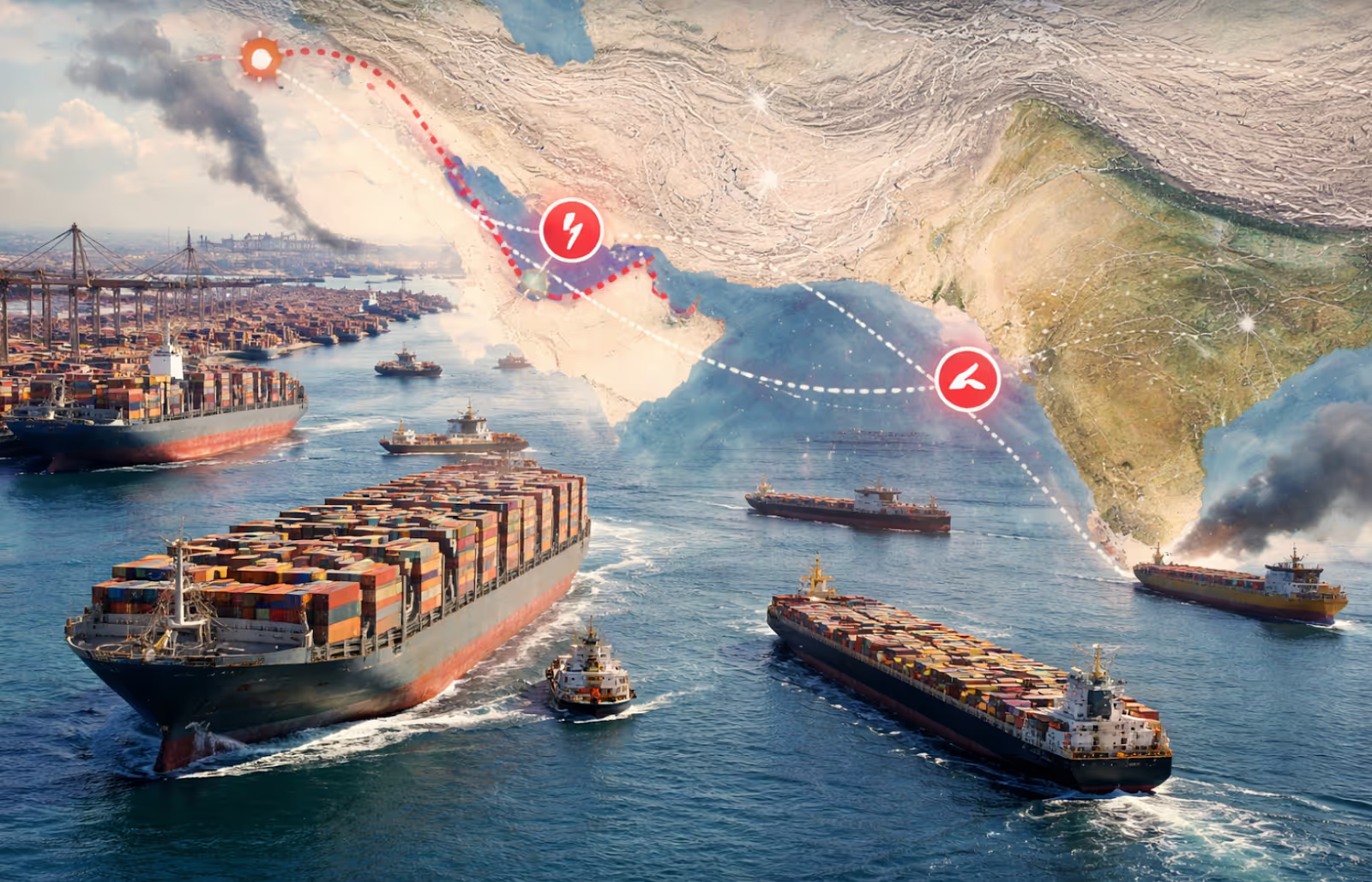
The global economy runs on shipping lanes that connect continents, industries, and consumers. Nearly 90% of world trade is carried by sea, making maritime routes the backbone of international commerce. However, in recent years and especially into 2025 and 2026, these routes have become increasingly unstable. Rising geopolitical tensions, particularly in the Middle East, are disrupting shipping flows, pushing up costs, and slowing down global trade.
One of the most critical chokepoints in global trade is the Red Sea, which connects the Mediterranean Sea to the Indian Ocean via the Suez Canal. This route is essential for transporting goods between Europe and Asia. However, ongoing regional conflicts and attacks on commercial vessels have made this corridor increasingly dangerous.
Shipping companies are now facing heightened security risks, including missile and drone threats targeting cargo vessels. As a result, many operators are choosing to avoid the Red Sea altogether, despite it being the fastest route between major markets.
Another sensitive zone is the Strait of Hormuz, through which nearly 20% of global oil supply passes daily. Any disruption here has immediate consequences for energy prices and fuel supply chains worldwide.
To avoid high-risk areas, shipping companies are rerouting vessels around the southern tip of Africa via the Cape of Good Hope. While safer, this alternative route significantly increases travel time, often by 10 to 15 days and adds substantial operational costs.
Longer journeys mean:
For industries relying on just-in-time supply chains, such delays can disrupt production schedules and inventory planning. Retailers, manufacturers, and energy companies are all feeling the ripple effects of these logistical challenges.
The rerouting of ships and rising insurance premiums have led to a sharp increase in freight rates. According to industry estimates, container shipping costs on key Asia-Europe routes have more than doubled in some cases compared to pre-crisis levels.
Insurance companies are also charging higher war-risk premiums for vessels entering conflict-prone waters. This added financial burden is ultimately passed down the supply chain, contributing to:
For small and medium-sized businesses, these cost spikes can be particularly damaging, squeezing margins and limiting global competitiveness.
With longer routes and increased uncertainty, global trade is experiencing a noticeable slowdown. Delivery timelines have become less predictable, affecting industries such as:
Ports are also experiencing congestion as ships arrive off-schedule, creating bottlenecks that further delay cargo movement. This disruption echoes the supply chain chaos seen during the COVID-19 pandemic, highlighting the fragility of global logistics systems.
Shipping disruptions in the Middle East have a direct impact on energy markets. Since a large portion of the world’s oil and liquefied natural gas passes through these regions, any threat to maritime security can trigger price volatility.
Oil prices often spike in response to geopolitical tensions, as markets react to potential supply shortages. This, in turn, affects transportation, manufacturing, and even food prices globally, making shipping disruptions a key driver of broader economic instability.
In response to these challenges, companies are beginning to rethink their supply chain strategies. Some of the emerging trends include:
These shifts signal a move away from efficiency-focused models toward resilience and flexibility.
Governments and international organizations are working to stabilize shipping routes through:
At the same time, industry players are investing in alternative transport corridors, such as rail links and overland trade routes, to reduce dependence on vulnerable maritime pathways.
The disruptions facing global shipping today are more than temporary setbacks, they represent a structural shift in how trade operates. As geopolitical risks become a persistent factor, businesses and governments must adapt to a world where uncertainty is the norm.
The era of seamless, low-cost global trade is being challenged by a more complex reality, where security, resilience, and adaptability are just as important as efficiency. For consumers, this may mean higher prices and longer wait times. For businesses, it demands a fundamental rethinking of how goods move across the world.
In this evolving landscape, one thing is clear: global shipping is no longer just about logistics, it is now deeply intertwined with geopolitics, security, and economic stability.
For questions or comments write to contactus@bostonbrandmedia.com



-v3.jpg)


-v3-02.jpg)