Stay informed with our newsletter.


EN





Jennifer Barreto of Puerto Rico made history at Miss Universe 2026, becoming the first married woman and mother to win the prestigious global title. Crowned during the competition’s 75th anniversary, her victory reflects the evolution of beauty standards and expanding opportunities for women across different stages of life. Beyond glamour, Barreto’s professional background, social advocacy and motherhood represent a broader vision of modern womanhood, leadership and ambition on the global stage today.
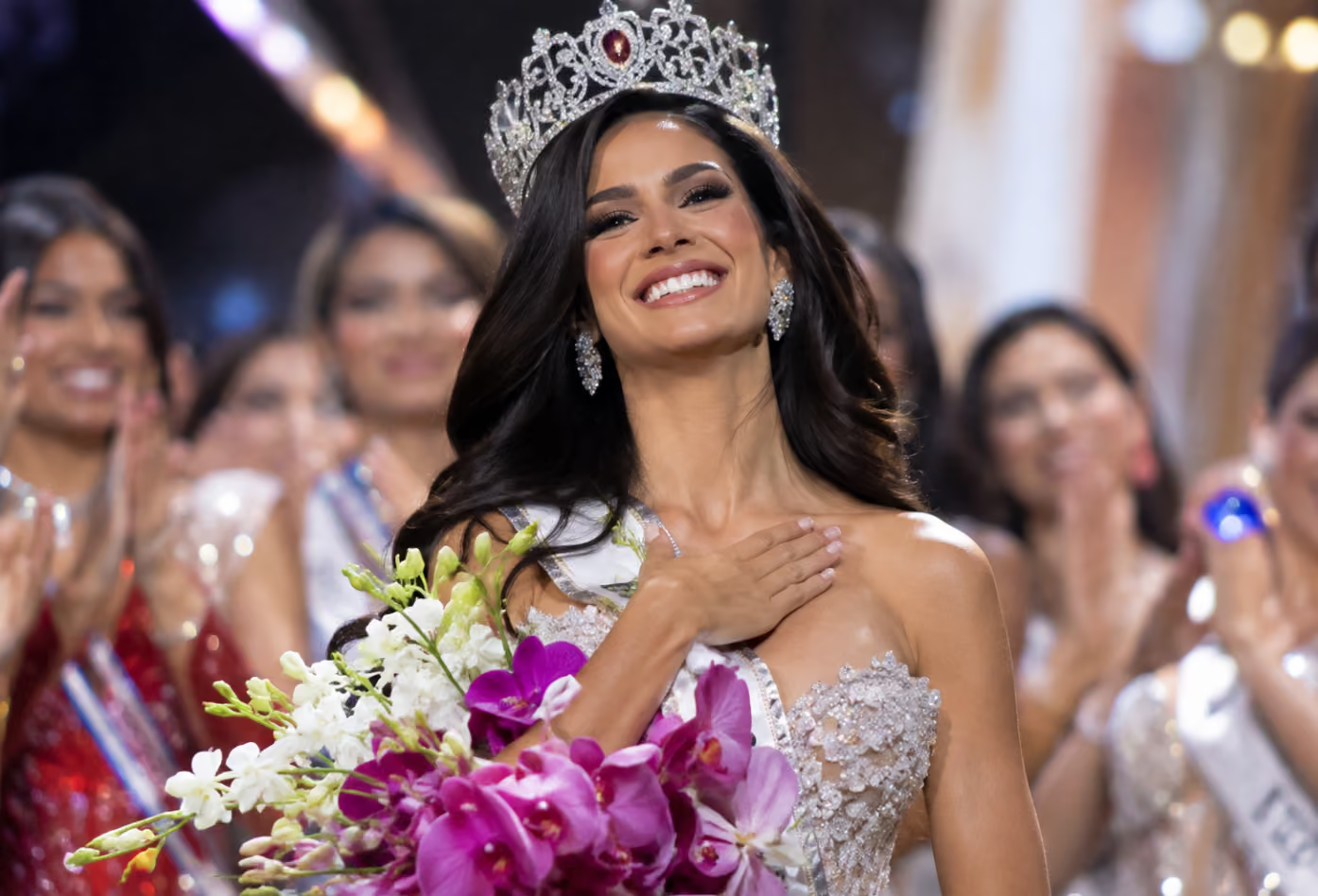
The crown placed on Jennifer Barreto of Puerto Rico at Miss Universe 2026 represented far more than another victory on the international pageant stage. It marked a significant moment in the 75-year history of Miss Universe and reflected how one of the world's most recognizable beauty competitions is attempting to redefine what a modern titleholder can represent.
Barreto, 27, was crowned Miss Universe 2026 on November 24 at the Coliseo de Puerto Rico José Miguel Agrelot in San Juan, becoming the first mother and first married woman ever to win the Miss Universe title. Her victory gave Puerto Rico its sixth Miss Universe crown and its first in 20 years.
The significance reaches beyond pageantry. For decades, marriage and motherhood effectively excluded women from competing for the crown. Barreto's victory demonstrates how changing eligibility rules are now translating into visible change on the world's biggest pageant stage.
Winning Miss Universe is already a major achievement. Winning it in your home territory during the competition's 75th anniversary made Barreto's victory particularly significant.
Puerto Rico has a formidable Miss Universe history. Its previous winners were Marisol Malaret in 1970, Deborah Carthy-Deu in 1985, Dayanara Torres in 1993, Denise Quiñones in 2001 and Zuleyka Rivera in 2006. Barreto now becomes the sixth Puerto Rican titleholder and only the second to win while Puerto Rico was hosting the competition, following Quiñones in 2001.
Barreto succeeded Fátima Bosch of Mexico, Miss Universe 2025.
The final also produced a strong Latin American showing. Melissa Núñez of the Dominican Republic finished first runner-up, followed by Clara Vegas of Venezuela as second runner-up. Bea Millan-Windorski of the Philippines finished third runner-up, while Georgia Waddington of New Zealand was fourth runner-up.
For much of Miss Universe's history, Barreto would not have been eligible to compete.
The organization previously required contestants to be unmarried and placed restrictions around motherhood. That began changing after the Miss Universe Organization announced in 2022 that it would expand eligibility to married women and mothers, with the revised rules taking effect beginning with the 2023 competition.
Women who were wives and mothers subsequently began appearing on the Miss Universe stage.
Colombia's Camila Avella, a married mother, competed in 2023, as did Guatemala's Michelle Cohn, who was married with two children. In 2024, Venezuela's Ileana Márquez, also a mother, went even further, finishing fourth runner-up. Puerto Rico's Jennifer Colón, a mother of three, reached the Top 12 that year.
But until 2026, no mother had taken the crown.
Barreto changed that.
Her victory transformed an eligibility reform from something written in a rulebook into something visible to millions of people following the competition internationally.
Barreto's personal and professional background also illustrates another way global pageants are evolving.
She has an academic background in psychology and social work, along with specialized training related to areas including trauma intervention, child protection, domestic violence and suicide prevention. According to the Miss Universe Organization, her professional work has included serving military communities through programs within the United States Department of the Army, supporting vulnerable individuals and families.
She is also a wife and mother, with a seven-year-old daughter.
Her social-impact platform, Amplify, seeks to increase visibility and support for community initiatives and use her public platform to encourage collective well-being and social change.
This matters because the traditional image of the international beauty queen is increasingly being challenged.
Modern contestants are expected to demonstrate communication skills, professional accomplishments, social advocacy, leadership and the ability to represent causes alongside fashion, stage presence and physical presentation.
The crown therefore increasingly represents something broader than conventional ideas of beauty.
Perhaps the most powerful element of Barreto's victory is what it communicates about women, motherhood and ambition.
Historically, women have often encountered an implicit expectation that marriage or motherhood should alter the scale of their professional or personal ambitions.
Miss Universe itself once institutionalized that distinction: a married woman or mother could not compete for its highest title.
The 2026 result turns that old assumption upside down.
Barreto did not win despite being a mother or despite being married. Those parts of her life were simply part of the identity and experience she brought to the competition.
That distinction is important.
It reflects a broader cultural movement toward recognizing that women do not necessarily need to choose between family, professional achievement, public leadership and personal ambition.
The Miss Universe Organization itself described Barreto's coronation as a defining moment, saying her journey demonstrated that motherhood, marriage and ambition need not be mutually exclusive.
Beauty pageants have long faced criticism over whether they promote narrow or unrealistic expectations surrounding women's appearance.
Those debates have not disappeared.
But Miss Universe has gradually broadened its eligibility requirements and presentation of contestants. The inclusion of married women and mothers represents one of the clearest examples.
The 2026 competition itself illustrated that shift. Reporting on the event indicated that among the 117 delegates were 10 mothers, five doctors and 22 women holding master's degrees.
Those numbers reveal something important about the direction of international pageantry.
The modern contestant is increasingly presented not simply as someone competing on physical appearance, but as a professional, entrepreneur, academic, advocate, parent or community leader who also participates in the glamour and fashion traditions associated with pageants.
This does not mean the traditional elements have disappeared. Evening gowns, national costumes, styling, stage presentation and fashion remain central to the Miss Universe spectacle.
Instead, the definition of the woman wearing those gowns is becoming broader.
Barreto's historic status should not overshadow the strength of the other finalists.
Dominican Republic's Melissa Núñez delivered one of the competition's most remarkable stories. Shortly before travelling to Miss Universe, Núñez was involved in a serious car accident in which the vehicle overturned after hitting a concrete barrier. She nevertheless competed and ultimately finished first runner-up.
The Philippines also achieved a major result, with Bea Millan-Windorski finishing third runner-up. India, represented by Kaziah Liz Mejo, advanced to the Top 30 but did not progress to the Top 12.
The Top Five ultimately represented Puerto Rico, the Dominican Republic, Venezuela, the Philippines and New Zealand — highlighting the international reach that continues to make Miss Universe one of the world's most closely followed pageants.
Miss Universe is not simply a competition. It is also a global entertainment and lifestyle brand operating across fashion, beauty, tourism, media and social causes.
That means its eligibility rules communicate something about the type of woman the organization believes can represent its brand.
Opening the competition to married women and mothers was therefore more than an administrative change. It expanded the potential identity of Miss Universe herself.
Barreto's victory completes that transformation symbolically.
A mother can now stand on the Miss Universe stage not merely as a participant, but as its winner.
A married woman can represent the organization internationally.
A professional career, family life, social advocacy, fashion and beauty can exist within the same public identity.
For brands across the wider beauty and fashion industries, there is a lesson here as well. Consumers increasingly expect representation to reflect real lives and different stages of adulthood, rather than presenting womanhood through a single idealized template.
The 75th anniversary offered Miss Universe an opportunity to celebrate its history. Instead, its most memorable moment may ultimately be remembered for breaking with that history.
Jennifer Barreto's coronation reflects how dramatically ideas surrounding beauty, success and women's roles have changed since Miss Universe was founded in 1952.
There will undoubtedly continue to be debates about pageantry, beauty standards and what competitions such as Miss Universe should represent. But the significance of the 2026 result is difficult to ignore.
For the first time in Miss Universe history, the woman wearing the crown is both a wife and a mother.
And that may be the bigger story.
The modern definition of beauty is increasingly becoming less about fitting women into a predetermined category and more about acknowledging the complexity of who women already are - professionals, leaders, mothers, wives, advocates and individuals with ambitions that do not have an expiration date.
As Miss Universe prepares for its 76th competition in Costa Rica in 2027, Barreto begins her reign carrying a title that has existed for three-quarters of a century, but representing it in a way no woman before her ever has.
For questions or comments write to contactus@bostonbrandmedia.com