Stay informed with our newsletter.


EN





Despite slower inflation, households continue to face a significant cost-of-living squeeze because prices remain far above pre-pandemic levels. Rising energy, food, housing, transportation and service costs are encouraging consumers to compare prices, seek discounts and prioritise value. Heading into 2027, affordability, quality, convenience and trust are expected to shape purchasing decisions, forcing brands to rethink pricing, promotions, product sizes and customer retention as value-conscious consumption becomes an increasingly powerful global trend.
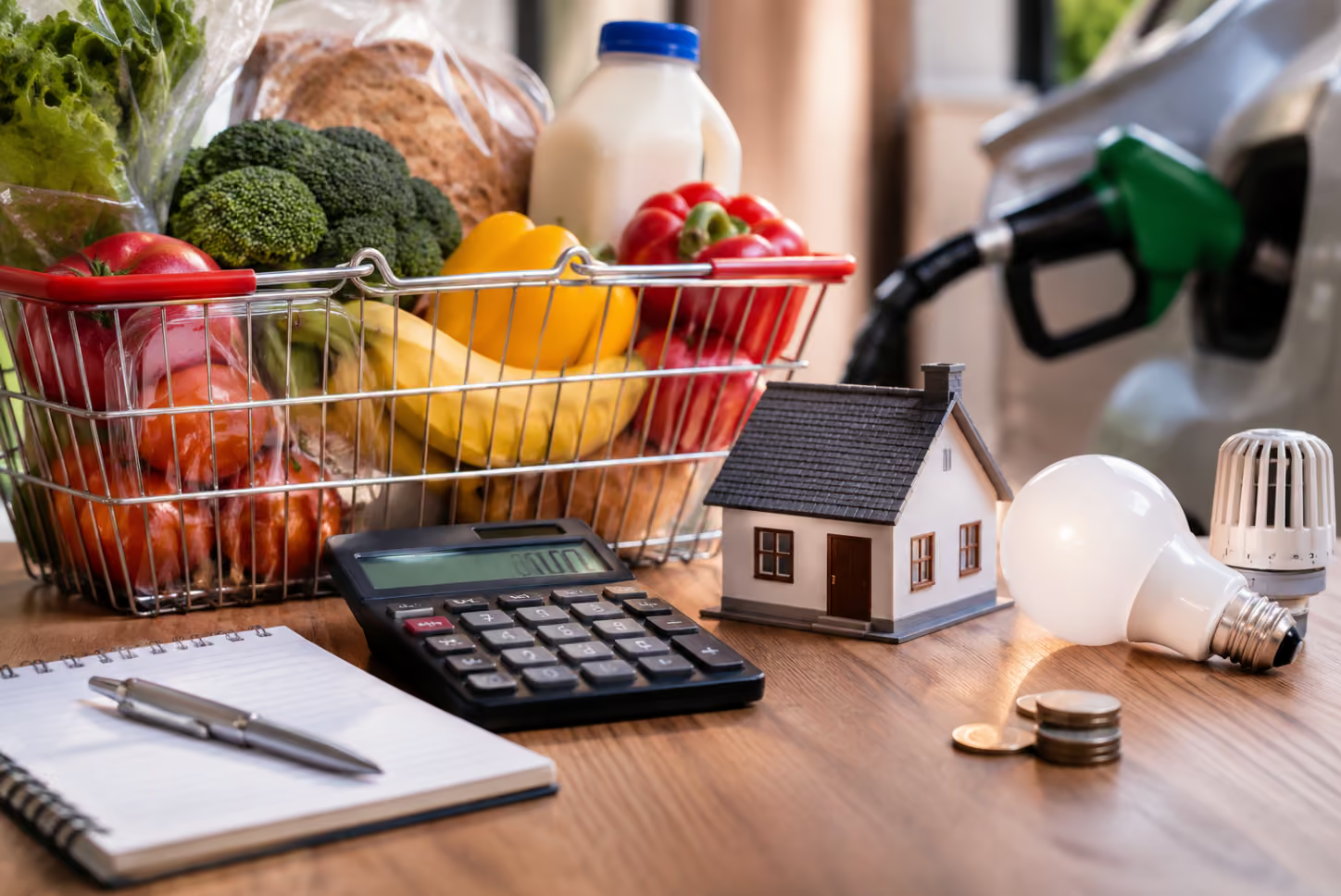
For households around the world, one economic question refuses to disappear: Why does everything still feel so expensive?
The answer lies in an important distinction that is often lost when inflation figures make the headlines. Lower inflation does not mean lower prices. It simply means prices are increasing more slowly than before. And in 2026, even that improvement has faced renewed pressure from energy costs.
The result is a prolonged cost-of-living squeeze in which households may hear that inflation has moderated from its earlier peaks but still find groceries, electricity, transportation, housing and everyday services substantially more expensive than they remember.
For businesses, the consequences are equally significant. Consumers are becoming more selective, price-conscious and willing to reconsider brands, pack sizes and discretionary purchases.
Inflation measures the rate at which prices change, not whether prices are high or low.
Imagine that something costing $100 rises by 10% in one year and then inflation falls to 3% the following year. The price does not return to $100. Instead, it rises from $110 to $113.30.
That distinction explains much of today's consumer frustration.
According to the OECD's November 2026 Consumer Price Index release, annual inflation across OECD economies increased to 4.5% in September 2026, compared with 4.3% in August. Energy was the biggest driver: annual energy inflation jumped to 17.4%, from 13.6% a month earlier. Core inflation, excluding food and energy, remained broadly stable at 3.7%.
The longer-term comparison is even more revealing.
Average prices across OECD economies were more than 40% above December 2019 levels. Food prices were almost 50% higher, while energy prices were close to 70% higher than before the pandemic.
These cumulative increases help explain why household finances can still feel under severe pressure even when the inflation rate is below its earlier peaks.
Energy prices have an unusually broad economic impact because energy is not simply something households purchase directly.
It is also an input into manufacturing, agriculture, refrigeration, transportation, logistics, construction and retail operations. When fuel, electricity or gas becomes more expensive, businesses frequently face higher costs throughout their supply chains.
The September numbers demonstrate the scale of the renewed pressure. Energy inflation increased in 31 of the 37 OECD countries for which data were available. Across the G7, headline inflation increased from 3.1% in August to 3.5% in September, with higher energy costs accounting for around half or more of the monthly acceleration in several major economies.
That matters because another energy shock can filter through to the prices consumers eventually pay for goods and services.
The squeeze is particularly noticeable because it affects expenses that households cannot easily eliminate.
Groceries remain one of the clearest examples. Food production depends on agricultural inputs, processing, packaging, refrigeration, transportation and energy. With OECD food prices now almost 50% above their pre-pandemic level, even relatively stable food inflation does not erase the cumulative increase already built into supermarket bills.
Housing presents another challenge. Rent, mortgage financing, insurance, repairs, utilities and maintenance can consume substantial portions of household income. Unlike an optional purchase, housing expenses cannot simply be removed from the monthly budget.
Transportation is similarly exposed to fuel prices, vehicle costs, maintenance, insurance and public-transport expenses. Higher logistics costs can also indirectly increase the price of other products.
Meanwhile, healthcare and education represent significant service-related expenses for many families. Labour, technology, facilities and operating costs all influence what consumers ultimately pay.
Finally, lifestyle and discretionary spending, including restaurants, entertainment, travel, fashion and leisure, becomes the area where consumers often have greater freedom to cut back when essential expenses rise.
The cost-of-living squeeze is not simply reducing spending. It is changing how people decide what is worth buying.

McKinsey's 2026 State of the Consumer research found that sustained cost consciousness is shaping purchasing behaviour across income groups. More than three-quarters of surveyed consumers continued to engage in some form of trading down. For essentials, that can mean changing brands, choosing different pack sizes or seeking promotions. For discretionary purchases, consumers may postpone or avoid the purchase altogether.
Price comparison, discount hunting and loyalty programmes therefore become increasingly important.
Consumers are also becoming more willing to challenge traditional brand loyalty. They may switch to private-label products, buy second-hand, repair rather than replace products, or reconsider services they previously regarded as routine.
This is becoming more than a temporary response to inflation. It is developing into a broader culture of value-conscious consumption.
Research into grocery behaviour illustrates the shift. McKinsey reported in 2026 that getting good value had become more important for 60% of surveyed North American grocery consumers, while 71% preferred lower, more consistent everyday prices rather than higher regular prices combined with frequent promotions.
Value, in other words, increasingly means clarity and reliability, not simply a discount sticker.
This environment creates a difficult balancing act for companies.
Businesses face many of the same pressures as consumers: energy, transportation, wages, financing, raw materials and operating expenses can all increase. Passing every additional cost directly to customers, however, risks reaching a point where consumers trade down, switch brands or stop purchasing altogether.
That makes pricing strategy increasingly important.
Companies may need to rethink pack sizes, product tiers, loyalty rewards, bundles, targeted promotions and private-label competition rather than relying primarily on repeated price increases.
Quality still matters. Consumers are not necessarily looking for the cheapest possible product. Increasingly, they are asking a different question: “Is this worth what I am paying?”
McKinsey's food and beverage research found that 61% of surveyed consumers said price mattered more than it did two years earlier, while cost and perceived value were the two leading reasons consumers stopped purchasing a brand.
That makes trust especially valuable. A brand that combines reasonable pricing with reliability, convenience and consistent quality can potentially defend customer loyalty even during periods of financial pressure.
Looking ahead to 2027, value-conscious consumption is likely to remain one of the defining consumer trends, particularly if elevated energy prices continue feeding into business and household costs.
The OECD has also modelled the potential consequences of additional global shocks. Its September 2026 interim outlook estimated that a combination of adverse shocks could reduce global growth by 0.7 percentage points in 2027 while raising global consumer-price inflation by 1.1 percentage points, with higher energy prices among the most important potential drivers. This is a scenario analysis rather than a baseline forecast, but it highlights the continuing vulnerability of the global economy to renewed cost pressures.
Brands therefore cannot assume consumers will simply become accustomed to higher prices.
Companies capable of combining affordability, quality, convenience and trust may have an advantage over businesses relying exclusively on premium positioning. Customer retention could become just as important as customer acquisition, while product architecture and promotional strategy will need to reflect increasingly sophisticated purchasing behaviour.
The winners may not necessarily be the cheapest brands. They could be the brands that make consumers feel they are receiving genuine value for every dollar spent.
The mathematics of inflation demonstrates why the cost-of-living squeeze becomes so noticeable over time.
If a product costs $100 and its price increases by 5% every year for three consecutive years, the calculation is:
$100 × 1.05 × 1.05 × 1.05 = $115.76
That represents a 15.76% cumulative increase, not simply 15%, because each year's increase applies to the already higher price.
Multiply that effect across groceries, electricity, transportation, insurance, housing and hundreds of everyday purchases, and the pressure on household budgets becomes much easier to understand.
This is the fundamental reality behind today's cost-of-living debate: inflation does not have to be at record highs for consumers to feel financially squeezed.
After several years of accumulated price increases, slowing inflation alone cannot immediately restore purchasing power. Unless incomes rise sufficiently, prices fall outright, or households find meaningful savings elsewhere, consumers will continue adjusting what they buy, where they buy it and how much they are willing to pay.
For businesses heading into 2027, that sends a clear message: value is no longer merely a marketing proposition. It is becoming a competitive necessity.
For questions or comments write to contactus@bostonbrandmedia.com