Stay informed with our newsletter.
.webp)


EN





In 2026, the global fashion and lifestyle industry is being transformed by three powerful forces: the rise of luxury resale as an investment-minded market, the growing influence of GLP-1 medications on beauty and wellness, and stricter sustainability regulations targeting fashion waste. Together, these shifts are changing consumer behaviour, product development and business strategy, while pushing brands toward greater innovation, circularity, longevity and accountability across the fashion and lifestyle economy.
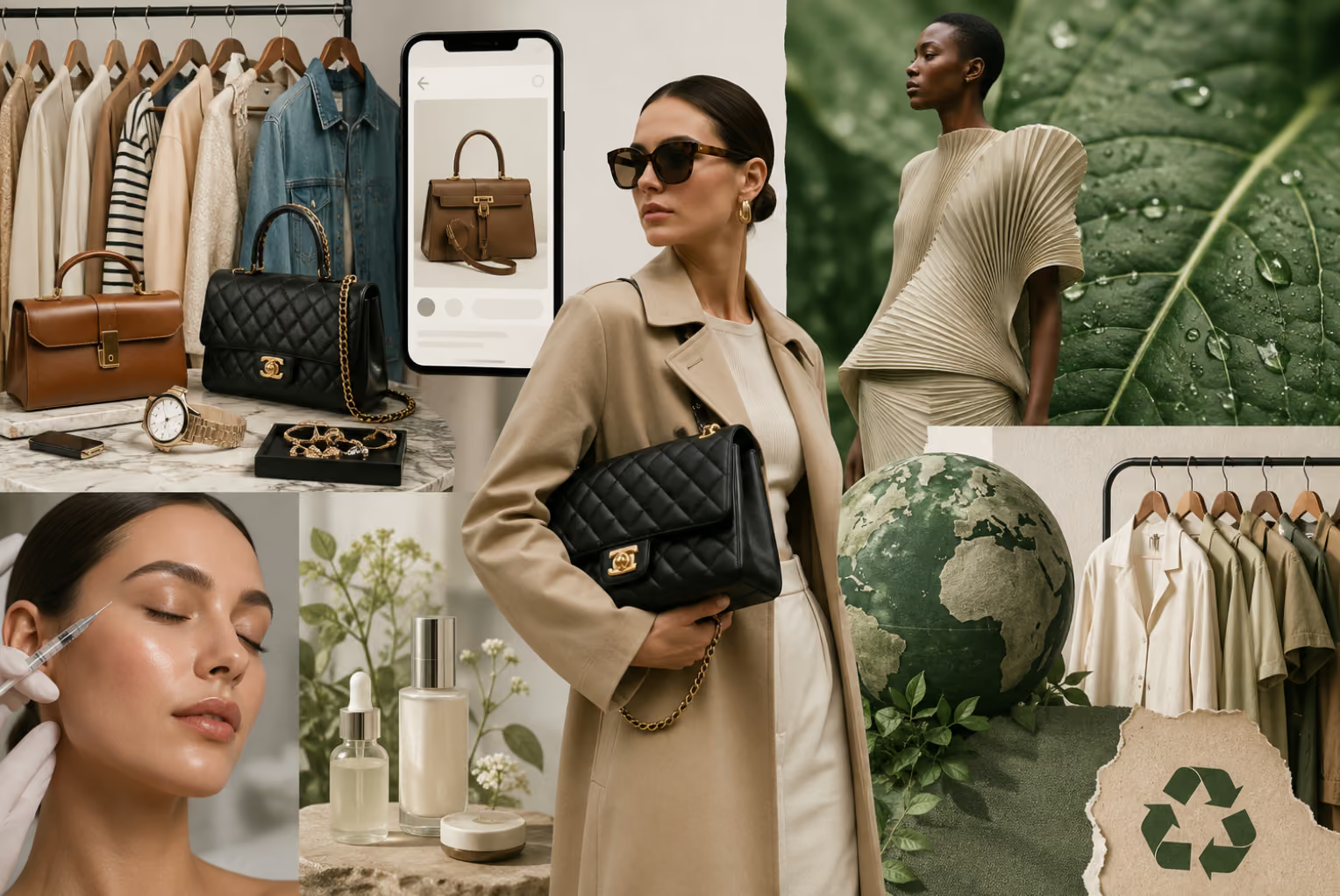
The global fashion and lifestyle industry is undergoing a remarkable transformation in 2026. What consumers buy, how they think about beauty and even what companies are permitted to do with unwanted inventory are changing simultaneously. Three developments in particular are defining this shift: the rise of luxury resale as an investment-minded market, the emergence of a new GLP-1-driven beauty and wellness economy, and the European Union’s landmark ban on destroying unsold clothing and footwear.
Although these trends appear very different, they share a common theme. Consumers and regulators increasingly expect products to deliver long-term value, personal relevance and greater responsibility, forcing fashion and beauty businesses to rethink traditional models.
Luxury resale is no longer simply a way to purchase designer goods at discounted prices. Increasingly knowledgeable consumers are approaching vintage fashion much like collectors approach art, watches or rare automobiles.
According to data highlighted in The RealReal’s latest resale research, demand for vintage fashion, defined as pieces 15 years old or older, has increased 432% since 2020. Shoppers are also becoming extraordinarily specific in their searches, moving beyond broad terms such as “Prada bag” toward individual seasons, designers and runway collections. Searches may now target something as precise as a particular Chanel collection or a Prada piece from a specific year.
This sophistication is changing the concept of fashion value. Nearly half of shoppers now consider an item's potential resale value before purchasing it new, according to the resale data cited by Vogue. Instead of seeing a designer purchase purely as consumption, some customers are evaluating its future desirability, scarcity and ability to retain value.
Separate Vogue Business consumer research involving 3,103 luxury consumers worldwide reinforces the trend. About 19% of respondents had purchased luxury goods through resale platforms during the previous six months, while the figure shopping at second-hand stores rose to 23% among Gen Z. Uniqueness was the biggest motivation for second-hand luxury shoppers at 44%, while both competitive pricing and sustainability were cited by 43%.
Investment potential is becoming another important consideration. 34% of surveyed consumers said they buy resale partly because they believe certain products can appreciate in value. Vestiaire Collective data cited by Vogue Business suggests that some Hermès bags can appreciate by around 40% over five years, while a Chanel Timeless may rise by approximately 17%.
For luxury houses, this creates a profound challenge and opportunity. A strong resale market can strengthen heritage, desirability and product longevity, while poorly made or overly trend-driven products may struggle to retain value. Durability, authenticity and timeless design are becoming commercial advantages rather than merely marketing claims.
At the same time, another lifestyle transformation is moving rapidly from medicine into beauty.
GLP-1 medications, originally associated principally with diabetes management and later widely adopted for obesity treatment, have become a major cultural and consumer phenomenon. In 2026, their influence expanded further as oral weight-management medicines became more widely available.
Novo Nordisk launched the Wegovy pill in the United States in January 2026. By the week ending 17 July, weekly prescriptions had exceeded 265,000, and the pill had subsequently launched in the UAE and UK. Clinical trial data reported by Novo Nordisk showed mean weight loss of approximately 16.6% among participants who remained on treatment.
Eli Lilly's oral GLP-1 drug Foundayo (orforglipron) was approved in the US in April 2026. In the ATTAIN-1 trial, adults taking the highest dose lost an average of approximately 27 pounds, illustrating why easier-to-use oral treatments could considerably broaden the weight-management market.
This expansion is now influencing the beauty industry.
The first wave of products and treatments focused heavily on what became popularly known as “Ozempic face”—changes in facial appearance associated with substantial or rapid weight loss. The next phase is considerably broader, with beauty companies exploring products addressing skin laxity, elasticity, collagen support, body composition and hair health.
Body skincare, traditionally less sophisticated than facial skincare, is increasingly incorporating ingredients such as peptides and regenerative technologies. Beauty companies are also investigating how rapid body changes affect areas including the neck, arms and abdomen.
Hair is becoming another important category. Significant or rapid weight loss can be associated with temporary hair shedding, creating demand for scalp care, strengthening treatments and products positioned around healthier hair growth. Vogue has identified hair-health technologies, regenerative products and LED-based treatments among areas attracting greater attention.
Yet the expansion also requires caution. Beauty products marketed around GLP-1-related changes do not necessarily have evidence comparable to prescription medicines, and claims such as topical products behaving like “fillers” require careful scrutiny. The emerging opportunity is therefore likely to favour credible clinical evidence, personalisation and collaboration between medicine, dermatology and beauty.
The third major change is regulatory rather than consumer-led and could have enormous consequences for the global fashion supply chain.
From 19 July 2026, large companies operating within the European Union are prohibited from destroying unsold clothing, clothing accessories and footwear under the EU's Ecodesign for Sustainable Products Regulation (ESPR). Medium-sized companies are expected to come under the rules from 2030.
The scale of the problem explains the intervention.
According to figures cited by the European Commission from the European Environment Agency, an estimated 4% to 9% of textile products placed on the European market are destroyed before they are ever used. That represents approximately 264,000 to 594,000 tonnes of textiles every year.
Under the new framework, companies are expected to prioritise alternatives such as resale, reuse, repair, remanufacturing and donation rather than destroying usable products. Businesses must also maintain records for five years to facilitate inspection and compliance. Limited exemptions remain for circumstances including safety concerns, irreparable damage and certain other justified situations.
The effects could extend far beyond Europe. Global fashion groups selling into the EU may need better inventory forecasting, production planning and reverse-logistics systems. Producing excessive volumes and quietly disposing of unwanted inventory becomes much harder when regulators demand accountability.
It also gives brands a powerful financial incentive to embrace circularity. Unsold garments can potentially become resale inventory, repaired merchandise, recycled material or products for alternative distribution rather than pure waste.
Together, these three developments reveal a major change in the global lifestyle economy.
Luxury resale is transforming clothing into potentially enduring assets. GLP-1 medicines are creating entirely new beauty and wellness needs. European regulation is forcing fashion businesses to confront the environmental and financial consequences of overproduction.
Consumers are asking whether products will retain their value, beauty customers increasingly expect solutions tailored to changing bodies and lifestyles, and regulators are demanding that companies account for what happens to products that never sell.
The winners in this emerging landscape may therefore be businesses capable of combining innovation, longevity, transparency and circularity.
Fashion and lifestyle in 2026 are becoming less about simply creating and selling more products. Increasingly, the question is whether those products and the businesses behind them, can provide lasting value in a world where consumers are becoming more informed, health-conscious and environmentally demanding.
For questions or comments write to contactus@bostonbrandmedia.com



-v3.jpg)


-v3-02.jpg)