Stay informed with our newsletter.
.webp)


EN





Despite challenging economic conditions and declining overall vehicle sales across the automotive industry, Volvo and Renault are experiencing strong growth in their electric vehicle (EV) order books. Rising consumer demand for sustainable transportation, supportive government policies, and ongoing advancements in EV technology are helping drive this momentum. Their success highlights the resilience of the electric vehicle market, even as traditional automakers face pressure from inflation, higher interest rates, and increasingly competitive Chinese EV manufacturers.
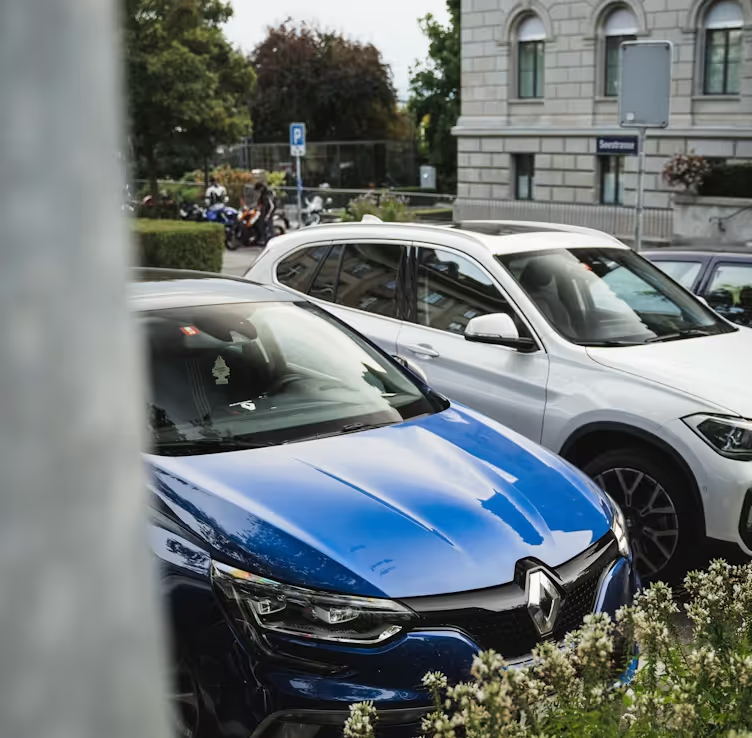
The global automotive industry is undergoing one of the most significant transformations in its history. While many traditional car manufacturers continue to face declining sales volumes due to economic uncertainty, inflationary pressures, and changing consumer behavior, some brands are proving that the future remains bright for electric mobility. Recent reports indicate that Volvo and Renault are experiencing substantial increases in their electric vehicle (EV) order books, highlighting the growing demand for sustainable transportation despite broader market challenges.
This trend comes at a time when several legacy automakers are struggling with slowing vehicle sales, higher production costs, and fierce competition from rapidly expanding Chinese EV manufacturers. However, the strong performance of Volvo and Renault demonstrates that consumers remain committed to transitioning toward cleaner and more technologically advanced vehicles.
The global shift toward electric vehicles has been driven by multiple factors, including stricter environmental regulations, government incentives, advancements in battery technology, and increasing consumer awareness about sustainability. Although economic conditions in many regions have become more challenging, demand for EVs continues to show resilience.
Volvo has reported a notable surge in EV orders across several European markets, reflecting growing customer confidence in fully electric transportation. Similarly, Renault has witnessed significant momentum for its electric lineup, benefiting from strategic investments in affordable EV technology and innovative vehicle platforms.
These positive developments suggest that while overall automotive demand may fluctuate, the long-term trajectory for electric mobility remains strong. Consumers increasingly view EVs not only as environmentally responsible choices but also as practical and cost-effective transportation solutions.
Despite encouraging EV growth, many traditional automotive companies are experiencing declines in overall vehicle volumes. The automotive sector continues to face a variety of macroeconomic headwinds that impact both production and consumer purchasing decisions.
Some of the key challenges include:
These factors have created a difficult operating environment for many established automakers. As a result, several manufacturers have reported weaker sales figures in conventional internal combustion engine vehicles, even while their electric segments continue to grow.
The contrast between declining overall sales and rising EV orders highlights the importance of successful electrification strategies in today's automotive market.
One of the most significant developments shaping the automotive landscape is the rapid expansion of Chinese electric vehicle manufacturers. Companies from China have become increasingly competitive by offering technologically advanced vehicles at highly attractive price points.
Chinese brands have benefited from:
As a result, many European and global automakers are facing unprecedented competition both within China and in international markets. Affordable electric vehicles from Chinese manufacturers are putting pressure on established brands to improve efficiency, reduce costs, and accelerate product development.
However, companies such as Volvo and Renault are leveraging their established reputations, safety credentials, engineering expertise, and brand loyalty to maintain strong positions in the evolving market.
Volvo has been among the most aggressive traditional automakers in pursuing electrification. The company has consistently emphasized its commitment to becoming a leader in sustainable mobility and reducing carbon emissions across its operations.
Several factors are contributing to Volvo's EV success:
Volvo is globally recognized for safety, quality, and innovation. These attributes continue to attract consumers seeking reliable electric vehicles from trusted manufacturers.
The company has introduced a growing range of fully electric models that appeal to different customer segments, from compact urban vehicles to premium SUVs.
Volvo's commitment to environmental responsibility resonates with modern consumers who prioritize sustainability when making purchasing decisions.
The increase in Volvo's EV order book demonstrates that customers are responding positively to the company's long-term electrification vision.
Renault has also emerged as a major player in Europe's electric vehicle market. Unlike some competitors that focus primarily on premium EVs, Renault has concentrated on delivering accessible and affordable electric mobility solutions.
This strategy has proven particularly effective during periods of economic uncertainty when consumers become more price-sensitive.
Key advantages driving Renault's EV growth include:
Renault's ability to offer competitively priced EVs makes electric mobility accessible to a broader audience.
The company's strong manufacturing presence across Europe supports efficient production and supply chain management.
Renault continues to invest heavily in battery technology, software integration, and vehicle efficiency improvements.
Growing order volumes indicate that consumers appreciate Renault's combination of affordability, innovation, and practicality.
One of the most encouraging aspects of rising EV orders is the indication of improving consumer confidence in electric vehicle technology.
Several concerns that once slowed EV adoption are gradually being addressed:
As these barriers continue to diminish, more consumers are considering electric vehicles as viable alternatives to traditional gasoline and diesel-powered cars.
The strong order growth reported by Volvo and Renault suggests that many buyers now view EVs as mainstream transportation options rather than niche products.
Government regulations and environmental policies remain important drivers of electric vehicle adoption worldwide. Many countries have established ambitious emissions reduction targets and are encouraging consumers to transition toward zero-emission transportation.
Support measures often include:
These policies create favorable conditions for manufacturers investing in electrification and help sustain long-term demand growth.
Although short-term market conditions remain challenging, industry analysts generally expect electric vehicles to capture an increasing share of global automotive sales over the coming decade.
Several trends are likely to shape future growth:
Manufacturers that successfully balance innovation, affordability, and operational efficiency will be best positioned to capitalize on this transition.
The recent success of Volvo and Renault illustrates how strategic investment in electrification can generate growth even when broader market conditions remain difficult.
The automotive industry is navigating a period of significant disruption. While many legacy automakers continue to experience volume declines due to economic pressures and aggressive competition from Chinese EV manufacturers, the strong performance of Volvo and Renault highlights the growing strength of the electric vehicle market.
Rising EV order books, increasing consumer confidence, supportive government policies, and ongoing technological advancements are creating opportunities for companies that embrace electrification. As the global transition toward sustainable transportation accelerates, manufacturers with clear EV strategies are likely to emerge as the industry's future leaders.
The success of Volvo and Renault serves as a powerful reminder that even in challenging economic environments, innovation and commitment to electric mobility can drive substantial growth and position brands for long-term success.
For questions or comments write to contactus@bostonbrandmedia.com



-v3.jpg)


-v3-02.jpg)