Stay informed with our newsletter.
.webp)


EN





Japan’s latest food craze is turning instant noodles cold. Nissin’s viral Cup Noodles are specially designed to be prepared with cold water, offering a refreshing alternative during hot summer weather. After gaining huge attention online, the product reportedly sold out quickly across Japan. The BBC’s Tokyo correspondent Kurumi Mori put the unusual snack to the taste test, exploring its flavour, texture, convenience, and whether cold instant noodles could become the next big food trend globally.
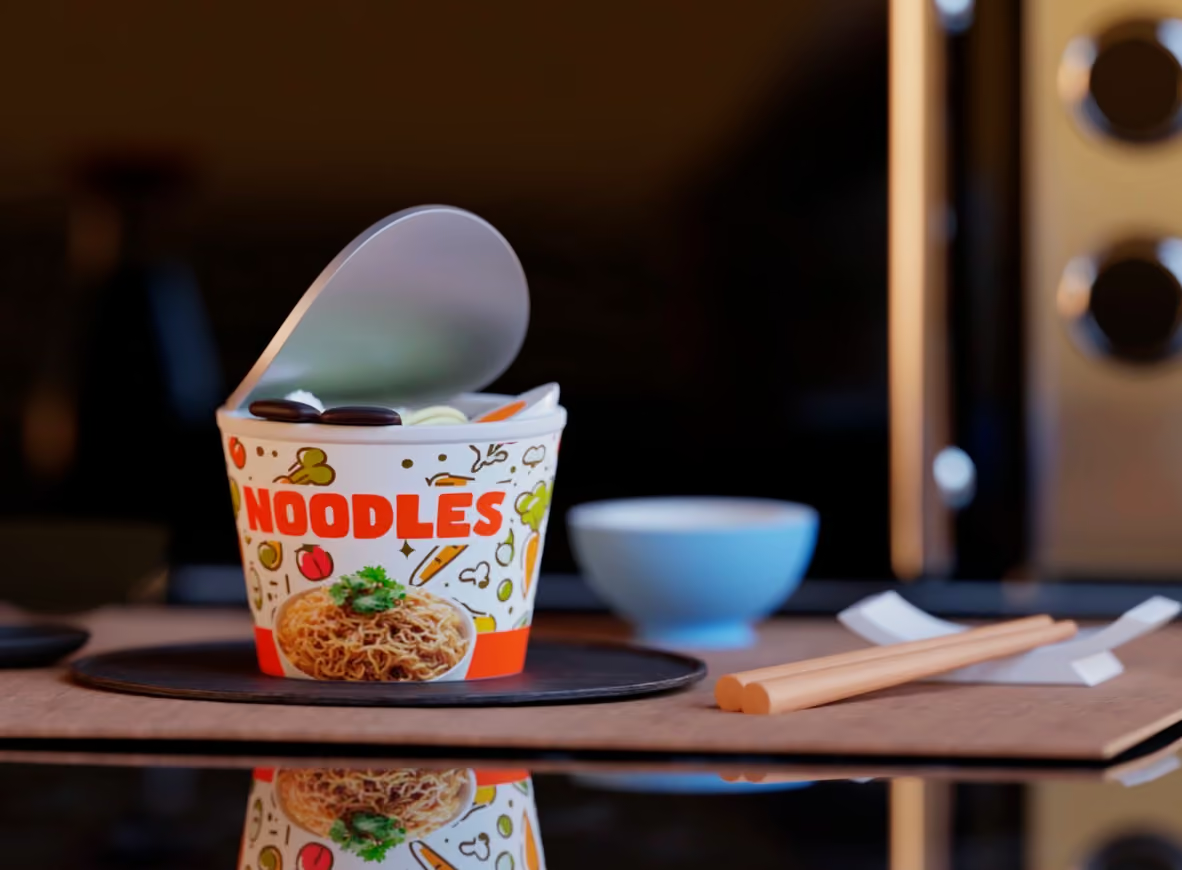
For decades, instant noodles have followed one basic rule: add boiling water, wait a few minutes, and eat. But Japan has now turned that familiar formula upside down with a new summer food sensation - Cup Noodles designed to be prepared entirely with cold water.
The unusual product has become one of Japan’s biggest viral food trends of the summer, selling out much faster than its manufacturer anticipated and attracting international attention. The BBC’s Tokyo correspondent Kurumi Mori recently put the noodles to the taste test, exploring whether a cold cup of instant ramen can genuinely deliver the convenience, texture and satisfaction consumers expect.
Behind the seemingly simple idea is actually five years of product development, patented food technology and a strategy aimed squarely at changing eating habits during increasingly hot Japanese summers.
The product, officially known as “Hiyashi Cup Noodle” or “Cold Cup Noodle,” was launched nationwide in Japan by Nissin Foods on July 20, 2026.
It marked a major departure for one of the country’s most recognisable food brands.
Nissin introduced Cup Noodles in 1971, meaning the cold-water version arrived as the brand approached its 55th anniversary. According to Nissin, it is the first Cup Noodle in the brand’s history specifically designed to be prepared without hot water.
There are currently two flavours:
Spicy Kimchi, combining chicken-based broth with the acidity and heat of kimchi, and Chicken Salt Lemon, featuring chicken, bonito and dried sardine flavours balanced with a fresh lemon aroma.
But the biggest surprise is written into the preparation instructions: do not use boiling water.
Instead, consumers add refrigerated cold water and wait approximately five minutes.
Cold water normally presents an obvious challenge for instant noodles.
Traditional instant ramen is manufactured so that hot water rapidly penetrates the dried noodles, restoring their texture while dissolving seasonings and warming the other ingredients.
Cold water cannot accomplish this nearly as efficiently.
To solve the problem, Nissin developed what it calls its patented “Cold Rehydration Method”, or “Cold Rehyd” process. The company says the technology allows specially designed noodles to absorb cold water while maintaining a firm, smooth and elastic texture.
The technology reportedly took five years to develop.
That makes Cold Cup Noodle more than simply regular instant noodles served at a lower temperature. The noodles themselves were engineered specifically for cold-water preparation.
Consumers therefore require no kettle, stove, microwave or ice — just a cup of sufficiently cold water.
What happened after launch surprised even Nissin.
The company had reportedly prepared enough initial stock to cover approximately one to two months of demand.
Instead, that supply sold out in roughly one week.
Nissin has not publicly disclosed the precise number of cups sold, but the speed of the sell-out demonstrates the scale of consumer interest.
Social media helped accelerate the phenomenon, with people uploading reactions, taste tests and unconventional ways of preparing the noodles. Some users reportedly experimented with liquids other than water, including milk, soy milk and tea, further increasing online curiosity around the product.
The unusual preparation method also created the perfect viral question:
Can instant ramen really taste good when made with cold water?
That curiosity has pushed the product beyond ordinary food marketing and transformed it into something people actively want to test for themselves.
The craze became prominent enough for the BBC to conduct its own taste test in Tokyo.
BBC correspondent Kurumi Mori sampled the noodles while examining whether the product genuinely works as a refreshing alternative to traditional steaming-hot ramen.
The concept certainly challenges expectations. Cup noodles have traditionally been associated with hot broth and comforting warmth — qualities that work particularly well during cold weather but can feel considerably less appealing during a humid Japanese summer.
Cold Cup Noodles attempt to reposition instant ramen as something completely different: a cooling convenience food.
The result is not simply chilled conventional ramen. The specially developed noodles and summer-focused flavours are meant to create a dish better suited to cold preparation.
Whether every ramen fan will prefer the colder texture and broth is a matter of taste, but the sell-out suggests that Japanese consumers are willing to reconsider what instant noodles can be.
The timing of the product is particularly important.
Japan has experienced increasingly intense summer temperatures in recent years, creating growing consumer demand for cold meals, beverages and products designed to provide relief from the heat.
Nissin specifically pointed to record-breaking hot weather and increasing popularity of chilled foods when explaining the development of the product.
Preparing traditional instant noodles also creates additional heat: consumers first boil water and then eat steaming broth.
On a day when temperatures are already uncomfortable, that process may be far less attractive.
Cold Cup Noodles remove both problems.
The consumer does not have to boil water, and the finished meal itself is cold rather than steaming hot.
That makes the product an interesting example of how food manufacturers are adapting established products to changing environmental conditions and consumer behaviour.
The cold-water technology could potentially have applications beyond summer snacking.
One unexpected discussion surrounding the product involves emergency and disaster preparedness.
Japan frequently experiences earthquakes, typhoons and other natural disasters. During serious emergencies, electricity and gas services can be interrupted, making boiling water difficult.
Instant noodles are convenient emergency foods, but conventional varieties still normally require heat.
A noodle product capable of being prepared using ordinary water could therefore have practical advantages when electricity, cooking facilities or fuel are unavailable.
Japanese consumers have already highlighted this possibility online, although Nissin has not announced whether Cold Cup Noodle will become a permanent emergency-food product or whether production will significantly expand.
Nissin has a long history of changing how people consume noodles.
Its founder, Momofuku Ando, introduced Chicken Ramen in 1958, helping create the modern instant-noodle industry. Cup Noodles followed in 1971, adding portability and a disposable container to the formula.
More than half a century later, Cold Cup Noodle represents another attempt to rethink something consumers assumed could not change.
The basic proposition remains extraordinarily simple: add water and wait.
The difference is that the water is cold.
Yet behind that tiny change lies years of food science, shifting consumer preferences and a response to hotter summers.
The fact that supplies intended to last up to two months disappeared in approximately seven days indicates that the idea has clearly struck a chord.
Whether cold-water Cup Noodles eventually become a permanent supermarket fixture remains uncertain. But Japan’s latest viral snack has already demonstrated something significant about mature consumer brands: even an everyday product that has existed for decades can still be reinvented.
For now, the biggest question may no longer be whether cold-water noodles can work.
Given their extraordinary popularity, it may be how quickly Nissin can get them back onto store shelves.
For questions or comments write to contactus@bostonbrandmedia.com



-v3.jpg)


-v3-02.jpg)