Stay informed with our newsletter.
.webp)


EN





Gaming and interactive media have evolved into a dominant force in global entertainment, driven by live-service models, cross-platform ecosystems, and cloud gaming innovations. The industry is expanding access, enhancing player engagement, and creating persistent digital experiences. Meanwhile, esports is gaining mainstream recognition, attracting large audiences and major investments. Together, these trends are transforming gaming into a connected, scalable, and culturally influential ecosystem that continues to redefine how people play, compete, and interact worldwide.
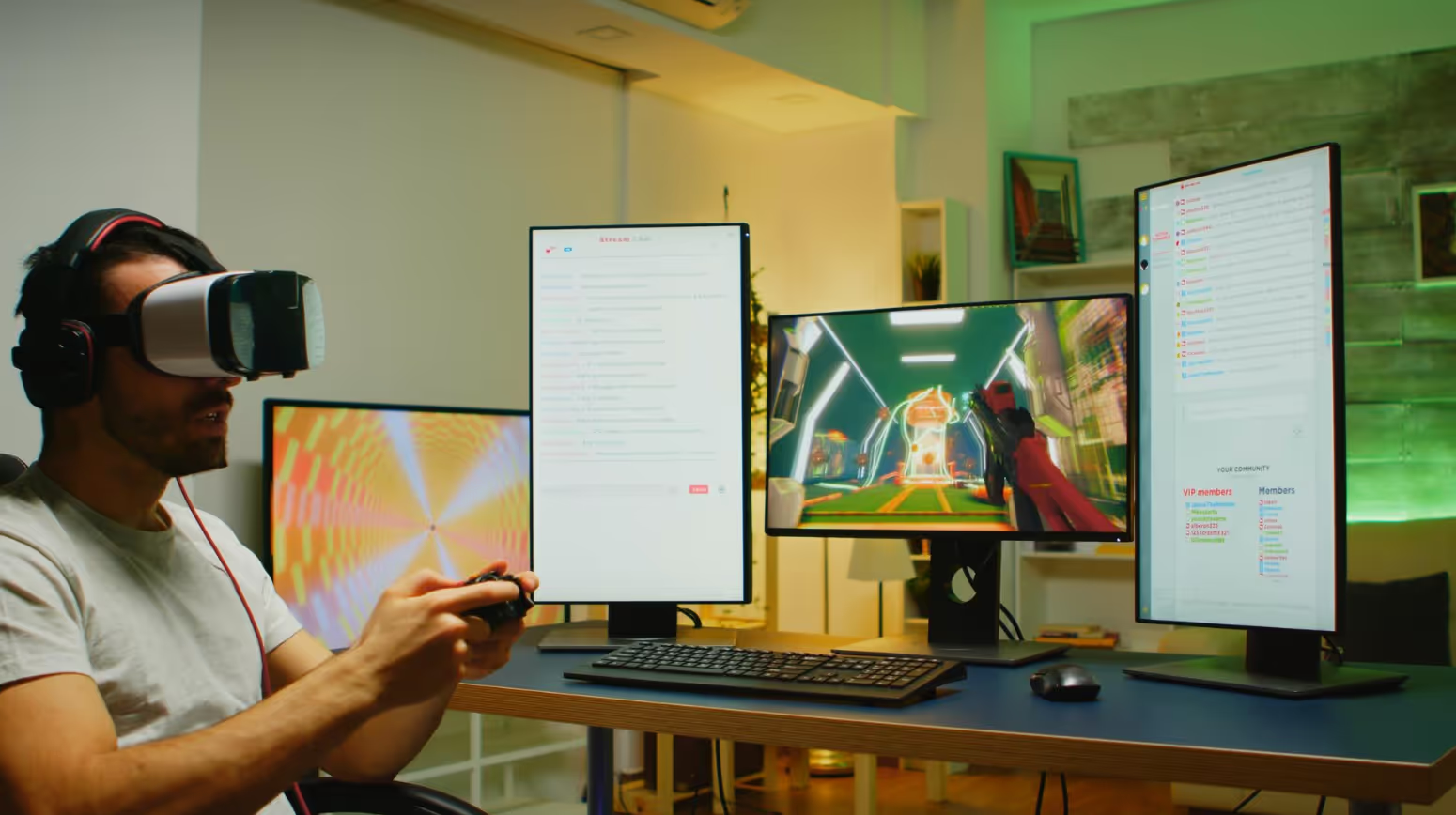
The global gaming industry is undergoing one of the most significant transformations in its history. Once viewed as a niche segment of entertainment, gaming has evolved into a multi-billion-dollar ecosystem that rivals and in many cases surpasses, film, music, and television in both revenue and cultural influence. At the center of this evolution are three defining forces: the rise of live-service games, the expansion of cloud gaming, and the mainstream ascent of esports.
One of the most influential trends shaping the industry today is the shift toward live-service games, titles that are continuously updated with new content, features, and monetization models long after their initial release. Rather than a one-time purchase, these games operate as ongoing platforms designed to retain players over months or even years.
Games like Fortnite, Call of Duty: Warzone, and Genshin Impact have demonstrated the immense potential of this model. These platforms generate revenue through in-game purchases, battle passes, and seasonal content updates, creating a steady and predictable income stream for developers and publishers.
The success of live-service gaming reflects a broader shift in consumer behavior. Players increasingly seek persistent, evolving experiences rather than static, one-off titles. This model also enables developers to respond dynamically to player feedback, fostering stronger engagement and community loyalty.
However, the approach is not without challenges. Maintaining a live-service ecosystem requires significant investment in infrastructure, content development, and community management. Failure to deliver consistent updates or address player concerns can quickly lead to user churn, highlighting the high-stakes nature of this model.
Alongside live-service models, the industry is witnessing a rapid expansion of cross-platform ecosystems. Historically, gaming was fragmented across consoles, PCs, and mobile devices, with limited interoperability between platforms. Today, that paradigm is changing.
Major titles now allow players to seamlessly connect and compete across devices, enabling a unified gaming experience regardless of hardware. This shift is driven in part by companies like Microsoft and Sony, which are increasingly embracing cross-platform strategies to expand their user bases.
Cross-platform play not only enhances accessibility but also strengthens network effects. Larger, more diverse player communities lead to better matchmaking, increased engagement, and longer game lifecycles. For developers, this translates into higher retention rates and greater monetization opportunities.
This ecosystem approach is also redefining competition within the industry. Instead of competing solely on hardware, companies are now focused on building integrated digital ecosystems that encompass software, services, and user communities. The result is a more interconnected gaming landscape where platform boundaries are becoming increasingly blurred.
Cloud gaming represents another major frontier in interactive media. By allowing users to stream games directly from remote servers, cloud platforms eliminate the need for high-end hardware, making gaming more accessible to a global audience.
Services such as Xbox Cloud Gaming, operated by Microsoft, and PlayStation cloud initiatives from Sony are at the forefront of this shift. These platforms leverage advances in cloud infrastructure, edge computing, and network connectivity to deliver high-quality gaming experiences across a wide range of devices.
The implications are profound. Cloud gaming has the potential to democratize access to premium gaming content, particularly in emerging markets where expensive consoles and PCs may be less accessible. It also aligns with broader industry trends toward subscription-based models, offering players a library of games for a monthly fee.
Despite its promise, cloud gaming faces several hurdles. Latency, bandwidth limitations, and infrastructure costs remain key challenges, particularly in regions with underdeveloped internet connectivity. Nonetheless, ongoing investments in 5G and fiber networks are expected to accelerate adoption in the coming years.
Perhaps the most visible indicator of gaming’s mainstream acceptance is the rise of esports. Competitive gaming has grown into a global phenomenon, attracting millions of viewers and generating substantial revenue through sponsorships, advertising, and media rights.
Major tournaments for games like League of Legends, Dota 2, and Counter-Strike now rival traditional sporting events in scale and viewership. Esports organizations have secured partnerships with global brands, while dedicated arenas and broadcast deals continue to expand the industry’s reach.
The growth of esports is underpinned by several factors. First, the digital nature of gaming makes it inherently suited for online competition and global audiences. Second, platforms like YouTube and Twitch have made it easier than ever to distribute and monetize content.
Importantly, esports is also benefiting from increased institutional support. Universities are offering scholarships for competitive gaming, while governments in some regions are recognizing esports as an official sport. This institutionalization is helping to legitimize the industry and attract further investment.
The convergence of live-service models, cross-platform ecosystems, cloud gaming, and esports is reshaping the gaming industry into a more dynamic and interconnected ecosystem. These trends are not only transforming how games are developed and consumed but also redefining the role of gaming within the broader entertainment landscape.
Looking ahead, several key themes are likely to shape the industry’s trajectory:
As gaming continues to evolve, its influence will extend far beyond entertainment. It will shape how people connect, compete, and create in an increasingly digital world.
In many ways, gaming is no longer just a form of leisure, it is a central pillar of modern culture and a key driver of innovation in interactive media.
For questions or comments write to contactus@bostonbrandmedia.com



-v3.jpg)


-v3-02.jpg)







.png)