Stay informed with our newsletter.
.webp)


EN





Chanel and Uniqlo demonstrate two distinct approaches to global brand success. Chanel combines heritage, luxury and creative reinvention to maintain consumer desirability, while Uniqlo builds growth through functional clothing, accessible quality and international expansion. Recent fashion developments and Fast Retailing’s financial performance highlight how both brands respond to evolving consumer expectations. Their strategies offer valuable lessons for businesses: a clear brand identity, meaningful innovation and customer relevance are essential to sustaining competitiveness in today’s dynamic global marketplace.
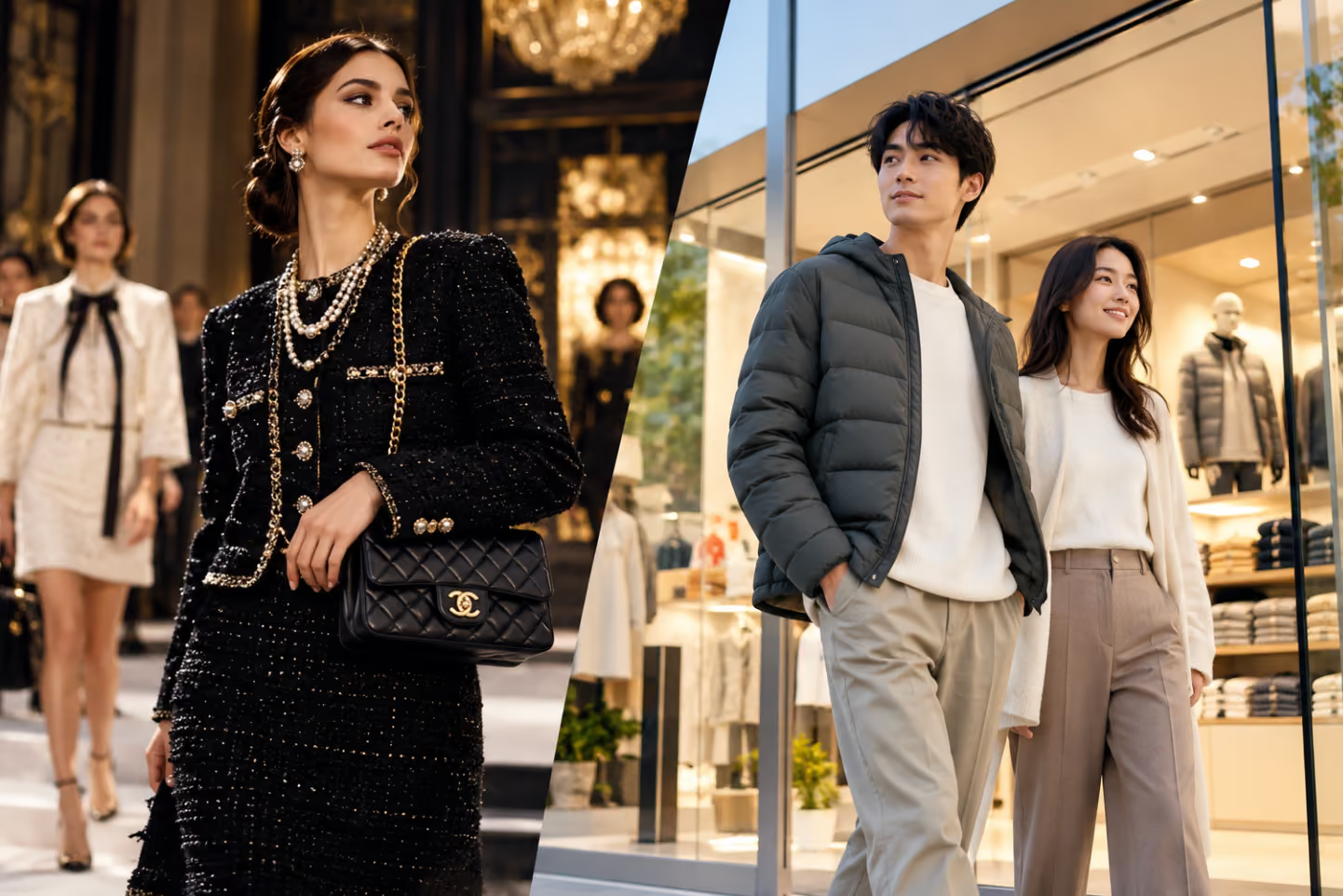
How luxury craftsmanship and everyday essentials are shaping the future of the global fashion industry
The global fashion industry is undergoing a significant transformation. Consumers are becoming more selective about what they buy, while brands are competing to deliver not only attractive products but also meaningful experiences, quality, and value. Two brands illustrate these contrasting yet successful approaches: Chanel, the French luxury fashion house, and Uniqlo, the Japanese apparel retailer.
Although they operate at different ends of the market, both brands demonstrate how a clear identity, an understanding of consumer behaviour, and a willingness to evolve can strengthen a company's global position. Their recent developments offer valuable insights into the changing dynamics of the fashion and retail industries.
Founded by Gabrielle “Coco” Chanel in 1910, Chanel has grown into one of the world's most recognisable luxury fashion houses. Its identity is built around timeless elegance, craftsmanship, exclusivity, and a distinctive design language that spans fashion, handbags, fragrances, jewellery, and beauty.
However, maintaining a heritage brand's relevance requires more than preserving its past. Luxury consumers continue to seek products that communicate individuality and sophistication, while younger audiences are increasingly drawn to brands that feel contemporary and culturally relevant.
This is where creative reinvention has become important to Chanel's strategy.
In 2025, Matthieu Blazy became Chanel's artistic director, bringing a fresh perspective to the house's established design codes. His collections have introduced more expressive colours, patterns, and contemporary styling while retaining recognisable elements such as tweed suits and quilted handbags.
The momentum was particularly visible during Paris Fashion Week in October 2026, when Chanel presented its Spring/Summer 2027 collection, featuring tiger-print tweed, sheer skirts, and bold styling. The presentation attracted international fashion coverage and reinforced the brand's renewed visibility.
Chanel also secured the top position in the Lyst Index, a ranking that measures fashion-brand demand and engagement using online search and social activity. The development highlights how creative leadership can influence consumer interest and a brand's cultural relevance.
Chanel's strength lies in balancing heritage with innovation. Its signature designs remain familiar, but the interpretation evolves to appeal to changing tastes.
The brand also benefits from the emotional value associated with luxury. For many customers, purchasing a Chanel product is not simply a functional decision; it can represent personal achievement, self-expression, or an appreciation of craftsmanship.
This emotional connection supports brand desirability, helping distinguish luxury products from ordinary fashion purchases.
Another important element is exclusivity. Unlike mass-market retailers, luxury brands generally depend on carefully managed distribution, premium positioning, and distinctive customer experiences rather than competing primarily on price.
Nevertheless, luxury fashion faces challenges, including economic uncertainty, changing spending patterns, and growing competition for consumer attention. Chanel's current creative direction illustrates one way an established brand can respond: preserve its core identity while giving customers new reasons to pay attention.
At the other end of the fashion spectrum is Uniqlo, the Japanese clothing brand operated by Fast Retailing. Its approach is centred on functional, versatile, and accessible clothing designed for everyday life.
Rather than relying mainly on seasonal fashion statements, Uniqlo has built its identity around its LifeWear philosophy: clothing designed to improve everyday comfort, practicality, and quality of life.
Its product range includes T-shirts, knitwear, outerwear, trousers, and functional basics. The emphasis is on garments that can be worn repeatedly, combined easily, and adapted to different lifestyles.
This approach appeals to consumers seeking a balance between quality, practicality, and price.
Uniqlo's recent performance provides a compelling example of the commercial potential of this model.
On October 8, 2026, its parent company, Fast Retailing, reported full-year results for the financial year ended August 31, 2026.
According to the company's results and Reuters reporting:
These figures relate to Fast Retailing as a group, not Uniqlo alone. However, the company identified strong international performance, particularly in North America and Europe, as a major contributor to its results.
The shift in regional performance is significant. It suggests that Uniqlo's growth is becoming less dependent on its historically important Greater China market and increasingly supported by demand in Western markets.
Fast Retailing has also reiterated its long-term ambition to reach ¥10 trillion in annual sales, underlining its intention to expand its global presence.
Uniqlo's success demonstrates that a fashion brand does not necessarily need to depend on luxury positioning or constantly changing trends to build a strong global business.
Its differentiation comes from product functionality, consistency, and everyday relevance. Technologies used in selected product lines, including HEATTECH thermal clothing and AIRism fabric, help reinforce the brand's emphasis on comfort and performance.
Its relatively straightforward product philosophy can also make shopping easier for customers who prefer dependable wardrobe essentials over frequent fashion changes.
International expansion, however, brings its own challenges. Uniqlo must adapt to different climates, shopping habits, price expectations, and competitive environments. It also faces pressure from established international retailers and local clothing brands.
To sustain growth, the company must continue strengthening its product offering, store experience, and understanding of regional consumers.
Chanel and Uniqlo demonstrate that successful brand building does not depend on following a single formula.
Chanel creates value through exclusivity, heritage, craftsmanship, and emotional appeal. Uniqlo creates value through functionality, consistency, accessibility, and everyday usefulness.
Their differences reveal several important lessons for businesses across industries.
First, a clear brand identity matters. Customers should understand what a brand represents and why it is different from competitors.
Second, innovation must support the brand's core promise. Chanel's new creative direction refreshes its heritage, while Uniqlo's functional fabrics reinforce its practical positioning.
Third, understanding consumer behaviour is essential. Luxury customers and everyday apparel shoppers have different motivations, but both expect products that justify their purchases.
Finally, global growth requires local relevance. International brands must retain a consistent identity while responding to changing consumer expectations across markets.
Chanel's renewed fashion momentum and Uniqlo's record financial performance illustrate two distinct approaches to competing in a changing global marketplace.
One uses creative expression and luxury desirability to maintain its position; the other uses functional innovation and international expansion to reach a wider customer base.
Their experiences underline a broader business principle: lasting success comes from understanding what customers value, delivering it consistently, and evolving without losing the qualities that make a brand distinctive.
As consumer expectations continue to change, Chanel and Uniqlo offer contrasting but valuable examples of how brand identity, customer relevance, and strategic adaptation can support long-term growth in the global fashion industry.
For questions or comments write to contactus@bostonbrandmedia.com



-v3.jpg)


-v3-02.jpg)