Stay informed with our newsletter.
.webp)


EN





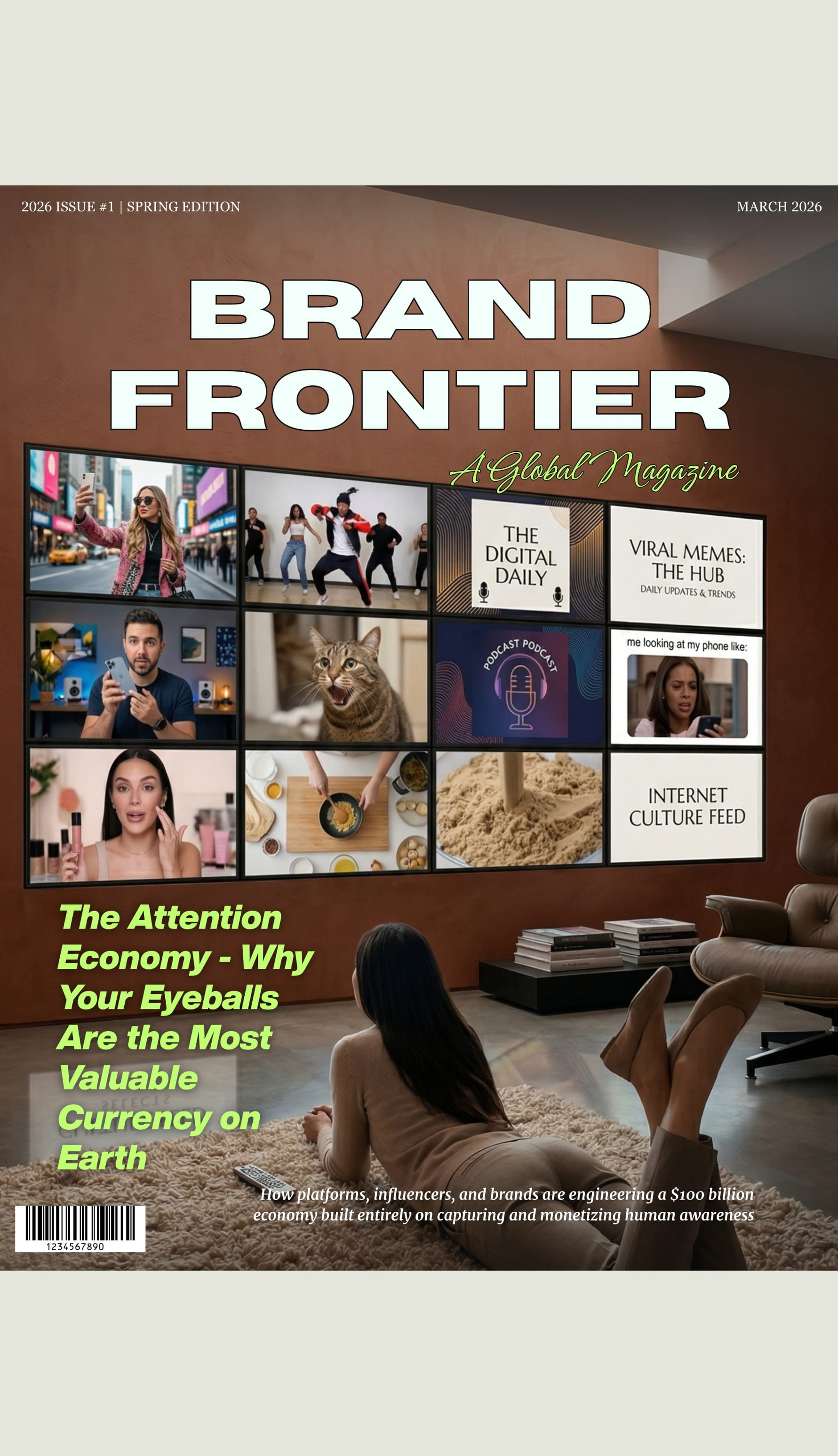
In today's digital economy, content, capital, and AI-generated information are more abundant than ever. Yet the one resource that remains limited is human attention. As consumers are bombarded with thousands of messages daily, average content is increasingly ignored. Brands that win are not those producing the most content, but those earning meaningful attention through distinctive viewpoints, niche communities, and memorable experiences. In an age of information overload, attention has become the ultimate competitive advantage.

The average consumer is exposed to thousands of marketing messages every day.
Logos flash across screens. Ads interrupt videos. Emails flood inboxes. Social media feeds refresh endlessly with content from brands competing for visibility.
Yet despite this overwhelming volume of communication, very little is remembered.
Ask someone what advertisement they saw yesterday, and most struggle to recall even one. Ask them which brand posted on LinkedIn this morning, and the answer is usually silence.
This is the defining challenge of modern business.
Not a shortage of money.
Not a shortage of technology.
Not even a shortage of content.
The real scarcity is attention.
And in every economy, the scarcest resource eventually becomes the most valuable.
For decades, businesses competed primarily on capital.
Companies with the largest budgets could build factories, buy media space, hire talent, and dominate markets.
Today, that advantage is shrinking.
Capital is abundant.
Investors are sitting on record amounts of deployable cash. Startups can access funding globally. Businesses can launch online with minimal upfront investment.
Content is abundant too.
Every company has a blog. Every executive has a LinkedIn account. Every brand has a content calendar.
And now AI has accelerated content production to unprecedented levels.
What once required a team of writers can now be generated in minutes.
The result?
The internet is experiencing an explosion of information.
But more information doesn't create more attention.
Human attention remains finite.
Every person still has only 24 hours in a day.
That's why attention has become the ultimate bottleneck.
The winners of the next decade won't be those who produce the most content.
They will be those who earn the most attention.
For years, businesses operated under a simple assumption:
"Create more content and people will find you."
That strategy worked when content was scarce.
Today, everyone is publishing.
Thousands of articles, videos, podcasts, newsletters, and social posts appear every second.
The unfortunate reality is that most of it looks remarkably similar.
The same headlines.
The same insights.
The same recycled advice.
The same safe corporate language.
When everything sounds alike, nothing stands out.
Average content doesn't fail because it's bad.
It fails because it's forgettable.
In a world flooded with information, being good is no longer enough.
You have to be memorable.
A useful way to think about this is:
Information is abundant. Insight is scarce.
People don't need another article explaining obvious trends.
They want perspectives they haven't heard before.
They want ideas that challenge assumptions.
They want content that changes how they think.
The future belongs not to content creators, but to attention creators.

Most corporate communication is designed to avoid criticism.
Marketing teams remove anything controversial.
Legal teams eliminate strong opinions.
Executives choose language that offends nobody.
The result is content that excites nobody.
Safe messaging creates invisible brands.
This doesn't mean companies should manufacture controversy.
It means they should have a point of view.
Consider the brands, founders, and thought leaders that dominate conversations online.
People discuss them because they stand for something.
They make clear arguments.
They challenge conventional wisdom.
They are willing to disagree.
A strong opinion naturally attracts two groups:
Both groups pay attention.
Neutral messaging attracts neither.
In the attention economy, relevance often matters more than universal approval.
The goal isn't to be liked by everyone.
The goal is to be unforgettable to the right people.
Many of today's fastest-growing brands understand this principle.
They don't compete for broad awareness.
They compete for emotional engagement.
And engagement follows conviction.
For decades, marketers chased scale.
The dream was simple:
Reach the largest audience possible.
Television rewarded mass appeal.
Newspapers rewarded mass appeal.
Radio rewarded mass appeal.
The internet changed the rules.
Today, a creator with 10,000 highly engaged followers can outperform a media company with millions of passive viewers.
Why?
Because attention quality matters more than audience size.
A niche audience often delivers:
A cybersecurity expert doesn't need millions of followers.
They need the attention of the right decision-makers.
A luxury watch brand doesn't need everyone.
They need affluent enthusiasts.
A B2B software company doesn't need mass visibility.
They need industry buyers.
The biggest misconception in marketing is believing reach equals influence.
In reality:
Focused attention beats broad awareness.
This is why communities are becoming more valuable than audiences.
Communities participate.
Audiences consume.
Communities remember.
Audiences forget.
Brands that cultivate loyal niches often build stronger businesses than those chasing viral reach.
Many leaders assume AI will create a content advantage.
The opposite may be true.
AI dramatically lowers the cost of producing content.
When supply increases and demand remains constant, value decreases.
The same economic principle applies to information.
As AI generates more articles, posts, videos, reports, and marketing assets, the average piece of content becomes less valuable.
The competitive advantage shifts elsewhere.
Not to content creation.
To attention acquisition.
Not to producing information.
To producing meaning.
The future belongs to organizations that can:
AI can generate words.
It cannot automatically generate trust.
And trust remains one of the strongest drivers of attention.
Many businesses are still operating with an outdated assumption:
"If we create more content, growth will follow."
But the market has changed.
The companies winning today understand a different equation.
Content is abundant.
Distribution is crowded.
Technology is accessible.
Attention is scarce.
That scarcity changes everything.
The brands that thrive in the next decade will not be those with the biggest content libraries.
They will be those with the clearest ideas.
Not those speaking to everyone.
But those speaking powerfully to someone.
Not those publishing the most.
But those remembered the longest.
Because in a world overflowing with information, attention isn't just another business metric.
It is the currency that determines every other outcome.
And while most brands are drilling for more content, the smartest ones are drilling for attention.
For questions or comments write to contactus@bostonbrandmedia.com



-v3.jpg)


-v3-02.jpg)







.png)



.avif)
