Stay informed with our newsletter.
.webp)


EN





Artificial intelligence is moving beyond analyzing biological data and beginning to help scientists decide which experiments are most worth conducting. Researchers are developing AI systems that can evaluate competing hypotheses, predict experimental outcomes and recommend the next tests to perform. By learning from existing biological datasets, these systems can help laboratories prioritize promising experiments while reducing time and resources spent on less informative approaches. The emerging field could transform how biological research is planned, accelerating discoveries in medicine, genetics, drug development and biotechnology.
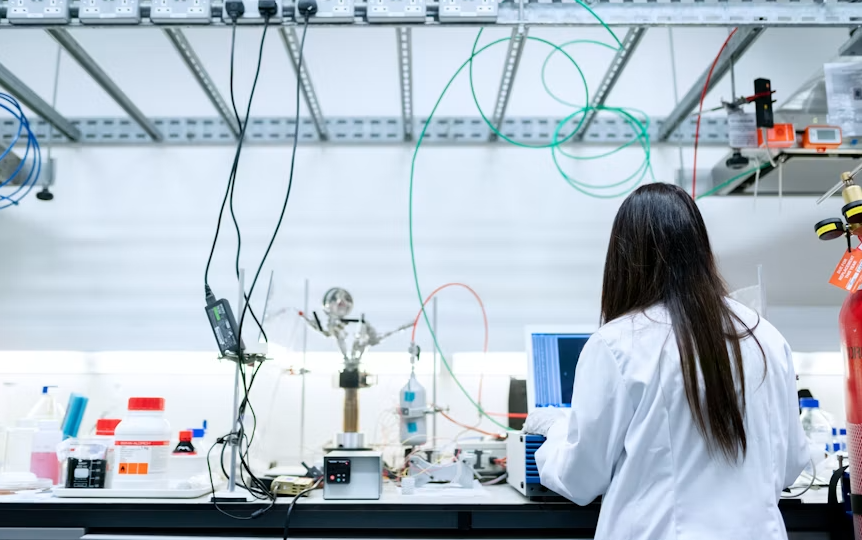
Artificial intelligence is taking on a new role in biology not just analyzing experimental data, but helping scientists decide what to test next.
Modern biological research produces enormous amounts of data and thousands of possible experimental paths. AI can analyze existing evidence, compare hypotheses and identify experiments that could provide the most useful information.
This approach, known as active learning, allows AI systems to recommend the next experiment based on what has already been discovered. Researchers can then conduct the experiment and feed the results back into the system, creating a continuous cycle of learning.
The technology is also driving the development of self-driving laboratories, where AI works alongside robotic equipment. These systems can select experimental conditions, conduct tests, analyze results and recommend subsequent experiments with limited human intervention.
The potential applications are significant. In drug discovery, AI could help researchers prioritize promising compounds and reduce the number of experiments needed to identify effective treatments. In genetics and cellular biology, it could help scientists determine which genes, proteins or biological conditions deserve closer investigation.
However, AI is not replacing scientists. Biological systems are complex, and AI predictions can be affected by incomplete or biased data. Researchers must still evaluate whether an experiment is scientifically meaningful, practical and ethical.
The emerging technology could nevertheless change how biological research is conducted. Instead of computers simply analyzing the results of experiments, AI is beginning to help determine which experiments should happen in the first place.
If the technology continues to advance, AI could become an increasingly important research partner helping scientists explore more possibilities, reduce wasted resources and accelerate discoveries in medicine, genetics and biotechnology.
For questions or comments write to contactus@bostonbrandmedia.com



-v3.jpg)


-v3-02.jpg)