Stay informed with our newsletter.
.webp)


EN





Time Out has revealed its pick for the world’s coolest neighborhood of 2026, spotlighting a destination that stands out for its culture, food, nightlife, creativity and strong sense of community. The recognition reflects the area’s distinctive character, local energy and growing appeal. Time Out’s annual ranking celebrates neighborhoods that offer memorable experiences for residents and visitors alike, combining authenticity, diversity and an exciting atmosphere that captures the spirit of contemporary urban life around the world.
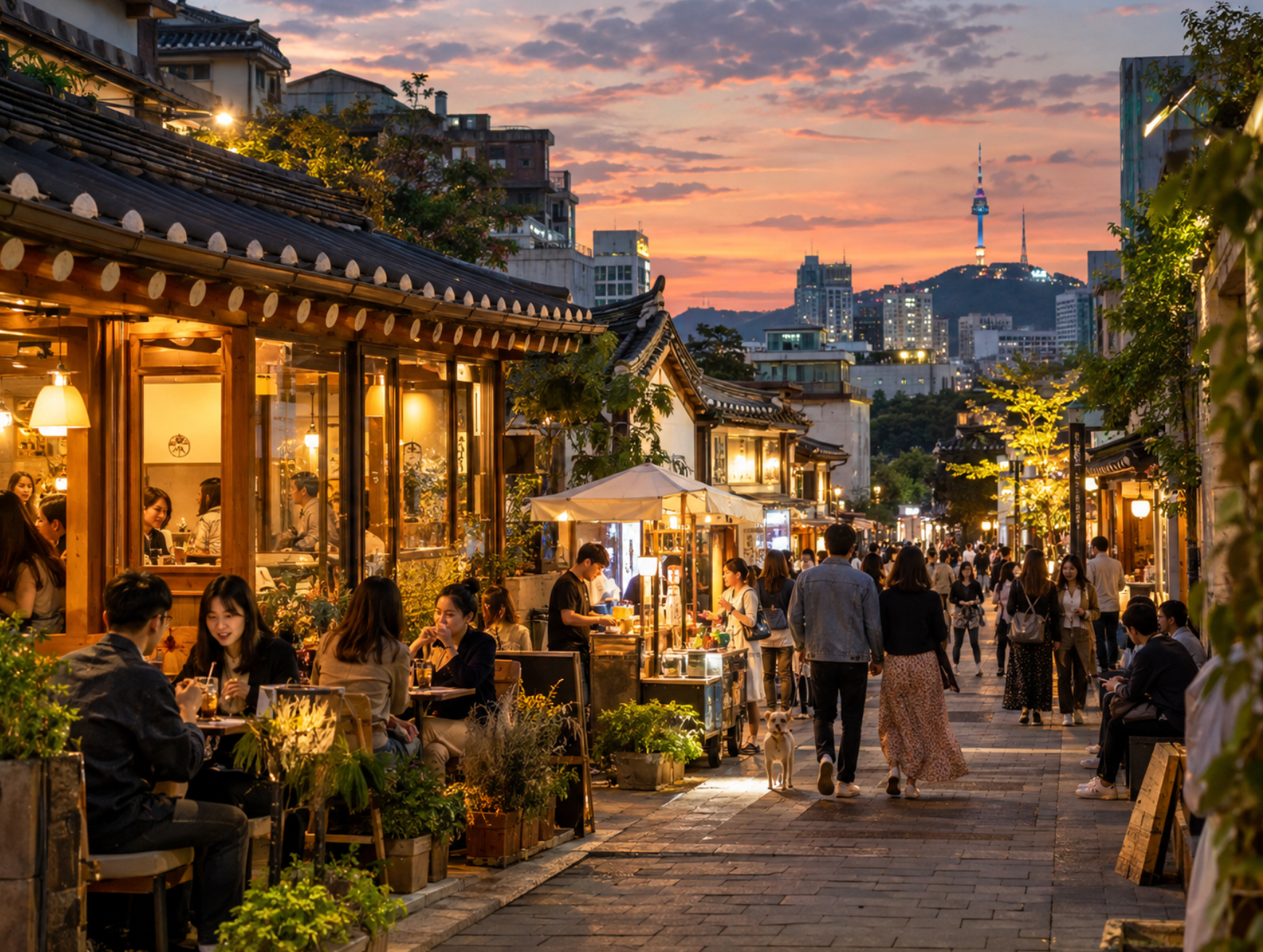
A memorable city escape often becomes special when the destination begins to feel less like somewhere you are visiting and more like a temporary home of your own. It might happen when you discover a neighborhood bar you return to every evening, receive insider tips from the owners of a small hotel, or wander into an independent bookstore packed with recommendations and works by local writers.
For travelers searching for that elusive combination of community, character and discovery, Time Out has unveiled its latest annual selection of the world’s coolest neighborhoods for 2026.
At the very top of this year’s ranking is Jongno 3-ga in Seoul, South Korea.
The lively Seoul district has already appeared on Time Out’s radar before, securing third place in 2021. Known for its thriving street-food culture, traditional atmosphere and independent businesses, the neighborhood has continued to evolve without losing the qualities that made it distinctive.
Time Out travel editor Grace Beard explained that some neighborhoods featured in previous editions have continued getting better rather than fading from attention. Jongno 3-ga’s rise from third place to the top position has been driven in part by its expanding late-night outdoor dining scene and flourishing collection of independent shops and businesses.
Visitors are increasingly attracted to exactly that combination.
Portuguese traveler Anna Barra highlighted the neighborhood’s market stalls and the opportunity to experience several different flavors and cultural influences within one compact area.
For Barra, much of Jongno 3-ga’s attraction comes from how naturally historic traditions and contemporary city life exist alongside one another.
Time Out recommends beginning a visit with soft steamed bread at Mil Toast, one of the many popular cafés scattered around Jongno 3-ga.
The café has become sufficiently popular that queues regularly form in the morning, according to employee Myung Guen.
Beyond its cafés and desserts, he points to the district’s rich historical identity and food culture as two of its strongest attractions.
Taking second place is L’Ocean District in Rabat, Morocco, a coastal neighborhood that combines seaside character with an increasingly sophisticated hospitality scene.
Although major luxury developments such as the Four Seasons have arrived, L’Ocean continues to retain a strong network of independent businesses and an unmistakably local personality.
American resident Steven M. Bradford, who relocated to the neighborhood earlier in 2026, says its strong community atmosphere is one of the things that makes it stand apart.
He describes an environment shaped by welcoming residents, authentic Moroccan cuisine and an enthusiasm for football that brings people together.
In third place is Neos Kosmos in Athens, a district increasingly recognized for its artistic and creative energy.
Los Angeles’ Chinatown follows in fourth place, making it the highest-ranked neighborhood in the United States. Time Out particularly recognizes the area for preserving its heritage while continuing to adapt and reinvent itself for new generations.
Completing the top five is Govanhill in Glasgow, Scotland, a diverse neighborhood celebrated for its welcoming character and cultural richness.
Local entrepreneur Aimée Ballinger, who runs Burning House Books with her partner Benjamin, describes Govanhill as one of the most inclusive and culturally dynamic places she has experienced.
Their independent bookstore is among several locally owned businesses contributing to the neighborhood’s changing identity and strengthening its creative community.
For Ballinger, living, raising a family and operating a bookstore in Govanhill offers an opportunity to contribute directly to the place she calls home while bringing challenging, inspiring and distinctive literature to local readers.
That community-centered reputation is echoed by Tommy Nicholls, owner of LGBTQ+ venue Adrian’s, who sees Govanhill as an unusually strong meeting point for culture and neighborhood life.
One of the most noticeable differences in Time Out’s 2026 selection is the stronger presence of central and downtown neighborhoods.
According to Beard, city centers around the world are experiencing renewed energy as creative venues, restaurants, bars and cultural spaces return to areas that were heavily affected during the Covid-19 period.
That shift represents a significant contrast with the years when many downtown districts became noticeably quieter and less active.
Time Out develops its annual neighborhood ranking with input from its international network of editors and writers, who identify districts within their cities that they believe deserve global attention.
Rather than concentrating solely on famous destinations, the publication also searches for neighborhoods that are just beginning to have their moment and may still be better known among residents than international tourists.
As Beard explained: “A lot of the time, there are neighbourhoods that have only just reached their moment and that only in-the-know locals are aware of, that sense of ‘nowness’ is really what we’re looking for on this list.”
That emphasis on “nowness” - the feeling that a neighborhood is experiencing an exciting cultural moment right now, helps explain why the ranking often brings relatively under-the-radar districts into the international spotlight.
The ranking stretches across Asia, Europe, Africa, North America, South America and Australia, demonstrating how the idea of a “cool” neighborhood differs dramatically from one city to another.
India earns two places in the global top 40, with Humayunpur in Delhi at No. 16 and Bandra West in Mumbai at No. 23, highlighting the growing international attention on neighborhood-level culture in the country’s largest cities.
Japan also makes a strong appearance, with Kitakagaya in Osaka and Koenji in Tokyo both securing spots within the top 10.
What connects these very different places is not simply popularity. Time Out’s 2026 selection emphasizes neighborhoods where local businesses, food, creativity, history and community identity intersect, creating places that feel genuinely lived-in rather than designed purely for visitors.
With Jongno 3-ga now leading the world ranking, Seoul’s historic district demonstrates how a neighborhood can preserve its traditional roots while embracing new restaurants, independent businesses and changing urban lifestyles.
For travelers planning their next city escape, the list offers a reminder that some of the most rewarding experiences may be found away from famous landmarks, in the markets, cafés, bookstores, bars and everyday streets where local life actually happens.
For questions or comments write to contactus@bostonbrandmedia.com
Source: CNN



-v3.jpg)


-v3-02.jpg)