Stay informed with our newsletter.
.webp)


EN





The Asia Summit 2026 will spotlight the growing role of nuclear energy and Small Modular Reactors (SMRs) in supporting Asia’s clean energy transition. Bringing together policymakers, regulators, utilities, investors, and technology providers, the event will explore advancements in nuclear innovation, regulatory frameworks, financing models, and regional collaboration. Discussions will focus on enhancing energy security, achieving decarbonization goals, and accelerating SMR deployment, positioning nuclear power as a key component of Asia’s sustainable energy future.
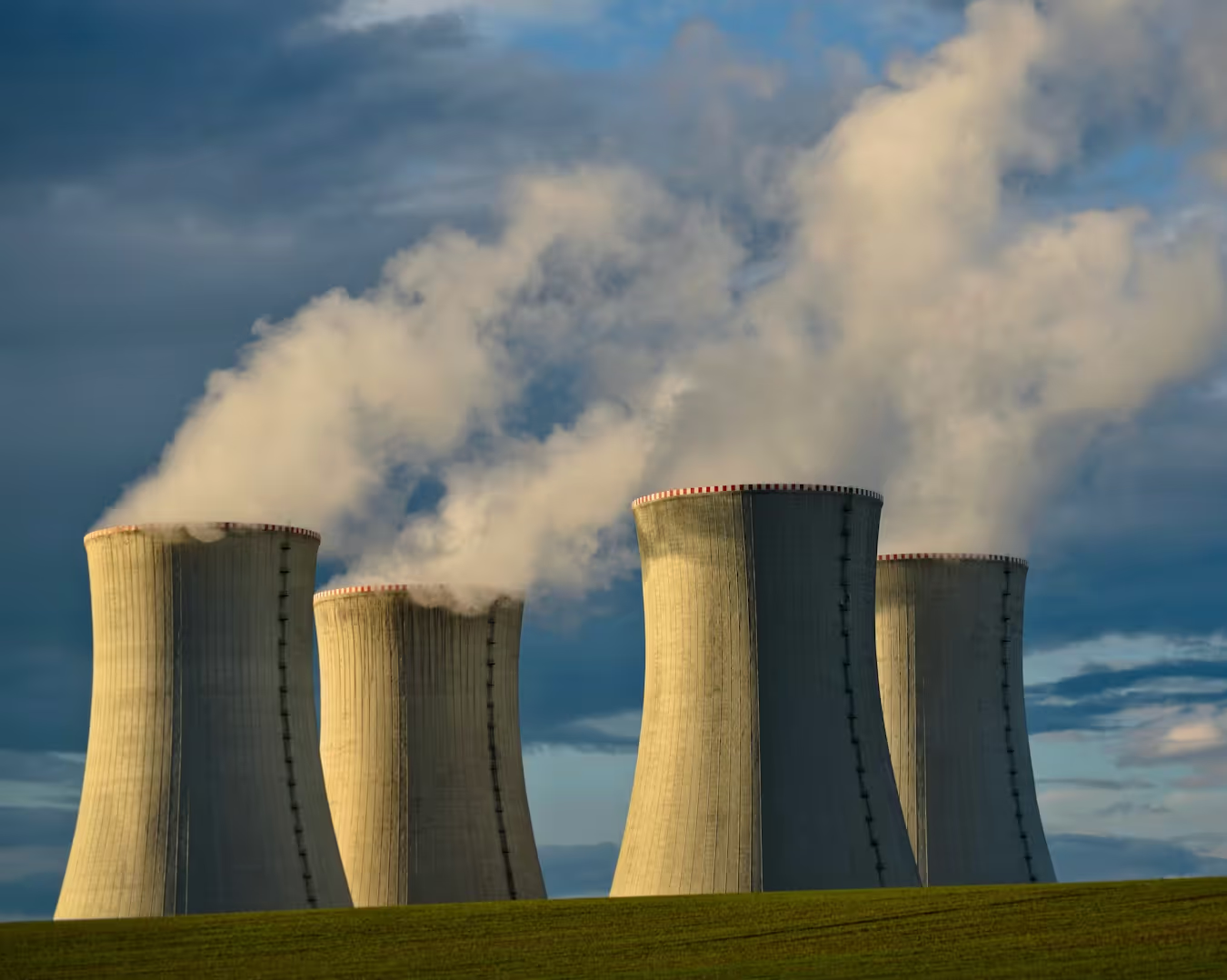
As Asia confronts rapidly growing electricity demand, ambitious decarbonisation targets, and increasing concerns over energy security, nuclear energy is emerging as a critical component of the region’s future energy mix. Against this backdrop, the Asia Nuclear Energy & SMR 2026 Summit, scheduled for 30 June–1 July 2026 in Singapore, is set to become one of the most influential gatherings of nuclear stakeholders in the region. The summit will bring together government agencies, regulators, utilities, technology developers, financiers, engineering companies, and supply-chain leaders to explore the future of nuclear power deployment and Small Modular Reactors (SMRs) across Asia.
The event comes at a pivotal moment for Asia’s energy transition. Countries across Southeast Asia, East Asia, and South Asia are seeking reliable low-carbon power sources that can support industrial growth while helping meet climate commitments. Traditional renewable energy sources such as solar and wind continue to expand rapidly, but policymakers increasingly recognize the need for stable, round-the-clock electricity generation. This has renewed interest in advanced nuclear technologies and particularly SMRs, which are widely viewed as a flexible and scalable solution for emerging energy systems.
A major focus of the summit will be the development of Small Modular Reactors, a new generation of nuclear reactors designed to be smaller, more flexible, and potentially faster to deploy than conventional large-scale nuclear power plants. Most SMRs are designed to generate up to approximately 300 megawatts of electricity and can be manufactured in modules before being transported to installation sites. Their modular nature offers the potential for lower upfront capital requirements and phased deployment based on energy demand growth.
Experts believe that SMRs could play a transformative role in supporting energy security, reducing carbon emissions, and providing reliable baseload power for industries, urban centres, remote communities, and emerging sectors such as data centres. As artificial intelligence, digital infrastructure, and electrification continue to drive power consumption, interest in nuclear-powered energy solutions is accelerating globally.
Singapore’s role as the host nation further underscores the growing importance of nuclear discussions within Southeast Asia. Although Singapore has not yet committed to deploying nuclear power, the country has significantly expanded its research and international cooperation efforts related to civil nuclear energy. Recent collaborations with international partners and studies on SMR feasibility demonstrate the city-state’s desire to better understand how nuclear technologies could contribute to its long-term net-zero ambitions and energy resilience.
The summit agenda highlights the region’s evolving nuclear landscape. Key discussions will examine policy frameworks, regulatory readiness, licensing processes, and the infrastructure required to support nuclear deployment in newcomer countries. Delegates will also explore lessons learned from established nuclear markets and assess how these experiences can be adapted for Asian nations considering nuclear energy for the first time.
Several Asian nations are already making notable progress. Countries such as Indonesia, Vietnam, Thailand, and the Philippines have intensified their nuclear planning efforts, recognizing the potential of nuclear energy to support economic growth while reducing dependence on fossil fuels. At the same time, governments across the region are investing in workforce development, regulatory institutions, and technical capacity-building to prepare for future deployment opportunities.
Another major theme of the conference will be nuclear financing. While nuclear projects offer long-term benefits through stable, low-carbon electricity generation, securing investment remains one of the sector’s greatest challenges. Industry leaders will discuss innovative financing mechanisms, public-private partnerships, and risk-sharing models that can make nuclear projects more attractive to investors. The ability to establish bankable frameworks and predictable regulatory environments will be essential for accelerating deployment across the region.
The summit will also address the importance of supply chain readiness. As interest in nuclear energy grows, demand for specialised manufacturing, engineering expertise, fuel services, and construction capabilities is expected to increase significantly. Building resilient regional supply chains will be critical for ensuring that future projects can be delivered efficiently, safely, and cost-effectively. Industry participants are expected to examine opportunities for cross-border collaboration and regional industrial development.
Safety and regulation will remain central to every discussion. Public acceptance of nuclear energy depends heavily on confidence in robust safety standards, effective oversight, emergency preparedness, and responsible waste management. Regulators and policymakers attending the summit will explore pathways for harmonising standards, strengthening international cooperation, and implementing best practices that reflect global nuclear governance frameworks.
Beyond technology and policy, the event reflects a broader shift in regional energy thinking. As Asian economies seek to balance sustainability, affordability, and reliability, nuclear energy is increasingly viewed as a complementary solution alongside renewables rather than a competing technology. The integration of nuclear power with solar, wind, hydrogen, and energy storage systems could help create more resilient and diversified energy portfolios capable of supporting long-term economic development.
The Asia Nuclear Energy & SMR 2026 Summit arrives at a time when momentum behind nuclear energy is growing worldwide. Governments, utilities, investors, and technology providers are recognizing that achieving ambitious climate goals will likely require a combination of clean energy technologies, including advanced nuclear solutions. For Asia, where electricity demand continues to rise faster than in most other regions, the stakes are particularly high.
As delegates gather in Singapore, the summit is expected to serve as a catalyst for new partnerships, policy development, and investment opportunities. More importantly, it will provide a platform for shaping a shared vision of how nuclear energy, Small Modular Reactors, and regional cooperation can contribute to a secure, sustainable, and low-carbon energy future for Asia. By bringing together the key stakeholders driving the next generation of nuclear innovation, the event will help define the roadmap for one of the most significant energy transformations of the coming decades.
For questions or comments write to contactus@bostonbrandmedia.com



-v3.jpg)


-v3-02.jpg)