Stay informed with our newsletter.
.webp)


EN





UK Prime Minister Keir Starmer is facing increasing political pressure as questions grow over his leadership and future in office. Critics, opposition figures, and some within political circles are raising concerns about his handling of key issues, fueling speculation about his position. As public scrutiny intensifies and challenges mount, the debate over Starmer's leadership is becoming a significant issue in UK politics, with potential implications for the government, party unity, and the country's political direction.
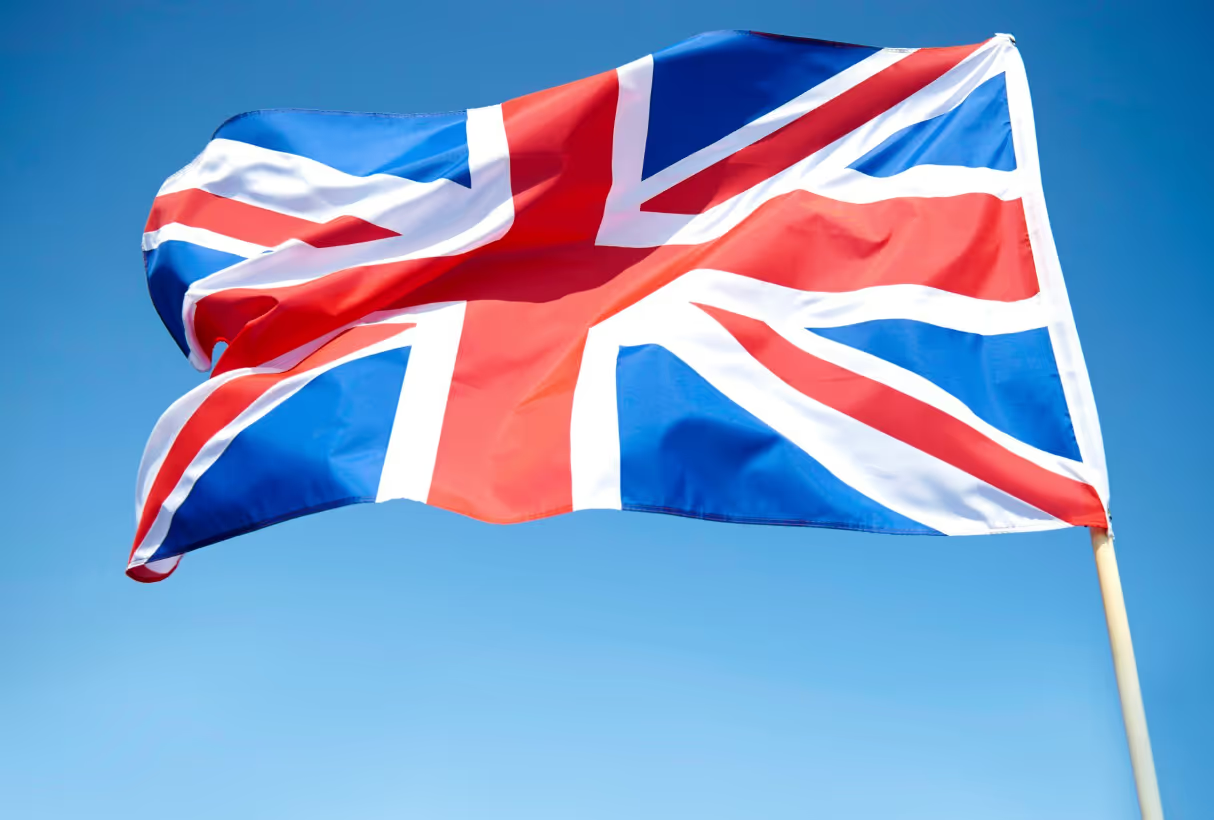
Despite repeatedly insisting that he has no intention of leaving office, Keir Starmer is facing intensifying pressure as a growing number of Labour Party members believe his leadership may be nearing its end.
The UK Prime Minister now finds himself at a pivotal crossroads—either remain in power and defend his position or confront a potential leadership challenge from rising Labour figure Andy Burnham.
Speculation over Starmer's future has accelerated, with political observers expecting clarity on his plans in the coming days. The anticipation coincides with Burnham's arrival in the House of Commons following his victory in a recent by-election, a development that has significantly strengthened his political standing.
Speaking to the BBC, Business Secretary Peter Kyle acknowledged that Starmer is carefully assessing the political landscape, weighing both the obstacles and opportunities before him. While Kyle dismissed resignation reports as mere speculation, he emphasized that Starmer remains focused on acting in what he believes is the country's best interest.
Away from Westminster, Starmer spent the weekend with his family at Chequers, the official country residence of British prime ministers. Although he avoided addressing the political storm publicly, he shared a personal Father's Day message on social media, reflecting on family and fatherhood rather than politics.
The uncertainty surrounding Starmer's future has even drawn international attention. US President Donald Trump commented on the situation before any official announcement had been made, arguing that Starmer's difficulties stemmed from his handling of immigration and energy policy. Trump suggested that these issues played a major role in weakening the prime minister's position.
It remains unclear whether Trump's remarks were influenced by media reports or independent assessments. Notably, there has been no direct communication between the two leaders over the weekend.
Relations between Starmer and Trump, once considered relatively cordial, have reportedly cooled in recent months, particularly over disagreements concerning international issues, including the conflict involving Iran.
Should Starmer decide to step aside, he would become the sixth UK prime minister in just a decade to leave office, highlighting an extraordinary period of political instability in Britain.
Within Labour, dissatisfaction has been growing steadily. Party members are increasingly concerned about the government's declining popularity despite the overwhelming election victory that brought Starmer to power in 2024.
Critics argue that his administration has struggled to deliver on key promises, including boosting economic growth, improving public services, and easing the ongoing cost-of-living crisis. His leadership has also faced scrutiny over controversial decisions, including the appointment of Peter Mandelson as Britain's ambassador to the United States.
At the same time, Labour is facing mounting pressure from both ends of the political spectrum. Some progressive voters are shifting toward the Green Party, while support for Reform UK, led by Nigel Farage, continues to grow as the party gains momentum in national opinion polls.
Meanwhile, Andy Burnham's recent electoral success has further intensified discussions about Labour's future. The former mayor of Greater Manchester secured a commanding victory in the Makerfield by-election, earning nearly 55 percent of the vote and finishing well ahead of his closest rival.
Now positioned in Parliament, Burnham has a clearer pathway to challenge for Labour's leadership. His victory speech strongly hinted at broader ambitions, portraying himself as someone ready to lead both the party and the nation through a period of political change.
Burnham argued that many voters feel disconnected from the current political system and suggested that the country may be approaching a significant turning point.
Whether Burnham would automatically emerge as Starmer's successor remains uncertain. Other senior Labour figures, including former Health Secretary Wes Streeting, have indicated they may enter a leadership contest if one takes place.
For his part, Starmer has publicly congratulated Burnham while maintaining that he has no intention of stepping aside without a fight. He has repeatedly stated that he is prepared to defend his leadership and contest any challenge that emerges.
However, some senior Labour voices are becoming increasingly blunt. Charlie Falconer, a prominent member of the House of Lords, recently argued that Starmer's political authority has been severely weakened and suggested that an orderly transition between Starmer and Burnham may ultimately be in the party's best interests.
As speculation continues to intensify, the coming days could prove decisive not only for Starmer's political future but also for the direction of the Labour Party and the wider landscape of British politics.
For questions or comments write to contactus@bostonbrandmedia.com
Source: NDTV



-v3.jpg)


-v3-02.jpg)