Stay informed with our newsletter.
.webp)


EN





JD Sports is expanding into Mexico through a long-term partnership with Grupo Axo, creating a new avenue for international growth as the retailer navigates softer consumer demand and changing footwear trends. At the same time, JD executives remain confident that Nike can regain momentum through stronger product innovation and renewed wholesale partnerships. The combination of geographic expansion, digital investment, and a potential Nike recovery could help support JD Sports’ next phase of growth globally.
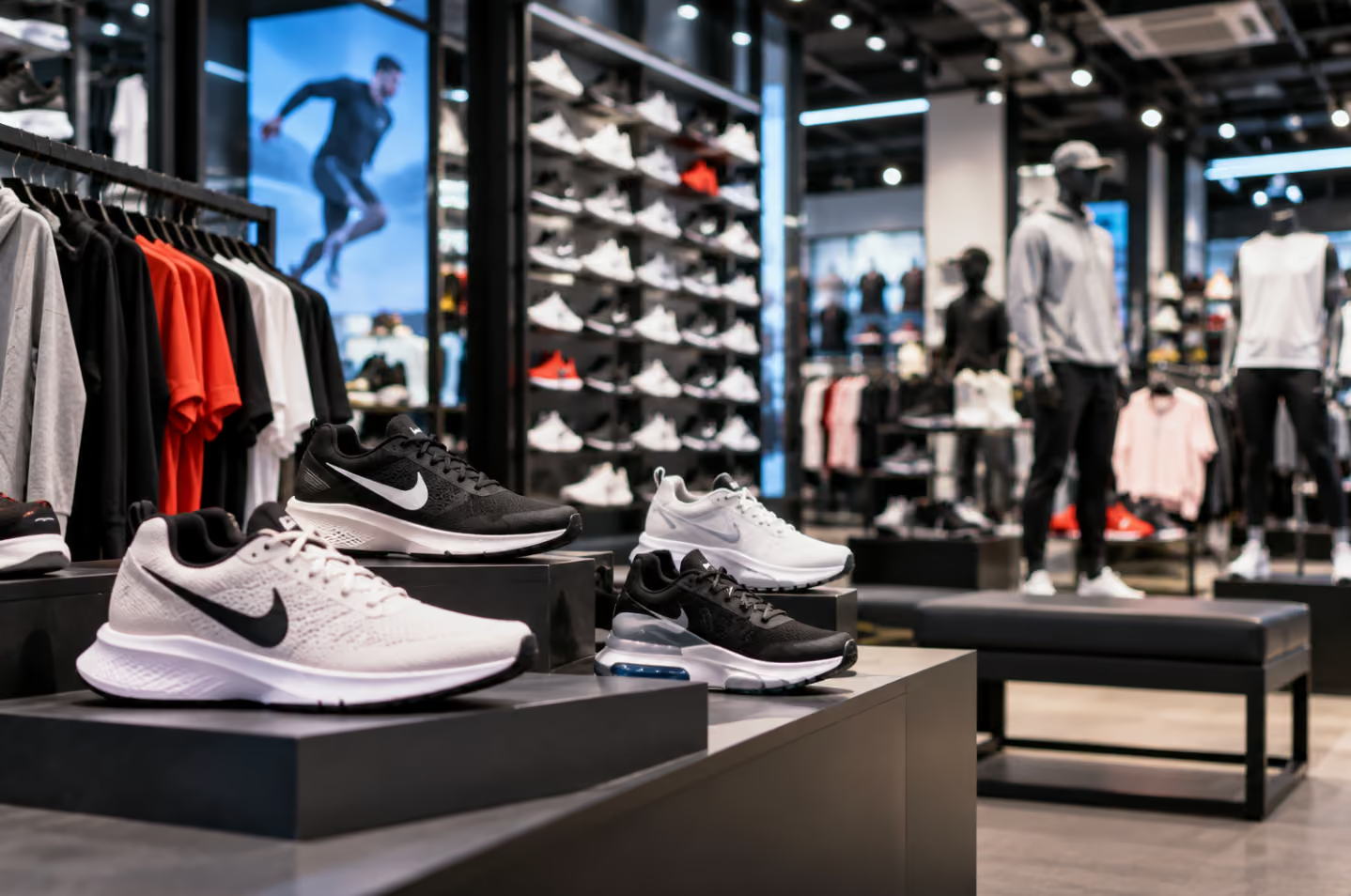
British sports-fashion retailer JD Sports Fashion is pushing ahead with international expansion even as difficult consumer conditions, a changing footwear cycle and weakness in North America weigh on its near-term performance. Two developments in September 2026 capture that strategy: JD's move into Mexico through a long-term partnership with Grupo Axo, and management's public confidence that key supplier Nike can successfully revive its business.
Together, the developments offer a revealing picture of where the global sportswear market is heading. JD is searching for new geographic growth while strengthening a multi-brand model that remains closely tied to Nike, a company undergoing one of the most closely watched turnarounds in global consumer goods.
On September 21, JD Sports announced a long-term franchise partnership with Mexican retail group Grupo Axo to introduce the JD brand into Mexico. Under the agreement, Grupo Axo will operate JD's physical stores and e-commerce business in the country while using JD's brand, intellectual property, own-label products and exclusive ranges across footwear, apparel and accessories.
The scale of the planned entry is substantial.
Beginning in 2027, Grupo Axo is expected to operate more than 140 JD locations in Mexico, initially drawing on Axo's existing sneaker-store estate. Selected locations are subsequently expected to be enlarged and redesigned around JD's “bigger and better” flagship format.
Mexico gives JD access to an especially attractive demographic. The company notes that the country has more than 130 million people, with roughly 40% of the population under 25 — a valuable consumer base for a retailer built around sneakers, sports fashion, music and youth culture.
Rather than building an entire Mexican operating network from scratch, JD will be able to combine its global brand relationships and merchandising capabilities with Grupo Axo's approximately three decades of experience in the Mexican retail market.
The franchise structure could also offer JD a way of expanding its international presence while potentially limiting the capital intensity associated with wholly owned store expansion.
JD's move into Mexico is occurring against a much more challenging background than the sportswear boom experienced during earlier years.
For the 26 weeks ended August 1, 2026, JD reported sales of £5.899 billion, down 0.7% on a reported basis from £5.940 billion a year earlier. Profit before tax and adjusting items declined 19.7% to £282 million, compared with £351 million in the previous-year period.
Management attributed the environment to several pressures, including cost-of-living challenges affecting consumers, a changing footwear product cycle and a highly promotional retail market.
The difficulties have been particularly visible in North America.
The region generated £2.233 billion of first-half sales, making it JD's largest geography at around 38% of group revenue. However, North American organic sales fell 1.7%, while comparable sales declined 3.5% during the period.
Footwear has been another important pressure point. It represented approximately 60% of JD's group sales, but organic footwear revenue declined by around 3% year over year as several established product franchises reached later stages of their sales cycles. In contrast, apparel and accessories represented 36% of group sales and grew approximately 4% organically.
Yet JD is beginning to see signs of momentum in an important part of the market: performance running and newer footwear styles.
And that brings Nike directly into the story.
Nike remains enormously important to JD.
Reuters reported earlier in 2026 that Nike products account for around 45% of JD Sports' sales, making the health of the US sportswear giant particularly significant to JD's own performance.
Nike has been working through a major strategic reset under chief executive Elliott Hill, who returned to the company as CEO in October 2024. The turnaround has focused on rebuilding relationships with wholesale partners, increasing product innovation and putting greater emphasis on core sporting categories including running and football.
JD Sports CFO Dominic Platt said following the retailer's September first-half results that the company believes Nike is taking the appropriate actions to strengthen its business.
JD is particularly encouraged by consumer response to Nike performance-running ranges including Vomero and Pegasus, which Platt said were resonating well with customers. He argued that a recovery at a company of Nike's size would naturally require time.
That confidence matters because Nike's turnaround remains unfinished.
For fiscal 2026, Nike generated $46.4 billion in revenue, flat on a reported basis and down 2% on a currency-neutral basis. However, there were encouraging signs in the wholesale channel: full-year wholesale revenue increased 6% to $27.5 billion, including 4% currency-neutral growth.
By contrast, Nike Direct revenue declined 6% to $17.7 billion, while Nike Brand Digital revenue fell 12% for the year.
The numbers reinforce why rebuilding relationships with retailers such as JD Sports has become strategically important for Nike.
The sports-footwear market has also become more fragmented.
Consumers now have greater choice from established competitors and fast-growing specialist brands, particularly in running. JD's results specifically highlight strong momentum in performance-based running, even while broader footwear sales remain under pressure.
For Nike, strengthening products such as Pegasus and Vomero is therefore about more than refreshing individual sneaker franchises. It is part of a wider effort to restore product momentum in categories where consumers have increasingly explored competing brands.
The relationship is equally important to JD. While Nike remains a major supplier, JD has increasingly emphasized the resilience of its multi-brand and multi-category strategy, enabling the retailer to move merchandise toward whichever brands and styles are attracting demand.
JD reported that apparel and accessories have now increased to 36% of group sales, while newer footwear styles and performance running are providing additional growth opportunities.
JD is not relying only on geographic expansion.
Online sales reached approximately £1.2 billion in the first half, representing 20% of group revenue, compared with 19% a year earlier. Organic online sales increased 5.2%, supported by investments in e-commerce technology, fulfilment and omnichannel services.
The company's JD STATUS loyalty programme has surpassed 10 million active customers globally, while new e-commerce platforms have been launched in the UK and Ireland. JD also said it became one of the first retailers in the United States to offer a native AI-enabled purchasing experience through Google's Gemini platform.
These investments suggest JD's strategy increasingly extends beyond simply adding stores.
JD maintained its fiscal 2026/27 guidance for £700 million to £800 million in profit before tax and adjusting items, together with expected free cash flow of £460 million to £520 million.
Near-term conditions remain challenging. Consumer spending is pressured in several markets, footwear trends are shifting, promotions remain intense and Nike's turnaround is still in progress.
But JD is positioning itself for what comes next.
The 140-plus-store Mexico partnership creates a new avenue for international growth. Its digital and loyalty investments give it additional ways to reach consumers. And its confidence in Nike suggests one of the retailer's most important brand partners could eventually become a tailwind rather than a headwind.
For JD Sports, the outlook increasingly rests on three interconnected bets: international expansion, a more diversified product mix and the return of stronger product innovation from the world's biggest sportswear brands.
If those factors align, Mexico may represent more than simply another country on JD's retail map. It could become part of the retailer's broader strategy for navigating the next phase of the global sportswear market.
For questions or comments write to contactus@bostonbrandmedia.com



-v3.jpg)


-v3-02.jpg)








.avif)