Stay informed with our newsletter.
.webp)


EN





Fibermaxxing is gaining momentum as one of 2025’s leading wellness trends, encouraging people to increase their daily fiber intake for better overall health. By prioritizing fiber-rich foods such as whole grains, fruits, vegetables, legumes, and seeds, individuals are improving digestion, supporting gut health, enhancing satiety, and stabilizing blood sugar levels. The trend reflects a broader shift toward simple, science-backed nutrition habits that promote long-term well-being rather than quick-fix diets.
If you’ve been scrolling TikTok, you probably noticed that after creatine had its moment, “fibermaxxing” quickly stole the spotlight. The playful, Gen-Z-approved phrase simply means making a conscious effort to boost your daily fiber intake, whether to improve overall health or support weight goals.
Across social platforms, the trend has exploded, with creators racking up millions of views while praising fiber’s wide-ranging benefits. From better digestion to improved overall wellness, enthusiasts are sharing easy hacks like topping oatmeal with chia seeds or piling extra vegetables onto dinner plates.
At first glance, it sounds like a refreshingly sensible movement and many nutrition professionals agree. Dietitian Rachel Gargano has even expressed her support, saying she’s thrilled to see fiber getting the attention it deserves.
However, there’s an important detail people shouldn’t overlook.
During an interview on the The Diary of a CEO YouTube channel, gut health specialist Dr. Will Bulsiewicz, widely known as “The Poo Doctor”, explained that dramatically increasing fiber overnight can backfire. The concept is solid, he says, but the rollout matters. If people overload too quickly and feel uncomfortable, they may abandon the effort altogether and wrongly assume fiber just isn’t for them.
So what’s the smarter approach?
Dr. Bulsiewicz explains that fiber serves as the primary fuel source for beneficial gut bacteria. When these microbes break fiber down, they produce short-chain fatty acids—compounds he describes as some of the most powerful anti-inflammatory agents he’s encountered in his research.
There are three major types of these fatty acids, each playing a unique role in strengthening the gut microbiome, supporting the intestinal barrier, and enhancing immune function. Their impact helps explain why higher fiber intake is linked to lower cholesterol levels and reduced risks of heart disease, diabetes, and even certain cancers.
Fiber itself comes in two forms. Soluble fiber absorbs water, forming a gel-like substance that slows digestion, promotes fullness, and softens stools. Insoluble fiber doesn’t dissolve; instead, it adds bulk and keeps things moving smoothly through the digestive tract, helping to prevent constipation.
Despite its benefits, most people aren’t getting nearly enough. Dr. Bulsiewicz notes that the vast majority of adults in the U.S. and U.K. fall short of recommended intake levels. This widespread deficiency may contribute to chronic inflammatory conditions such as heart disease, diabetes, Alzheimer’s, and Parkinson’s.
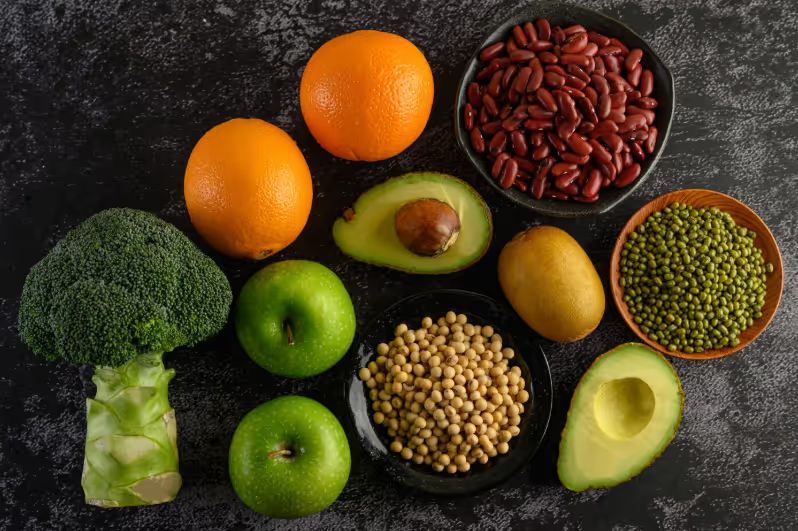
The good news? Boosting fiber doesn’t require complicated meal plans. It simply means gradually adding more plant-based foods to your plate. Fruits, vegetables, legumes, whole grains, nuts, and seeds are all rich in fiber, while animal-based foods contain none. If it grows from the soil, it likely contains fiber, though oils, even heart-healthy ones like extra virgin olive oil, provide beneficial compounds but zero fiber.
Variety, Gargano emphasizes, is essential. Different plants deliver different antioxidants, vitamins, minerals, and phytonutrients. A colorful, diverse plant intake ensures your body receives the full spectrum of nutrients it needs to thrive.
That said, ramping up too fast can cause bloating or constipation, especially if fluid intake doesn’t increase alongside fiber. Gargano advises calculating your current intake and raising it slowly, by about three to five grams per week, while steadily increasing hydration. Because fiber absorbs water like a sponge in the colon, inadequate fluids can lead to dry, uncomfortable stools.
Is fibermaxxing right for everyone? Not necessarily. Individuals with certain digestive conditions, such as active inflammatory bowel disorders or those recovering from surgery, may temporarily require a low-fiber approach. Consulting a healthcare provider before making major dietary changes is always wise. Once cleared, fiber should still be reintroduced gradually.
For those following a plant-based diet, Gargano suggests aiming for generous servings of vegetables at lunch and dinner, choosing whole grains over refined options, and incorporating nuts and seeds daily. Breakfast shouldn’t be overlooked as an opportunity to add fiber either.
In the United States, general guidelines recommend between 25 and 38 grams of fiber per day, or roughly 14 grams per 1,000 calories consumed.
Fibermaxxing may be trendy, but its foundation is timeless: eat more plants, increase gradually, stay hydrated, and let your gut adapt at its own pace.
For questions or comments write to contactus@bostonbrandmedia.com
Source: plantbasednews



-v3.jpg)


-v3-02.jpg)