Stay informed with our newsletter.
.webp)


EN





Consumption and “Treatonomics”: How Gen Z Is Redefining Spending Habits explores how younger consumers are transforming the way money is spent. Gen Z is moving away from traditional brand loyalty and embracing trend-driven purchases influenced by viral social media moments. At the same time, they are prioritizing small, frequent indulgences or “little treats” as a response to rising living costs. Their strong focus on sustainability and second-hand shopping further reflects a generation driven by emotion, values, and individuality.
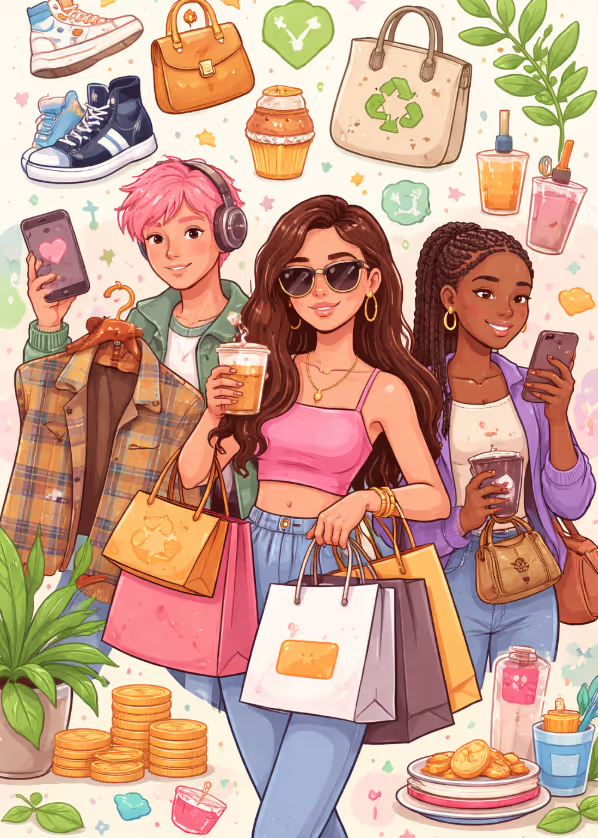
In today’s rapidly evolving consumer landscape, Generation Z is emerging as one of the most influential spending groups in the global market. Born into a world shaped by digital connectivity, economic uncertainty, and social awareness, this generation is rewriting the rules of consumption. Unlike previous generations that often valued long-term brand loyalty, major life investments, and conventional shopping habits, Gen Z is driven by instant trends, emotional fulfillment, and sustainability-focused choices.
Three major forces are shaping their spending behavior: “Trend Loyal” spending, Treatonomics, and Sustainability & Thrift Culture. Together, these patterns reveal a generation that prioritizes experience, identity, and mindful consumption over traditional markers of financial success.
The Rise of “Trend Loyal” Spending
For decades, brands relied heavily on the idea of lifelong customer loyalty. Once consumers trusted a brand, they often remained loyal for years, sometimes even decades. However, for Gen Z, this model is rapidly fading.
Today’s younger consumers are not necessarily brand loyal, they are trend loyal.
This means their purchasing decisions are increasingly influenced by viral moments, social media trends, influencer endorsements, and cultural relevance rather than the heritage or reputation of a brand. Platforms like TikTok, Instagram, and YouTube have become powerful engines that shape what Gen Z buys, wears, eats, and experiences.
A product can become a sensation overnight simply because it appears in a viral video, influencer reel, or trending challenge. For example, a skincare brand, snack item, or fashion accessory featured in a popular TikTok video can sell out within hours.
This form of loyalty is temporary but intense.
Instead of staying committed to one brand, Gen Z often shifts their preferences according to what feels culturally relevant in the moment. The focus is less on the brand’s history and more on its ability to stay visible, fresh, and socially engaging.
Brands are therefore investing heavily in:
This change reflects a broader cultural shift where social validation and online visibility play a major role in consumption decisions.
For Gen Z, buying a trending product is not merely a transaction, it is often a form of self-expression and social participation.
Understanding Treatonomics
One of the most fascinating shifts in modern consumption is the emergence of Treatonomics.
The term refers to a spending behavior where consumers, particularly Gen Z, choose small, frequent indulgences as a way to cope with financial pressure and emotional stress.
In an era marked by high inflation, rising rents, student debt, and increased living costs, many young people feel that large financial milestones such as buying a home, luxury vacations, or expensive long-term investments are increasingly difficult to achieve.
As a result, they turn toward affordable moments of joy.
This may include:
These purchases may seem minor individually, but collectively they represent a significant economic trend.
Rather than saving exclusively for distant goals, Gen Z often prioritizes immediate emotional rewards.
This behavior is deeply tied to psychology.
Small purchases provide a sense of comfort, control, and instant gratification in uncertain times. A luxury coffee on a stressful workday or an artisanal dessert after a long week becomes more than a purchase, it becomes a micro-celebration.
This is why the “little treat” culture has exploded online.
Social media phrases such as “I deserve a little treat” have become widely popular, normalizing the idea that small indulgences are a necessary form of self-care.
Treatonomics reflects a generation that values mental well-being and emotional satisfaction alongside financial decision-making.
It also signals that consumption is becoming increasingly emotion-driven rather than purely need-based.
Brands across sectors, from food and beverage to beauty and retail, are capitalizing on this trend by creating products specifically designed as small luxuries.
Examples include:
These products are intentionally positioned as accessible luxuries.
Sustainability and the Boom of Thrift Culture
Another defining feature of Gen Z consumption is their strong emphasis on sustainability.
Unlike earlier generations that often prioritized ownership of new goods, Gen Z is more likely to consider the environmental and ethical impact of their purchases.
This has led to a major rise in second-hand shopping, thrift culture, and circular fashion.
Buying pre-owned items is no longer viewed as a compromise.
Instead, it is often seen as stylish, responsible, and financially smart.
From vintage clothing to refurbished electronics, second-hand shopping has become mainstream among younger consumers.
Platforms such as Depop, Poshmark, and Vinted have transformed resale shopping into a highly social and trend-driven experience.
Thrifting appeals to Gen Z for several reasons:
This generation is highly aware of issues like climate change, textile waste, and overconsumption.
Fast fashion has been widely criticized for its environmental impact, and many Gen Z consumers are consciously choosing alternatives that reduce waste.
Second-hand items offer access to premium brands at significantly lower prices, which aligns with economic realities and Treatonomics behavior.
Thrift shopping allows consumers to discover one-of-a-kind pieces that help them express individuality.
This uniqueness is particularly valued in a social media age where personal style and originality matter greatly.
The global second-hand market is expected to grow substantially in the coming years, driven largely by younger shoppers.
This trend is reshaping industries such as:
Brands themselves are adapting by launching resale platforms, rental services, and recycling initiatives.
Major fashion houses and retailers are increasingly embracing circular economy models to remain relevant.
The Emotional Economy of Modern Consumption
What ties these three trends together is the rise of the emotional economy.
Gen Z spending is no longer based solely on necessity or status.
Instead, it is guided by:
A trending product satisfies social belonging.
A little treat satisfies emotional comfort.
A thrifted item satisfies both sustainability values and individuality.
This makes Gen Z one of the most complex consumer groups for brands to understand.
They expect brands to be:
Traditional advertising alone is no longer enough.
Brands must create cultural moments.
Conclusion
The future of consumption is being shaped by Gen Z’s evolving values.
Trend loyalty has replaced traditional brand commitment, Treatonomics has transformed indulgence into everyday emotional care, and sustainability-led thrift culture has made conscious shopping a lifestyle statement.
These trends reveal a generation that spends with both emotion and intention.
For businesses, understanding this shift is critical.
Success in today’s market depends on recognizing that Gen Z is not just buying products, they are buying experiences, identity, and moments of joy.
As economic pressures and digital culture continue to evolve, these consumption patterns are likely to influence broader global spending habits for years to come.
Would you like me to rewrite this as a magazine-style feature article with a stronger headline and subheadings for publication/blog use?
For questions or comments write to contactus@bostonbrandmedia.com



-v3.jpg)


-v3-02.jpg)